
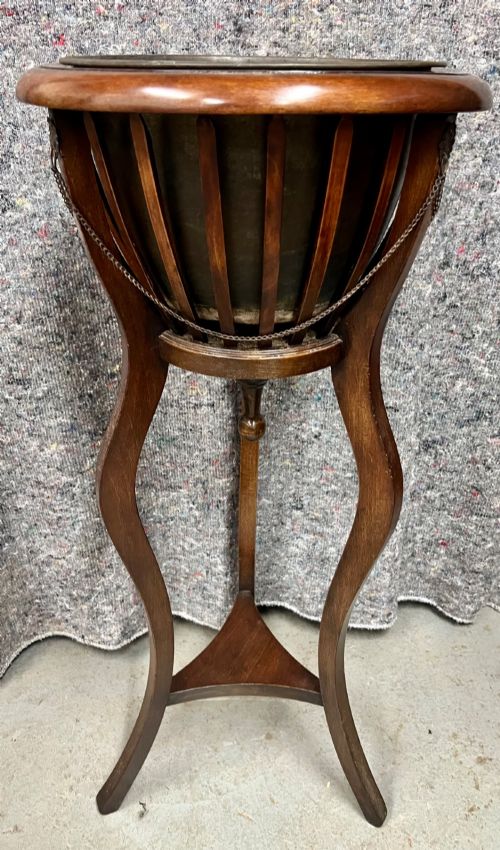


Edwardian Brass Jardiniere
An edwardian brass jardiniere brings sculptural plant display indoors, combining polished metalwork with period domestic horticulture.
Edwardian Brass Jardiniere
When you search for an edwardian brass jardiniere, you are looking at plant holders designed to sit on the floor, on tables, or upon dedicated stands inside the home. These vessels allowed households to bring palms, ferns, and flowering plants into principal living spaces without risking water damage to furnishings.
The versions you meet most frequently on this page span the Edwardian era itself, alongside earlier Victorian and later Arts and Crafts interpretations. They appear as heavy solid brass bowls, fluted cylinders, and bound wooden buckets fitted with metal liners.
Beyond standard bowls, the form extends to larger troughs, plant stands, and coopered oak barrels secured with brass bands. These pieces demonstrate how Edwardian interiors balanced functional gardening needs with formal decorative display.
Materials and construction methods
Makers constructed these pieces primarily from solid brass and copper, frequently pairing metal bodies with timber frames like mahogany, oak, satinwood, and box tree. Metal components were often spun, hammered, or cast to achieve specific surface textures and rigid forms.
Woodworking techniques involved traditional coopering for barrel and bucket planters, alongside detailed mahogany inlay and brass banding. Many examples utilised internal zinc or metal liners to protect the wooden or metal outer structure from soil and water moisture.
Listings feature brass, copper, mahogany, oak, satinwood, and zinc across Edwardian, Victorian, Georgian, and Arts and Crafts styles.
Determinants of quality
Quality rests upon the gauge of the metal and the integrity of the construction, distinguishing substantial cast or heavy-gauge vessels from thin, pressed alternatives. Superior examples retain crisp detail in decorative handles, lion masks, and fluting without distortion.
The relationship between materials also dictates standard, where hand-coopered oak fitted neatly with substantial brass straps surpasses simpler assembled boxes. Completeness of original inner liners and stable joinery separates collector pieces from domestic utility items.
J Sankey and Sons·Lister and Co
The Edwardian Brass Jardiniere Glossary
- Jardiniere
- An ornamental pot or stand designed to hold plants or flowers inside a room. The term derives from the French word for gardener.
- Coopered
- Built using narrow staves of wood fitted together and bound by metal hoops, much like a traditional barrel. This technique ensures stability for holding damp soil and plants.
- Ormolu
- Gilded bronze or brass applied to furniture and decorative objects as mountings. It provides bright golden highlights against dark woods.
- Cellarette
- A lockable container originally used for holding bottles of wine, occasionally adapted or repurposed in form as a planter. They share similar sturdy wooden and bound construction.
- Art Nouveau
- A stylistic movement characterised by organic, flowing lines, plant motifs, and stylized forms. It heavily influenced metalwork and planter designs around the turn of the twentieth century.
Edwardian Brass Jardiniere: Frequently Asked Questions
What is a jardiniere?
A jardiniere is a decorative pot or vessel designed to hold growing plants or cut flowers inside the home. They function primarily as ornamental containers to elevate household horticulture.
Historically, these vessels protected fine tables and floors from water spillage while framing potted palms and ferns. They remain practical for modern interior plant displays.
How do you care for brass planters?
Brass planters require gentle dusting and occasional cleaning with appropriate metal polishes to maintain their surface lustre. Avoiding abrasive cleaners preserves any original patination and fine surface detail.
Using a separate inner pot or liner prevents standing water from sitting directly against the base metal. This protects the interior from corrosion over time.
Where were jardinieres placed?
Edwardian households placed these vessels on the floor, on dedicated wooden stands, or directly onto tabletops in reception rooms and hallways. They occupied prominent spots near windows or in corners where plants received adequate light.
Larger trough forms often stood beneath windows or along stair landings to display trailing ferns and palms. Smaller bowls sat centrally on dining or occasional tables.
How do you date brass planters?
Dating relies on stylistic clues, construction methods, and material combinations recorded across different periods. Art Nouveau pieces display organic motifs, while Edwardian examples often feature clean brass fluting or mahogany inlay.
Heavy cast brass handles, lion mask attachments, and coopered wooden bodies help distinguish nineteenth-century production from later twentieth-century manufacturing techniques.