




Edwardian Brass Desk Accessories
Edwardian brass desk accessories bring functional elegance to a study, uniting utilitarian design with the decorative ambition of the early twentieth century.
Edwardian Brass Desk Accessories
When you search for edwardian brass desk accessories, you encounter items designed to organise and equip the writing table, spanning postal scales, inkwells, magnifying glasses, and calendar stands. These pieces originate predominantly from the Edwardian era and the surrounding late nineteenth and early twentieth centuries.
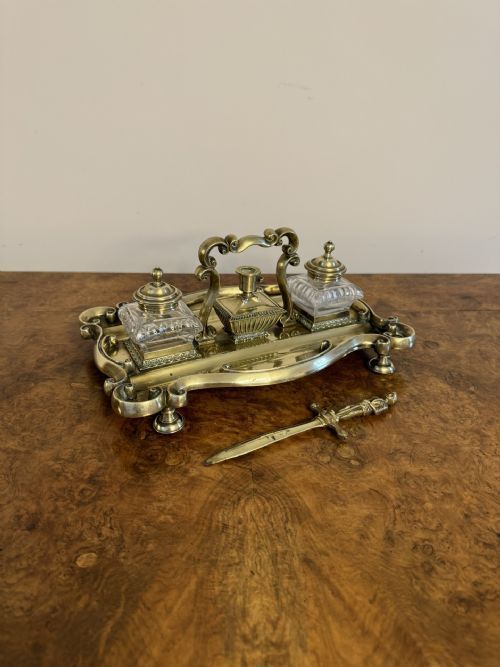
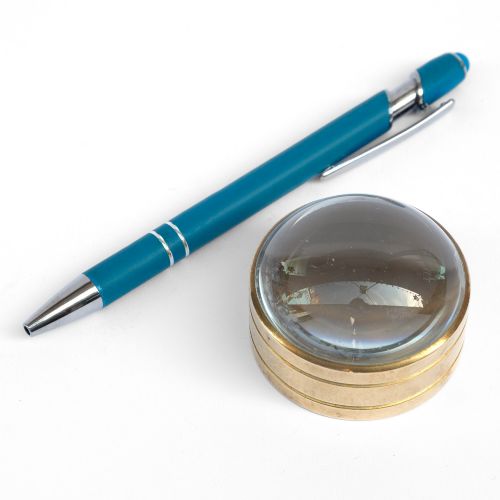
The most common survivals on this page include brass-mounted inkstands, heavy magnifying lenses on stands, and postal scales complete with original weights. Alongside these are desk tidies, letter racks, and mechanical tobacco cutters that reflect the formal writing rituals of the period.
While many examples date strictly to the Edwardian years, the selection also draws in Victorian precursors and 1920s novelties, incorporating stylistic influences from Art Nouveau, Arts and Crafts, and Egyptian Revival designs.
Materials and Technique
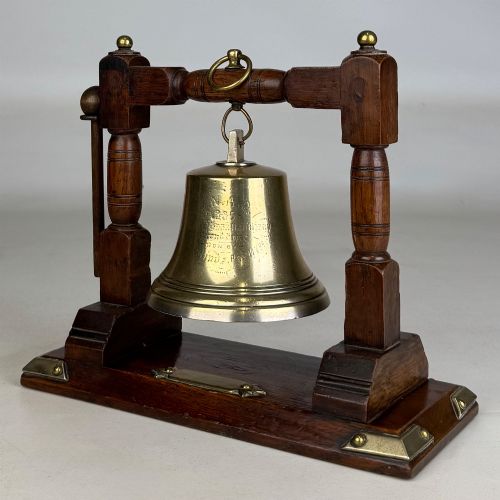
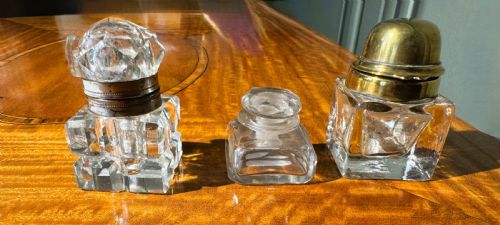
The objects combine cast and sheet brass with secondary materials including oak, mahogany, cut glass, burr walnut, and tooled leather. Wood bases and stands provide stability for heavy metal components, whilst glass is utilised for inkwell bottles and magnifying optics.
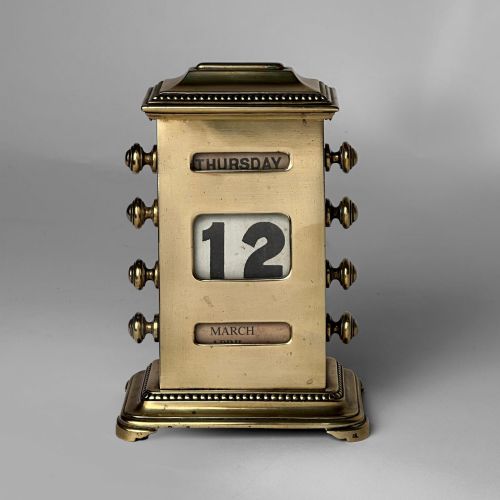
Manufacturing methods rely on traditional foundry work, including sand-casting for intricate bases, desk sets, and figural finials like bears. Mechanics such as perpetual calendar wheels, pivoting magnifying frames, and spring-loaded postal scales demonstrate precise period engineering.
A cast brass bear serves as a sturdy finial on one antique box.
Standards of Manufacture
Quality in these pieces is dictated by the weight of the metal casting and the crispness of decorative detail, such as the relief work on Art Nouveau stands and Egyptian-decorated calendars. Finer examples utilise heavier gauge brass and substantial wood mounts rather than thin pressed metal.
Completeness defines the upper tier of the range, particularly for postal scales retaining their matched sets of brass weights, or inkstands featuring their original cut glass bottles and stoppers. Superior items also demonstrate robust patent mechanisms that continue to function smoothly.
William Tonks of Birmingham·Betjemanns
The Edwardian Brass Desk Accessories Glossary
- Standish
- A portable tray or stand holding inkwells, pen holders, and sanders for a desk. It serves as the central writing accessory of the nineteenth and early twentieth centuries.
- Perpetual calendar
- A mechanical date indicator utilising rotating drums or slides to display days and months. These devices require manual adjustment only for the end of shorter months.
- Letter rack
- A desktop holder designed to keep correspondence upright and sorted. They frequently appear in brass, copper, or wood combinations.
- Bullseye magnifier
- A thick, convex glass lens mounted in a pivoting brass frame to enlarge text. They sit directly on documents or on adjustable stands.
- Inkwell
- A small container for liquid writing ink, usually fitted with a hinged lid to prevent evaporation. They often incorporate glass inserts to protect surrounding metal or wood.
Edwardian Brass Desk Accessories: Frequently Asked Questions
What are edwardian brass desk accessories?
These pieces are functional objects created to outfit writing desks during the early twentieth century. They include items for weighing mail, holding ink, reading small print, and keeping calendars.
Makers combined cast brass with woods like oak and mahogany to produce durable items for professional and domestic offices.
How were postal scales used?
Postal scales measured the weight of letters and small parcels to determine correct postage rates under changing postal systems. A small platform connected to a balanced arm or spring mechanism that indicated the required stamp value.
Users placed letters on the brass tray and matched the corresponding weight using small loose brass weights supplied with the set.
How do I care for brass desk items?
Brass accessories require minimal intervention to preserve their historic surface appearance. Dusting with a soft, dry cloth prevents the accumulation of grime in recessed cast details.
Avoid aggressive metal polishes that strip away age-related patination and softening of the brass tone.
Are inkwells still usable today?
Most antique inkwells function adequately if fitted with a sound glass insert that prevents fluid from contacting surrounding brass or wood. Glass liners must be checked for hairline cracks before filling with modern fountain pen ink.
Many collectors prefer to keep them dry as decorative desk ornaments rather than for daily writing.