






Edwardian Brass Candle Stands
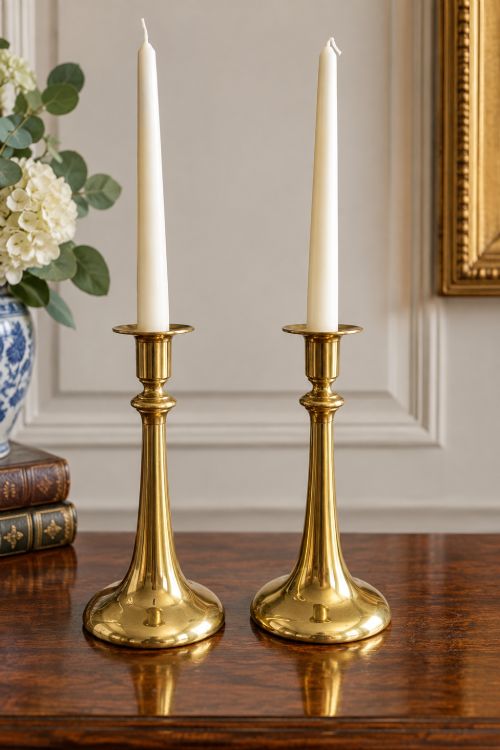
Edwardian brass candle stands bring period utility and warm metal tones to a room, spanning standard table pieces to tall floor designs.
Edwardian Brass Candle Stands
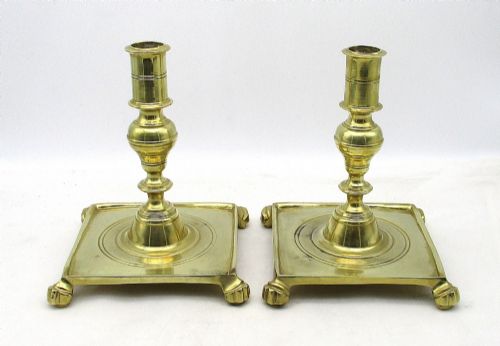
Edwardian brass candle stands encompass a diverse group of lighting supports designed for domestic or ecclesiastical use during the early twentieth century. When searching for Edwardian brass candle stands, a buyer encounters candlesticks, floor lamps, torchere stands, and adjustable students lights dating from the Victorian era through the nineteen twenties.
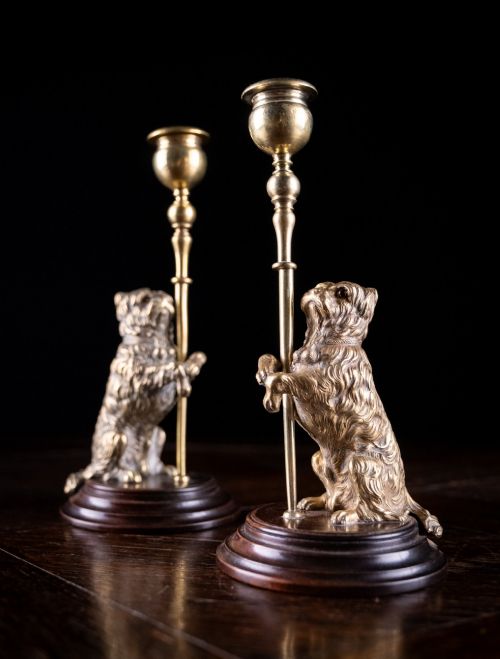
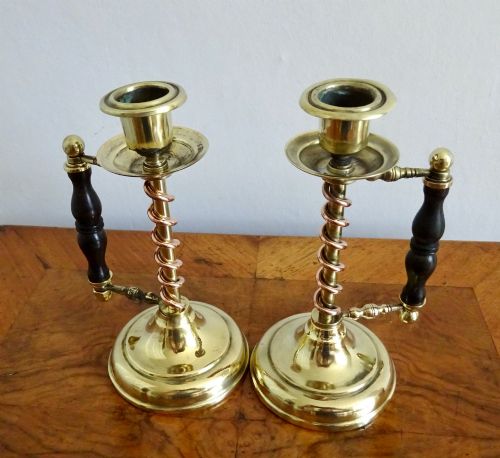
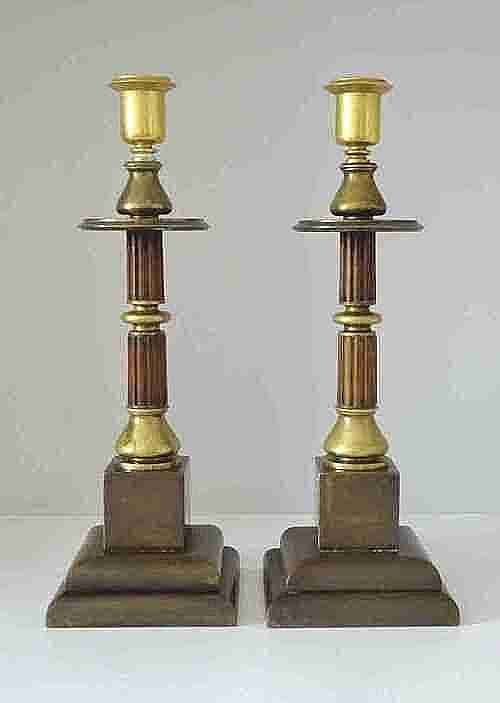
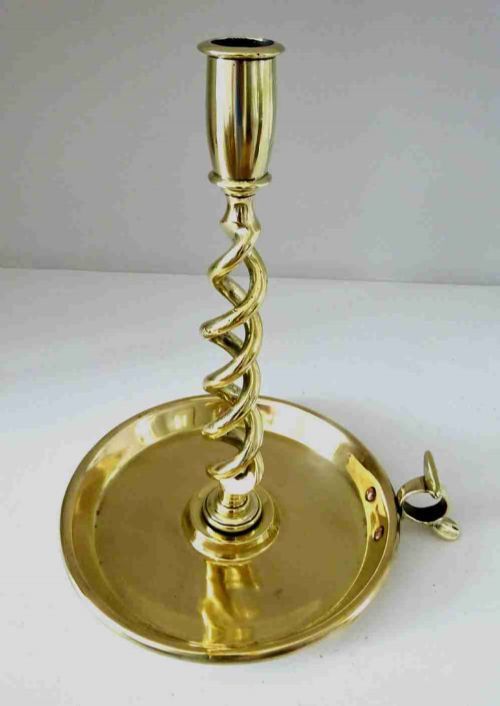
The materials paired with brass across these listings include oak, mahogany, copper, bronze, and teak, showing how makers combined timber stems with metal candle cups. Forms range from simple twisted shafts and chambersticks to novelty designs featuring dogs and specific period motifs.
How They Were Made
Metal components rely primarily on cast or turned brass, occasionally augmented with copper or bronze elements and gilt finishes. Turning techniques shape wooden components like oak and mahogany into barley twist or bobbin stems, anchored securely to fitted metal bases.
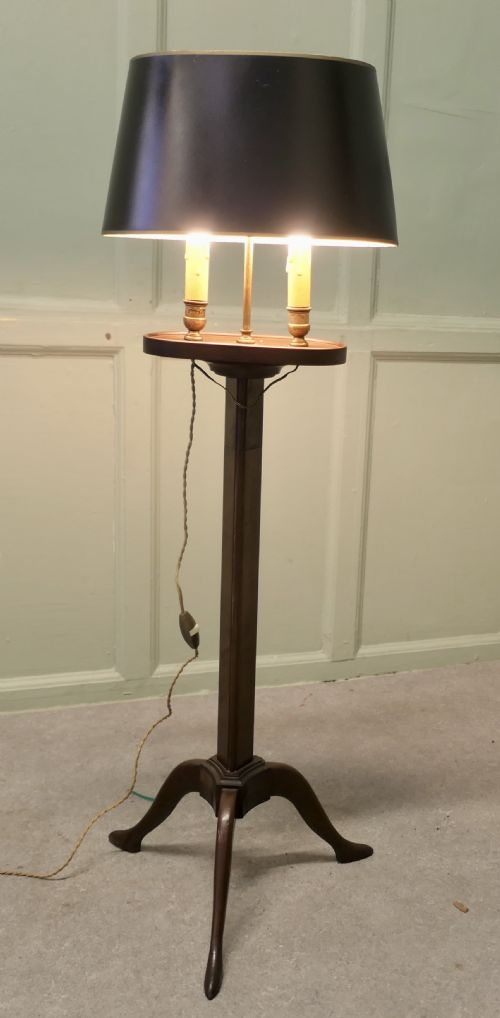
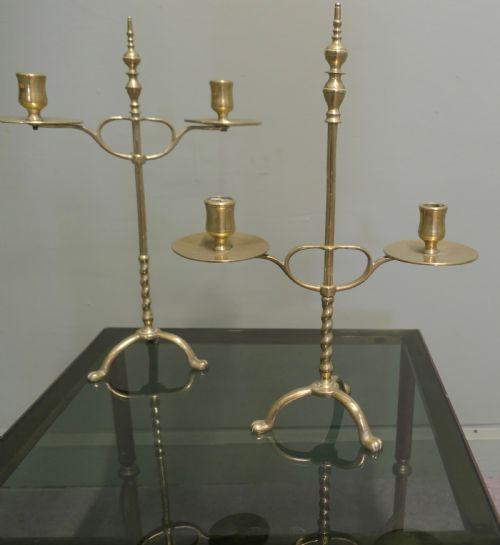
Makers integrated functional mechanics into adjustable student lights and bouillotte floor lamps, utilising sliding arms and twin candle sockets. Construction methods combine threaded metal joints, turned wood assembly, and weighted bases to provide stability.
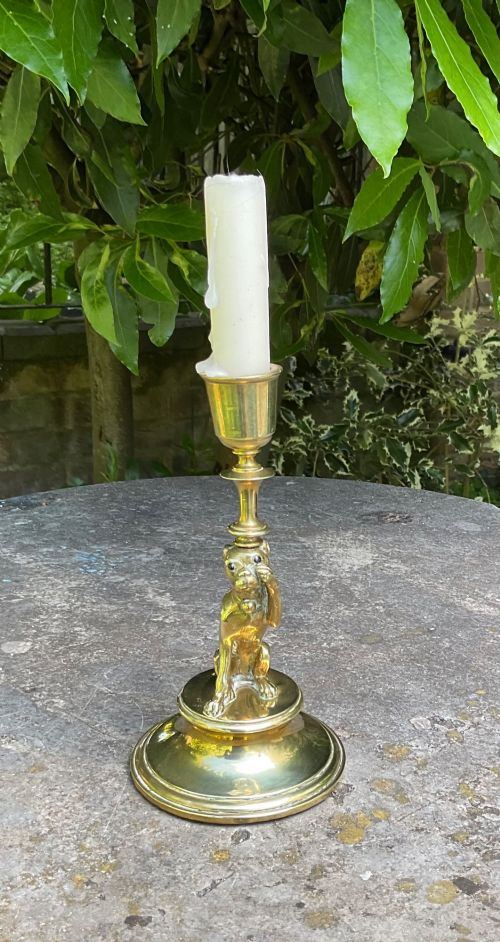
Pugs and terriers guard the candle flames in several Victorian and Edwardian novelty designs.
What Varies in Quality
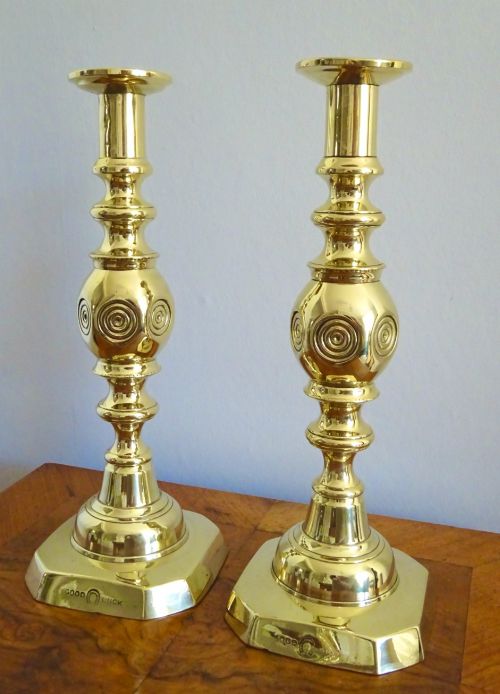
Quality rests in the precision of the turning and the substance of the metalwork, distinguishing heavy cast pieces from lighter stamped alternatives. Superior examples display crisp detail in Art Nouveau motifs, church castings, and novelty animal figures.
The integration of mixed materials reveals standard craftsmanship; tight joints between oak or mahogany shafts and brass fittings indicate superior maker execution. Proportions and weight distribution also dictate the calibre of floor lamps and tall candlesticks.
Frederick J Smith & Co·Wm Tonks & Sons·Abel Landry·T Thomason & Co
The Edwardian Brass Candle Stands Glossary
- Bouillotte lamp
- A metal desk or table lamp featuring an adjustable shade and multiple candle arms. It originates from card game traditions.
- Torchere stand
- A tall, slender floor stand designed to elevate a light source or candle. These often utilise turned timber columns.
- Chamberstick
- A low candleholder equipped with a handle and a saucer base for carrying wax lights through rooms. They were common before electric lighting.
- Barley twist
- A spiral turning technique applied to wood or metal shafts to create rhythmic, diagonal patterns. This style appears frequently in period supports.
- Candelabra
- A branched holder designed to carry multiple candles simultaneously from a single base. They provide increased illumination compared to single sticks.
Edwardian Brass Candle Stands: Frequently Asked Questions
How do I clean brass candle stands?
Wipe surfaces gently with a soft, dry cloth to remove dust without stripping the natural patina that accumulates over decades.
Avoid harsh chemical polishes unless necessary, as they can remove aged highlights and diminish the character of older metal.
Are these stands suitable for modern candles?
Most antique candle holders accommodate standard taper candles, though variations in socket diameters do occur across different historical periods.
A light sanding of the candle base or using small wax inserts helps secure slightly uneven or narrower tapers safely.
What is the difference between a candlestick and a torchere?
Candlesticks are typically smaller items designed for tables, desks, or mantelpieces, providing localized illumination within a room.
Torchere stands are tall floor-standing supports built to elevate candles or lamps well above floor level.
How can I tell an Edwardian piece from a Victorian one?
Edwardian designs often embrace lighter Arts and Crafts or early Art Nouveau influences, moving away from heavy ornamentation.
Victorian pieces tend to feature more robust proportions, Gothic Revival elements, or elaborate cast decoration.