


Edwardian Boxed Game
An Edwardian boxed game brings the social parlour pursuits of the early twentieth century into the modern room.
Edwardian Boxed Game
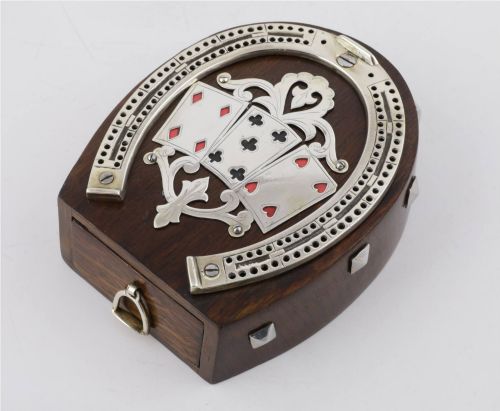
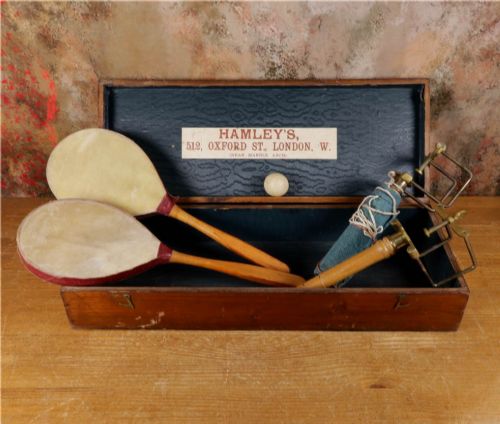
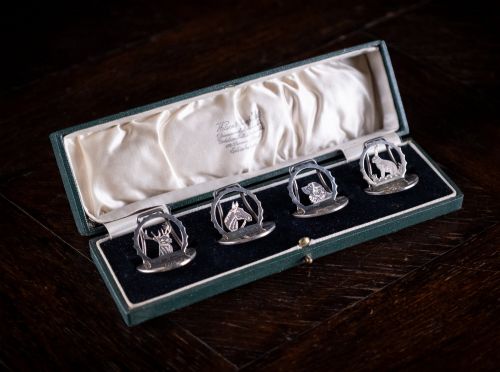
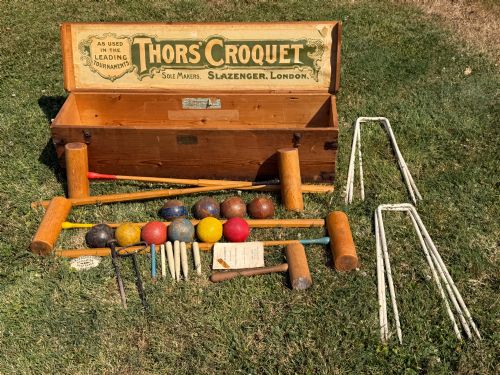
When searching for an edwardian boxed game, buyers encounter portable entertainments designed for the drawing room and parlour. These pieces encompass fitted compendiums, card boxes, and outdoor croquet sets housed in their original containers.
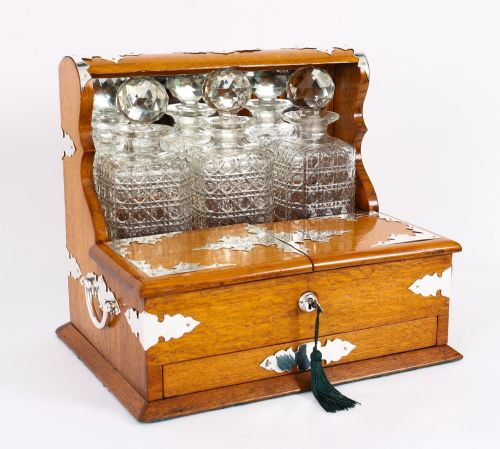
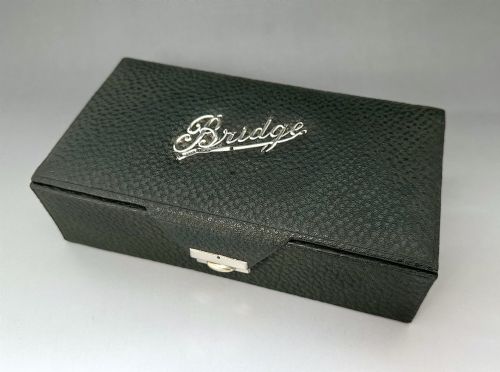
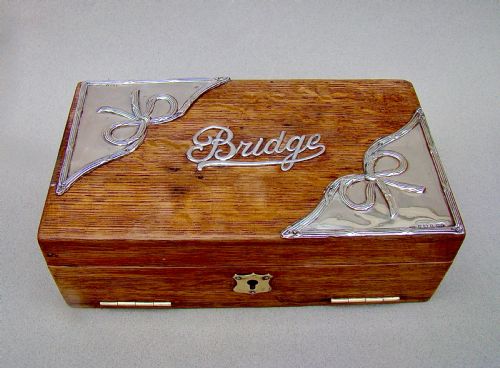
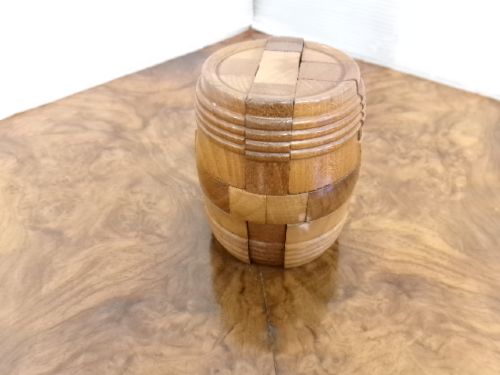
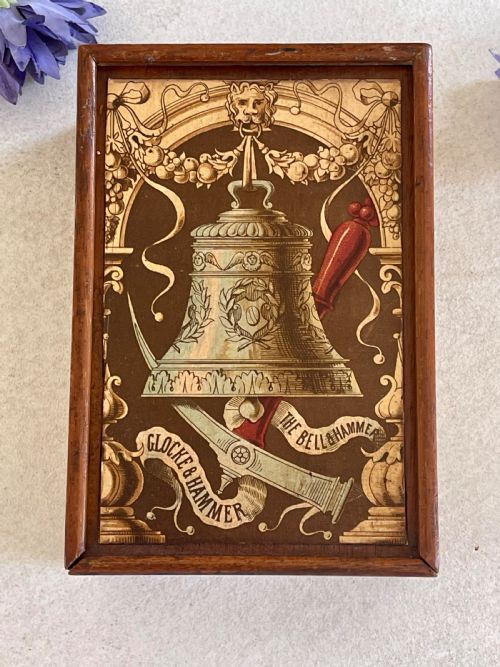
The objects span the Edwardian period alongside late Victorian and early twentieth-century examples. Common forms include multi-tier games compendiums, table tennis sets, and specialised boxes for bridge or patience.
Completness defines the surviving pieces found on this page. Many retain their original counters, boards, and fitted wooden compartments designed to keep every component secure.
Materials and construction
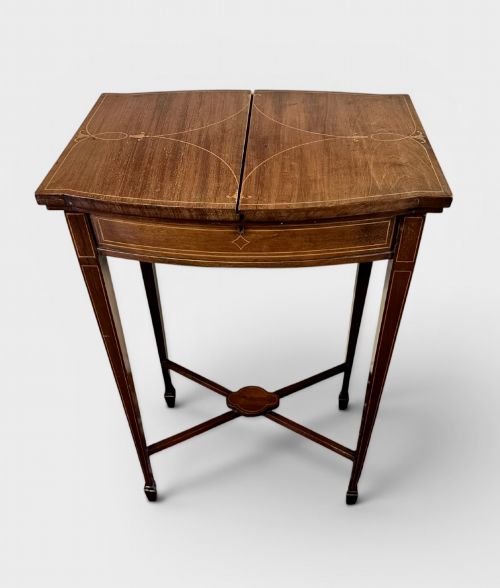
Cabinetmakers utilised timbers such as oak, mahogany, satinwood, and walnut for the exterior cases. Inlays of lighter woods and brass mounts frequently accent the corners and lids of better examples.
Internal components combine turned boxwood and ebony for chess and draughts sets alongside carved bone, leather, and silver mountings. Fitted interiors rely on precision joinery to separate cards, counters, and dice within a single compact space.
Period origins span from the late nineteenth century through the Edwardian era and into the Art Deco years of the 1920s.
Assessing quality and craftsmanship
Superior examples distinguish themselves through the selection of figured timber veneers and the presence of hallmarked sterling silver mounts. The execution of internal compartments and the survival of original markers or printed instructions elevate a piece.
Construction details such as dovetailed box corners and heavy, weighted chess pieces separate standard production from workshop pieces commissioned by notable retailers and makers.
Jaques & Hamleys·Slazenger·Levi & Salaman·A.W. Gamage·F.H. Ayres Ltd·British Chess Company
The Edwardian Boxed Game Glossary
- Compendium
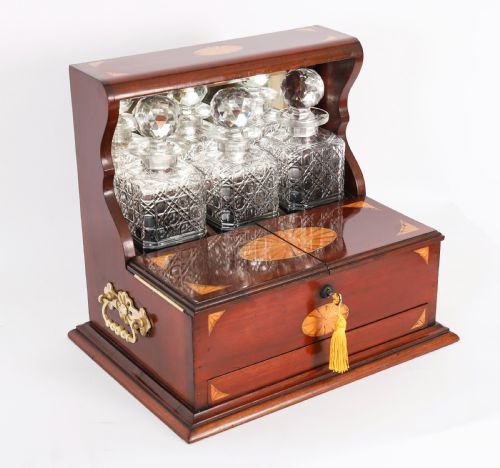
- A fitted box containing multiple distinct games such as chess, draughts, and backgammon. These multi-tier sets usually feature removable trays for the various playing pieces.
- Tantalus
- A locking wooden frame holding decanters that prevents access without a key. They frequently appear combined with games compendiums in large oak or mahogany cases.
- Staunton
- The standard design of chess pieces introduced in the mid-nineteenth century. Characterised by heavily weighted bases and clear, distinct forms for each piece type.
- Marquetry
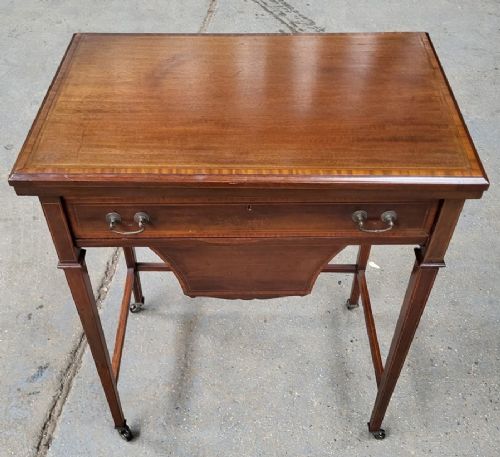
- Decorative woodwork where different coloured veneers form intricate patterns on the surface. Commonly applied to the lids of work tables and game boxes.
- Patience
- A card game played by a single person. Boxes designated for this pursuit are compact and fitted specifically for one deck of cards.
Edwardian Boxed Game: Frequently Asked Questions
What is an edwardian boxed game?
An edwardian boxed game is a portable pastime housed in a dedicated wooden container, created for household entertainment during the early 1900s.
These items range from simple card boxes with sterling silver mounts to large oak compendiums containing multiple boards and gaming pieces.
How were these games used?
Families and guests utilised these sets for evening parlour entertainment and social gatherings in the home. They provided structured amusement through card games, board games, and outdoor lawn pastimes.
After use, all components returned to their specific slots and trays within the fitted box for tidy storage.
How do I identify an edwardian piece?
Edwardian items typically display lighter timbers like satinwood and blonde oak, contrasting with the heavier, dark rosewoods of the Victorian era. Silver mounts often carry hallmarks dating to the early twentieth century.
Stylistic cues also point to this era through clean lines and restrained inlay work compared to elaborate Victorian ornamentation.
Are original pieces usually complete?
Many surviving examples retain their original internal fittings, instruction booklets, and playing pieces. Complete sets include all counters, dice, and markers originally supplied by the maker.
Checking the interior partitions helps confirm whether the compendium retains its full complement of games.