
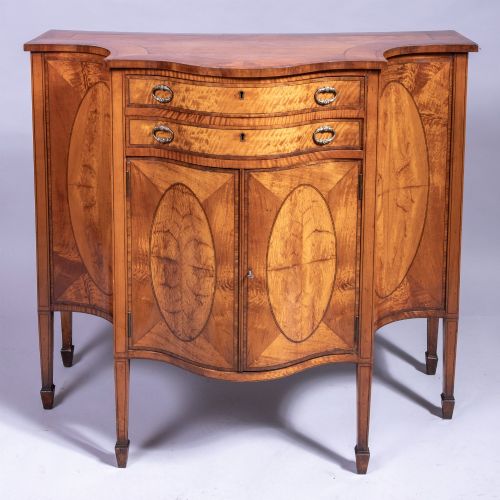


Edwardian Bowfront Side Cabinet
An Edwardian bowfront side cabinet brings elegant curved storage to a room, combining practical proportions with refined period detail.
Edwardian Bowfront Side Cabinet
An edwardian bowfront side cabinet is a refined case piece designed for domestic storage and display, characterised by its gently curved front. These cabinets appear across several periods including the Edwardian era, Victorian period, and Georgian styles, reflecting enduring popularity for curved case furniture.
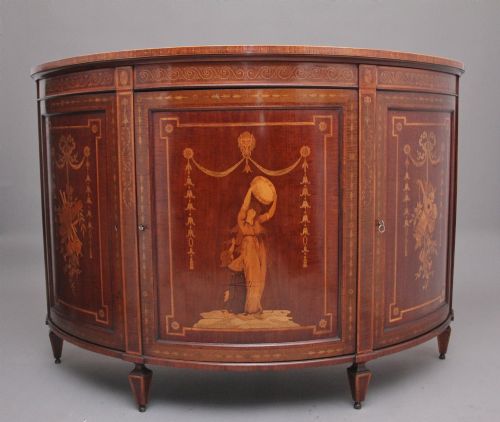
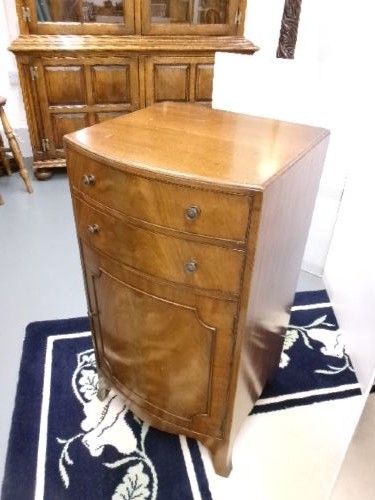
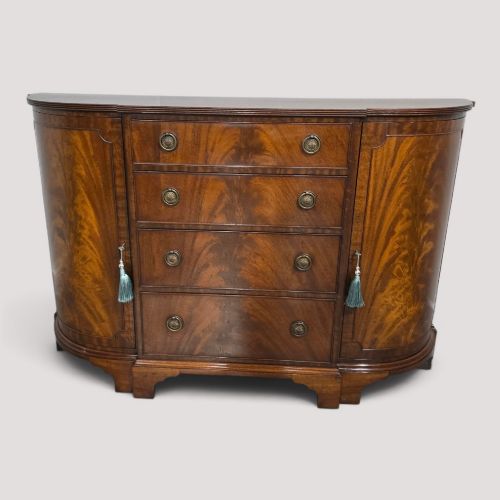
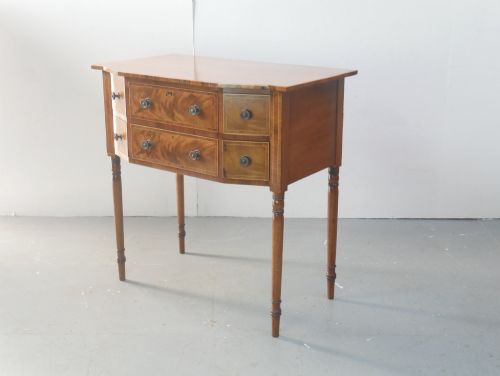
The forms vary from compact bedside cupboards and neat side cabinets to larger bowed sideboards and demi-lune cabinets. Most examples seen here date from the Edwardian period or the late nineteenth century, often following earlier Sheraton revival and Adam styles.
Makers utilised classic proportions to ensure these cabinets fitted neatly into dining rooms, hallways, and drawing rooms. The combination of cupboard space and drawer storage makes them particularly versatile for modern interiors.
How They Were Made
Cabinet makers relied primarily on solid mahogany and satinwood veneers, applying careful construction methods to shape the curved bows. Timber selection played a central role, with contrasting boxwood and rosewood used for fine stringing and inlay.
Decoration often included marquetry, hand-painted enamel details, and satinwood crossbanding to highlight the curved drawer fronts and cabinet doors. Brass hardware, such as handles and escutcheons, completed the construction of these refined pieces.
Periods represented span from the Georgian era through Victorian times to the Edwardian period.
What Varies in Quality
The distinction between standard and superior pieces rests on the crispness of the inlay and the subtlety of the timber grain. Finer cabinets display precise marquetry work and harmonious matching of satinwood and mahogany veneers across the curved surfaces.
Proportion and execution define the better examples, where the bow front flows smoothly without distortion in the doors or drawers. Original brass fittings and well-fitted interiors also separate ordinary utility pieces from finer decorative works.
The Edwardian Bowfront Side Cabinet Glossary
- Bowfront
- A convex curving front profile characteristic of certain cabinets and sideboards. This shape softens the corners of a room and requires advanced cabinet-making skill.
- Crossbanding
- A strip of veneer applied perpendicularly to the grain of the main surface around the border. It creates a neat framing effect on drawer fronts and tabletops.
- Marquetry
- The art of applying decorative pieces of veneer to a structure to form intricate patterns or pictures. Craftsmen used various coloured woods to achieve detailed floral or geometric designs.
- Satinwood
- A lustrous, yellow-toned timber prized for fine furniture decoration. It was frequently used in revival periods for contrasting veneers and painted panels.
- Sheraton Revival
- A late nineteenth and early twentieth century design movement inspired by the furniture of George Sheraton. It is known for delicate proportions, satinwood, and classical ornamentation.
Edwardian Bowfront Side Cabinet: Frequently Asked Questions
What is an edwardian bowfront side cabinet used for?
These cabinets serve as versatile storage furniture in living rooms, hallways, or dining areas, offering surface space for display alongside enclosed cupboards.
Their shallow curved profile allows them to fit into tighter spaces than traditional rectangular sideboards while still holding tableware, linens, or general household items.
How do I identify a sheraton revival piece?
Sheraton revival pieces typically feature light satinwood timbers, delicate painted decorations, and classical motifs such as urns and swags.
They draw inspiration from eighteenth-century designs but were manufactured around the late nineteenth and early twentieth centuries with distinctively crisp inlay.
Are bowfront cabinets suitable for small rooms?
The curved front profile reduces the visual bulk of the cabinet, helping it occupy less apparent space in a compact room.
Smaller variations, including bedside formats and neat side cabinets, provide practical storage without overwhelming limited floor areas.
What is the difference between a side cabinet and a sideboard?
Sideboards are traditionally longer serving pieces intended for dining rooms to hold large platters and cutlery.
Side cabinets are generally more compact general-purpose storage units designed to fit into various domestic rooms for display and storage.