

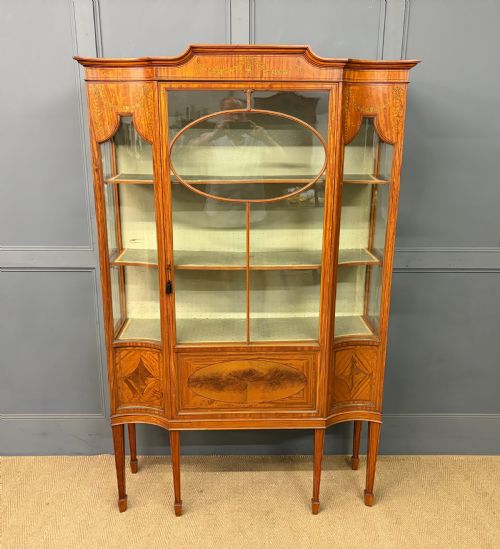
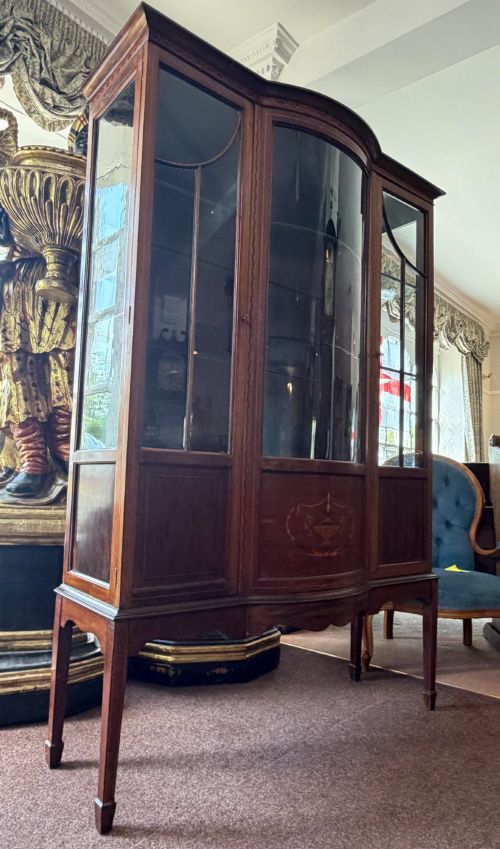
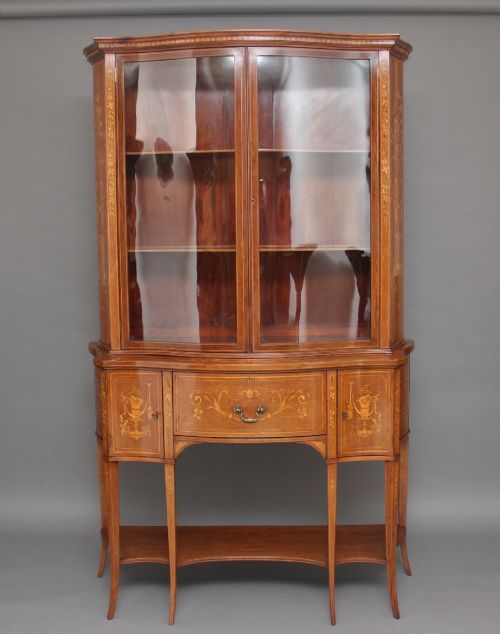
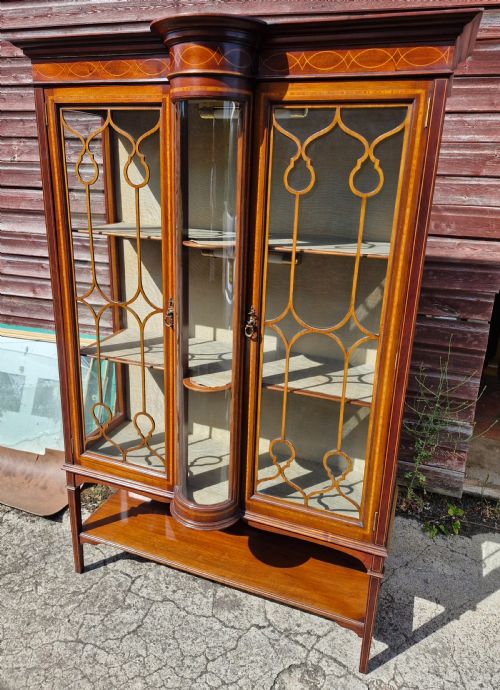
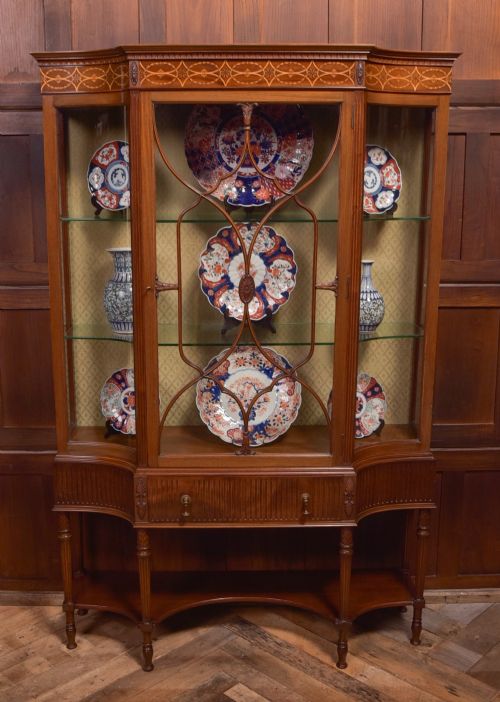
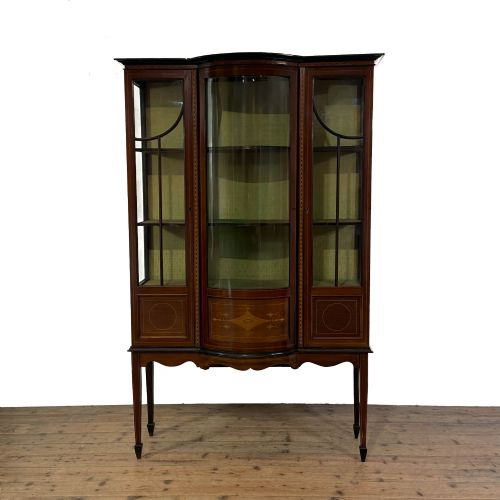
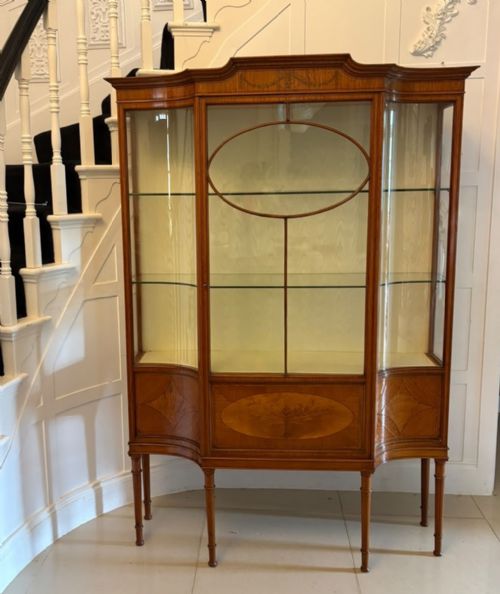
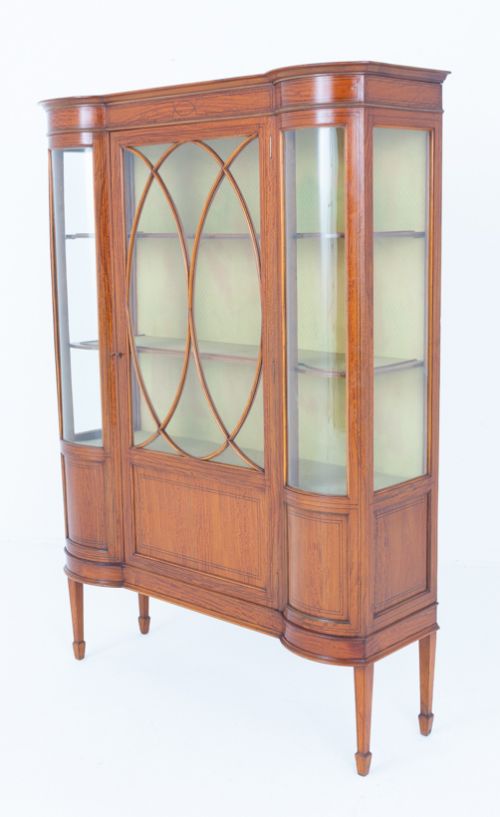


Edwardian Bow Front Vitrine
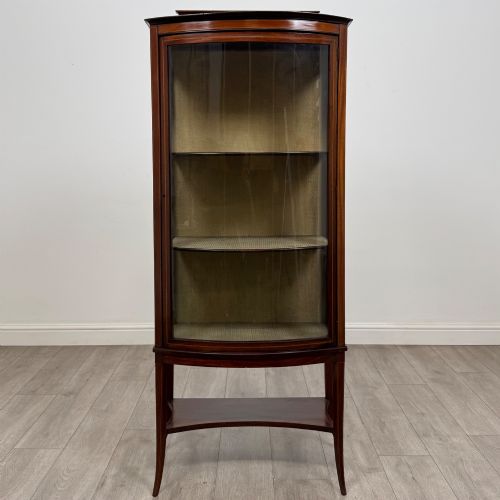
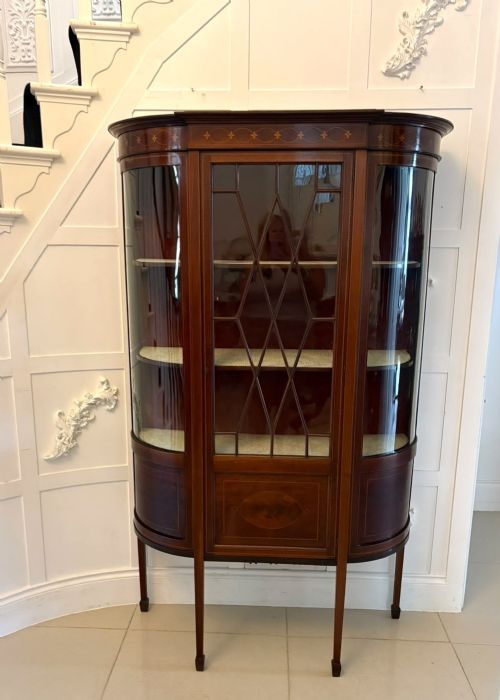
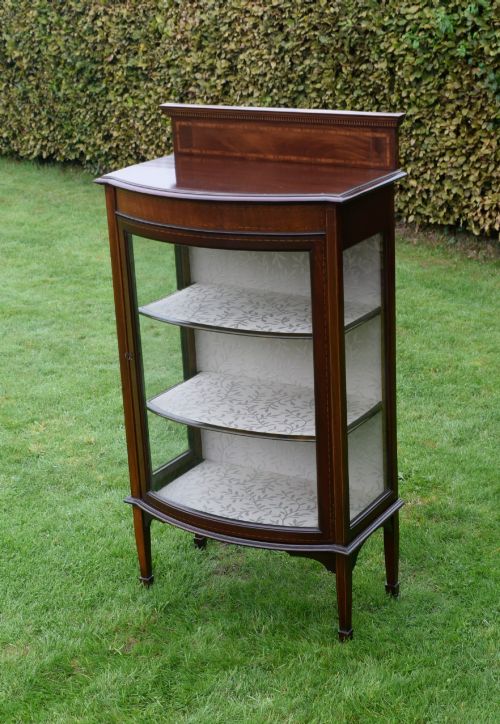
An Edwardian bow front vitrine brings delicate display space to a room, using curved glass to catch the light from every angle.
How they were made
Cabinet makers constructed these pieces using solid timbers and veneers of mahogany and satinwood, applying delicate inlay work in contrasting woods like fruitwood. Panels of curved glass required specialist glass-bending techniques to fit the bowed doors accurately. Brass hardware, mirror backs, and fabric linings completed the internal fittings of domestic vitrines.
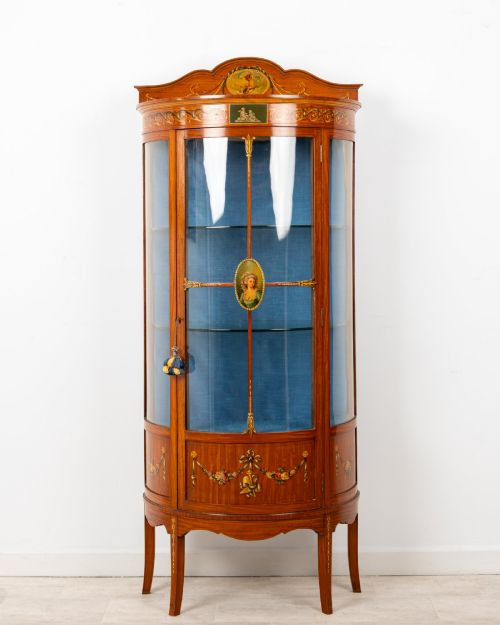
Inlay and painted decoration provided surface detail without altering the structural form of the cabinet. Carcass work followed traditional cabinet-making methods, utilising frame and panel construction to house the extensive glazing safely.
What varies in quality
Quality reveals itself in the crispness of the timber inlay and the handling of the curved glass doors. Finer cabinets display meticulous attention to grain matching and subtle painted details rather than heavy, uniform surface decoration.
The choice of primary wood sets a baseline, with satinwood and burr walnut typically signalling a more ambitious commission than standard mahogany. Structural integrity in the glazed door frames and the delicacy of internal glass shelves further distinguish exceptional pieces from simpler utilitarian models.
Edwardian Bow Front Vitrine Retail Price Guide 2026
Typical asking prices for edwardian bow front vitrine among the pieces listed under this phrase on Sellingantiques today, from the lower quarter to the upper quarter. They describe what is for sale here now, not the wider market.
One remarkably honest cabinet arrived bearing vintage sign-written perfume brand names from its former life as a shop display.
Maple and Co
The Edwardian Bow Front Vitrine Glossary
- Vitrine
- A glass-fronted cabinet designed specifically for displaying porcelain, curiosities, or fine objects. The term originates from the French word for glass.
- Bow front
- A convex curved front profile that projects outward in a smooth sweep. This shape softens the corners of a room and maximises internal viewing angles.
- Sheraton Revival
- A late nineteenth and early twentieth century design movement that reinterpreted the light, neoclassical furniture styles of Thomas Sheraton. Pieces often feature satinwood, delicate inlay, and tapered legs.
- Inlay
- A decorative technique where contrasting woods, metals, or shells are inserted into recesses in the primary wood surface to create patterns. In these cabinets, fruitwood and satinwood stringing are common.
- Bijouterie
- A specialised shallow display case designed for small valuables, jewellery, or trinkets. These tables or cabinets often feature glass lids and velvet-lined interiors.
Edwardian Bow Front Vitrine: Frequently Asked Questions
What is an edwardian bow front vitrine used for?
These cabinets were originally built to display prized collections of ceramics, glassware, and small ornaments behind protective glass.
Today, they serve the same purpose in a home setting, keeping dust away from delicate items while allowing maximum visibility.
How do I tell an edwardian piece from a victorian one?
Edwardian examples tend to exhibit lighter timber tones, finer stringing, and a generally airier aesthetic influenced by neoclassical revival styles.
Late Victorian cabinets often display heavier proportions, darker mahogany finishes, and more robust structural elements.
Are these cabinets suitable for small rooms?
The curved front profile reduces the sharp angles of a standard rectangular box, helping the cabinet fit more gracefully into corners or tight spaces.
Additionally, the glass panels and mirrored backs bounce light around a room, preventing the wooden furniture from feeling overly heavy.
How should I clean the glass shelves?
Most interiors feature removable glass shelves that can be taken out carefully for thorough cleaning outside the cabinet frame.
Use a mild glass cleaner applied to a cloth rather than sprayed directly, ensuring moisture does not seep into the wooden joints or fabric linings.