


Edwardian Bedside Stands
Edwardian bedside stands offer compact storage and display beside the bed, crafted from rich timbers during a period of refined domestic design.
Edwardian Bedside Stands
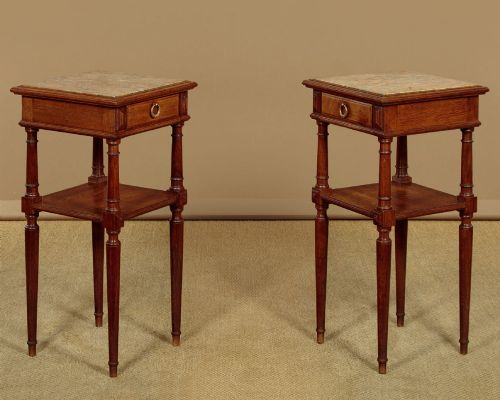
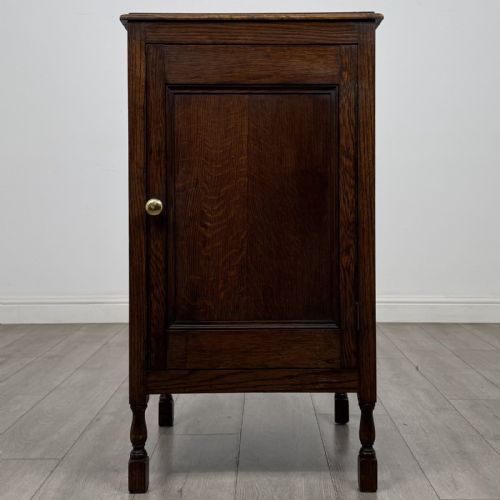
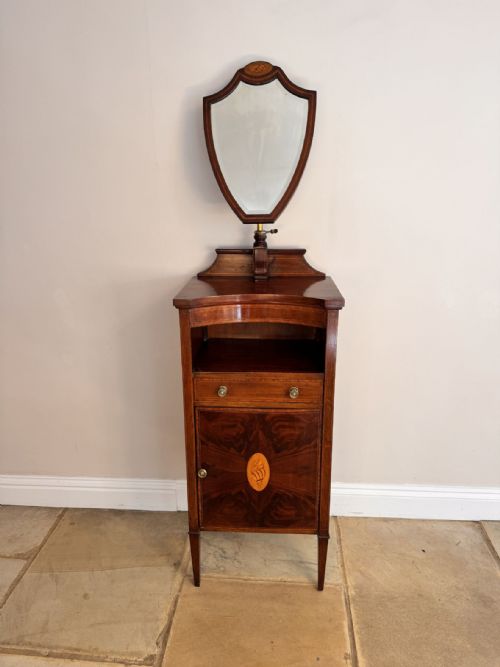
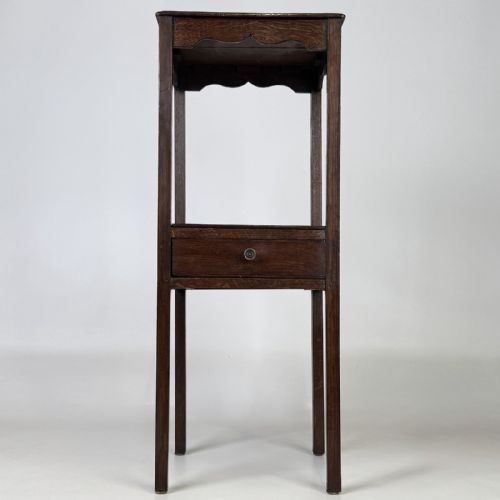
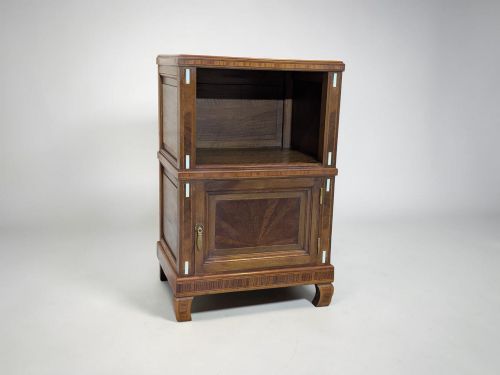
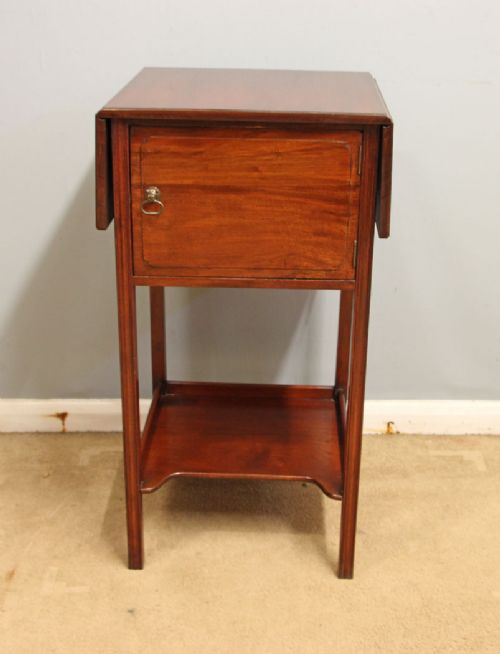
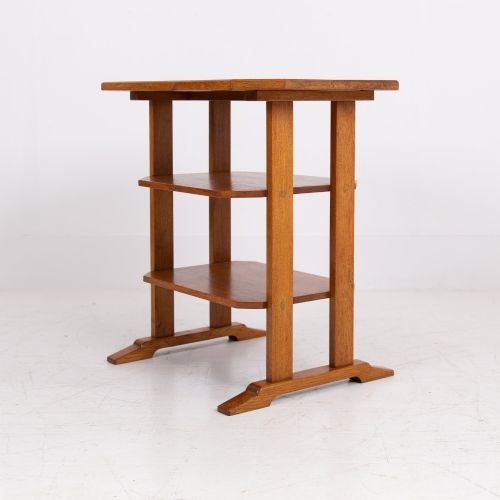
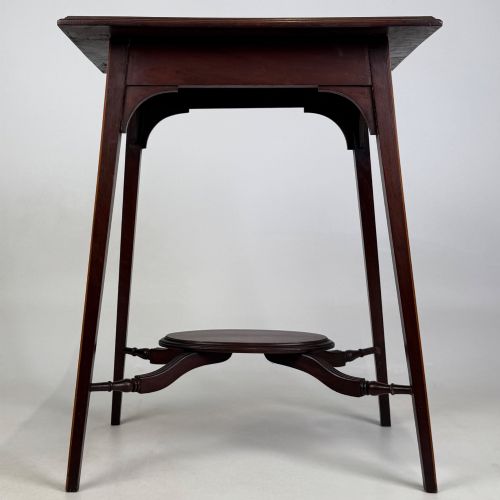
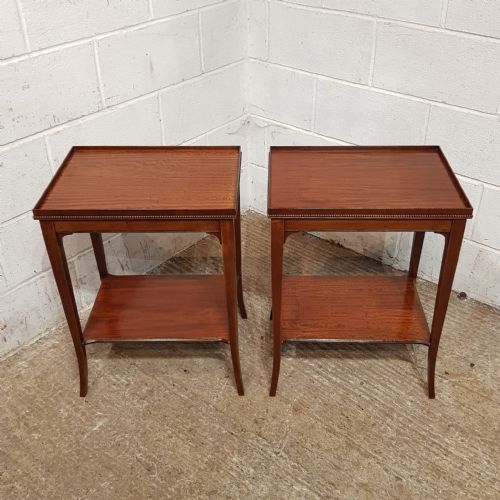
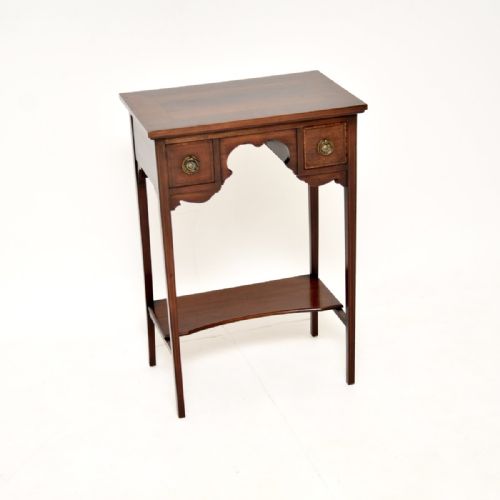
Edwardian bedside stands are small tables and cabinets designed to sit beside a bed, holding water jugs, timepieces or lamps within easy reach. When you search for Edwardian bedside stands, you encounter pieces that range from open-shelf side tables to enclosed bedside cabinets with cupboards and lower shelves.
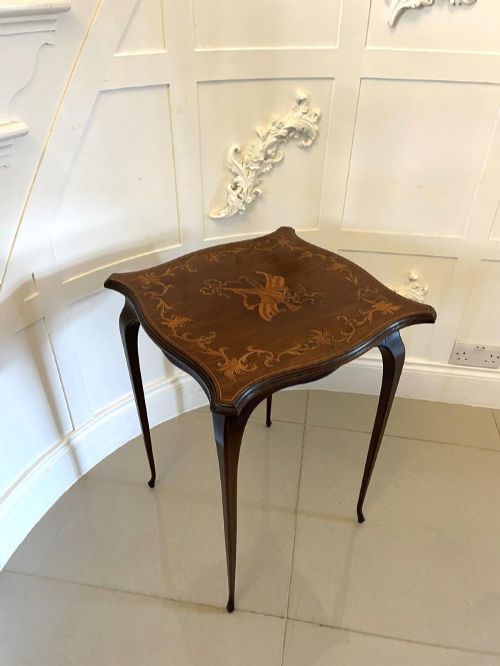
While the pieces belong broadly to the Edwardian period and the early twentieth century, the selection includes designs spanning from the Victorian era through to Art Deco and the Arts and Crafts movement. Mahogany, oak and walnut form the primary structure of these stands, often decorated with inlay or marquetry.
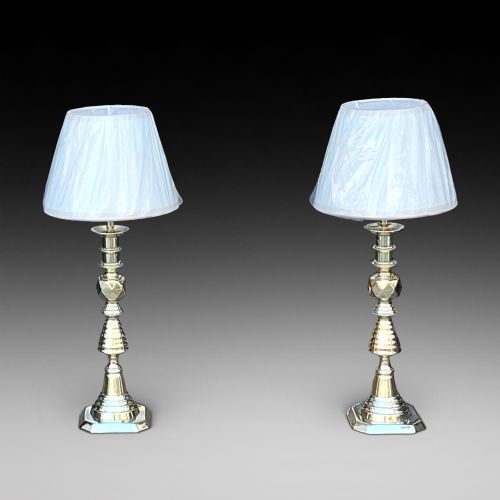
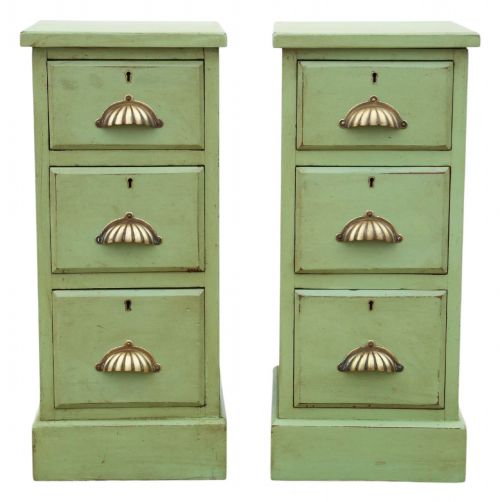
The practical needs of the bedroom shaped these objects into various forms, including nightstands, lamp tables and small cupboards. Buyers frequently find pairs of matching tables alongside singular pieces adapted from washstands or occasional tables.
Materials and Construction
Cabinet makers utilised solid timbers alongside veneers, relying heavily on mahogany, oak and walnut to build the foundational frames of bedside stands. Satinwood and boxwood stringing frequently provide delicate contrast through linear inlay upon the drawer fronts and tabletops.
Brass fittings, including handles, gallery rails and hinges, offer both structural integrity and decorative detail. Lacquer, green paint and French polish complete the surfaces, protecting the wood while accentuating the natural grain and marquetry patterns.
Edwardian Bedside Stands Retail Price Guide 2026
Typical asking prices for edwardian bedside stands among the pieces listed under this phrase on Sellingantiques today, from the lower quarter to the upper quarter. They describe what is for sale here now, not the wider market.
Several stands double as secret pocket watch holders, keeping ticking timepieces safely suspended by the bedside throughout the night.
Craftsmanship and Proportion
The distinction between standard utility pieces and finer examples rests in the precision of the cabinet work and the selection of timber. Finer stands display carefully matched wood grains, intricate marquetry inlay and well-fitted doors or drawers that operate smoothly within their frames.
Proportion and integrity also determine quality, as original surfaces and uncompromised structural forms command greater appreciation. Pieces retaining their matching pairs, original brassware and authentic polish demonstrate the high standard expected by discerning collectors.
Flashman & Co·Mappin & Webb
The Edwardian Bedside Stands Glossary
- Marquetry
- Decorative veneer applied to furniture in patterns using different woods, metals or shells. This technique creates pictorial or geometric designs on tabletops and cabinet doors.
- Inlay
- Inserting contrasting strips of wood, such as boxwood or satinwood, into recesses made in the base timber. It defines the borders and panels of Edwardian cabinet work.
- Occasional table
- A small, versatile table designed for general use around a room rather than a single specific purpose. They often serve as bedside surfaces or lamp stands.
- Washstand
- A piece of furniture originally designed to hold a basin and ewer for washing. Many examples from earlier periods are later converted into bedside storage units.
Edwardian Bedside Stands: Frequently Asked Questions
What is an Edwardian bedside stand?
An Edwardian bedside stand is a small table or cabinet produced during the early twentieth century to hold personal items next to a bed. They provide surface space for lamps and clocks, often featuring lower shelves or enclosed cupboards.
These pieces reflect the domestic priorities of the era, combining practical utility with refined cabinet making in timbers like mahogany and oak.
How do I identify Edwardian furniture?
Edwardian furniture typically displays lighter proportions than heavy Victorian pieces, often utilising mahogany or oak with delicate boxwood and satinwood stringing. The design aesthetic draws upon earlier Georgian and Sheraton revivals alongside simpler Arts and Crafts influences.
Examining the construction methods, interior secondary timbers and overall decorative restraint helps separate Edwardian pieces from nineteenth-century counterparts.
Can I find matching pairs of stands?
Matching pairs do appear among the listings, though single tables and cabinets are far more common due to the dispersal of bedroom suites over time. Pairs are particularly sought after for balancing the layout of a bedroom on either side of the bed.
Buyers searching for matching sets often look through Edwardian and Art Deco offerings where twin nightstands or lamp cabinets were produced together.
How were these stands used originally?
Bedside stands served as functional surfaces for nighttime necessities before electric lighting was common in every home. They held chambersticks, pocket watch holders, water carafes and reading materials within arm's reach.
Enclosed cabinet versions also stored chamber pots or personal belongings, keeping the bedroom tidy and organised.