



.jpg)
Edwardian Beach Scene
These edwardian beach scene works capture coastal life through oils and watercolours, offering a direct window into early coastal leisure and maritime work.
Edwardian Beach Scene
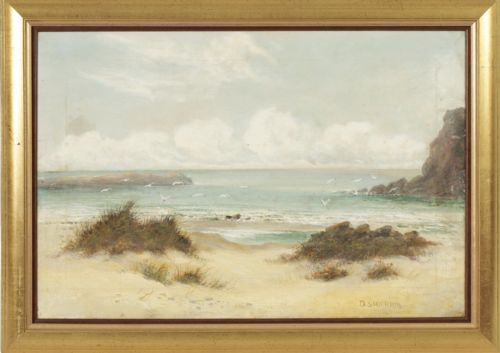
An edwardian beach scene typically takes the form of an oil painting on canvas or a watercolour on paper, capturing coastal subjects from the nineteenth and early twentieth centuries. The selection spans works attributed to British Impressionism, Impressionism, Victorian Marine, and nineteenth century British realism.
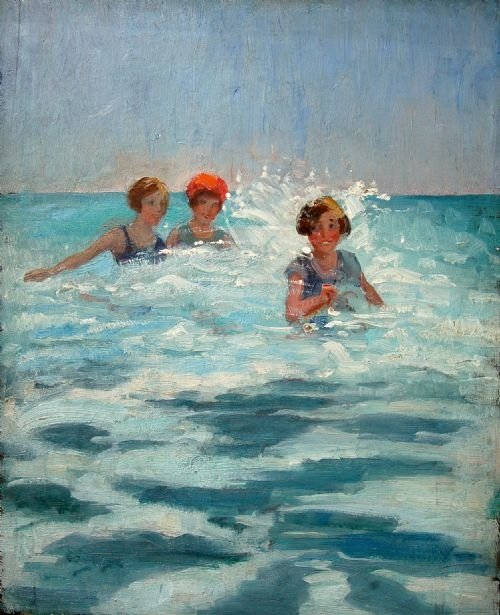
Buyers will encounter coastal landscapes, marine views, and depictions of figures by the sea, including shrimp net fishers and children playing in the surf. The dates stretch from the Victorian era through 1900, 1920, and 1930.
How they were made
Artists painted using oil paint on canvas or watercolour pigment on paper, often mounted within wood or gilded wood frames. The handling of paint relies on impressionist and realist techniques to render light on water and sand.
The physical support consists of stretched canvas or paper sheets, framed to protect the delicate pigments and painted surfaces from environmental damage.
A shrimp net makes an appearance by the sea, reminding us that Victorian and Edwardian beach days involved serious crustacean pursuit.
What varies in quality
Quality rests in the handling of light and atmosphere by named painters such as James Webb, Ernest F. Hill, William Shayer, William Greaves, Daniel Sherrin, Harry John Pearson, and George Hamilton Constantine, compared to anonymous or less assured hands.
The depth of composition and the fidelity of the coastal atmosphere distinguish finer examples within the broader categories of British Impressionism and nineteenth century British realism.
George Hamilton Constantine·James Webb·Ernest F Hill·William Shayer·William Greaves·Daniel Sherrin·Harry John Pearson
The Edwardian Beach Scene Glossary
- British Impressionism
- A painting style focusing on light and everyday subjects, visible in coastal works from the period. It reflects French influences adapted by British artists.
- Oil on Canvas
- Pigment mixed with drying oil applied to a woven fabric surface stretched over a wooden frame. This medium allows for rich texture and deep colour layering.
- Watercolour on Paper
- Pigment suspended in a water-based solution applied to paper supports. It creates transparent washes that capture coastal light effectively.
- Victorian Marine
- A genre dedicated to seascapes, coastal views, and maritime activity popular during the nineteenth century. These works often emphasise the mood of the sea.
Edwardian Beach Scene: Frequently Asked Questions
What periods do these paintings cover?
The works span from the nineteenth century and the Victorian era into the early decades of the twentieth century, specifically covering 1900, 1920, and 1930.
This broad chronological range shows the evolution of coastal painting from traditional marine scenes towards impressionist treatments of light and leisure.
What mediums are used in these artworks?
Artists utilised oil paint on canvas and watercolour pigment on paper to create these coastal scenes. These materials were frequently housed in wood or gilded wood frames.
The choice of medium influences the texture and transparency of the finished piece, with oils offering heavier impasto and watercolours providing luminous washes.
Who are the artists behind these pieces?
Identified creators in the selection include James Webb, Ernest F. Hill, William Shayer, William Greaves, Daniel Sherrin, Harry John Pearson, and George Hamilton Constantine.
Several pieces also come from anonymous hands working within nineteenth century British realism and British Impressionism.
What subjects appear in these beach scenes?
The compositions feature coastal landscapes, marine views, fishing boats, and figures engaged in seaside activities. Examples include children playing in the surf and a young girl with a shrimp net.
These subjects document both the working life of the coast and the growing popularity of seaside leisure during the era.