




Edwardian Barrel Back Chairs
Edwardian barrel back chairs bring deep-seated comfort and enclosing curves to a room, offering the sturdy elegance collectors seek.
Edwardian Barrel Back Chairs
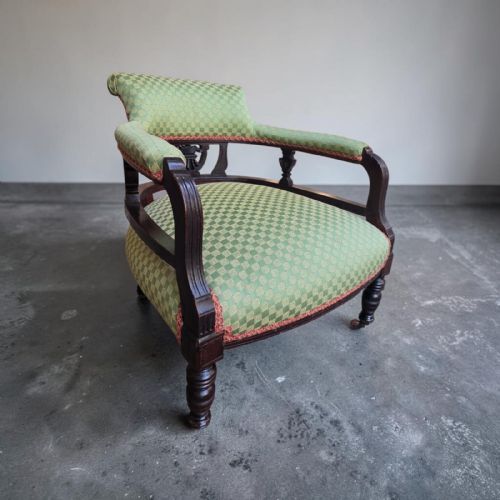
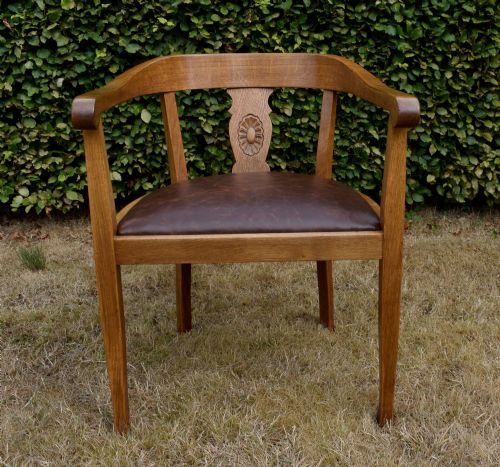
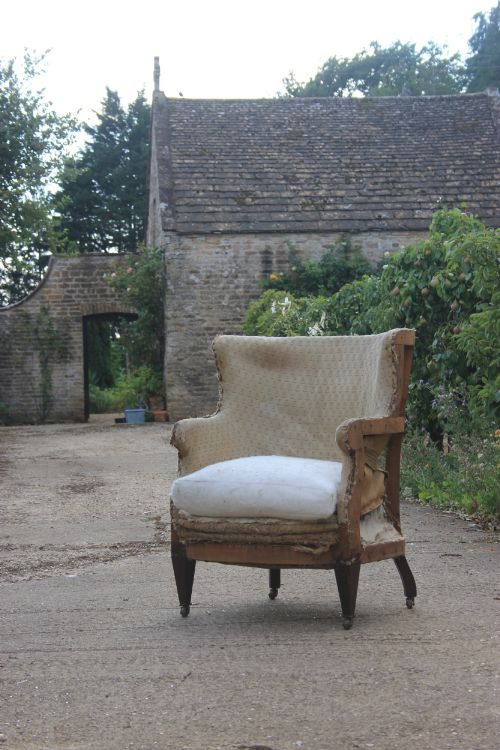
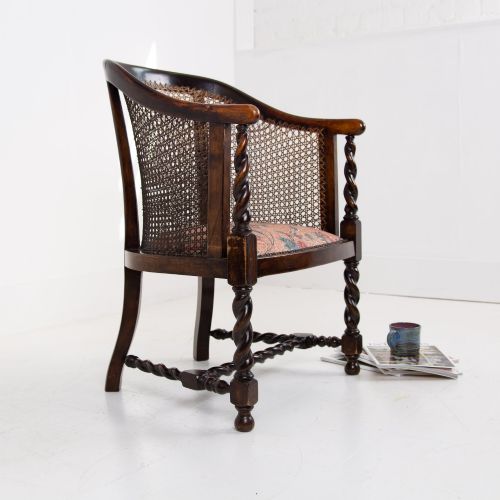
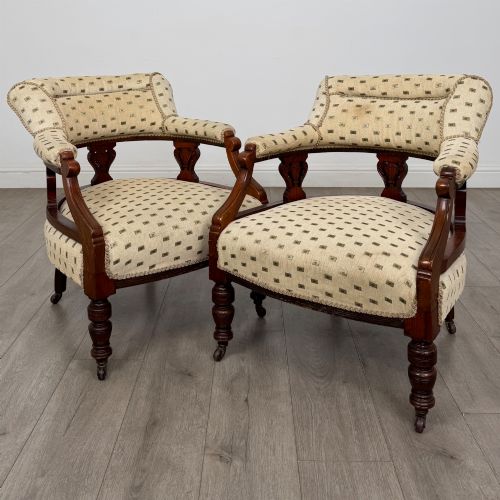
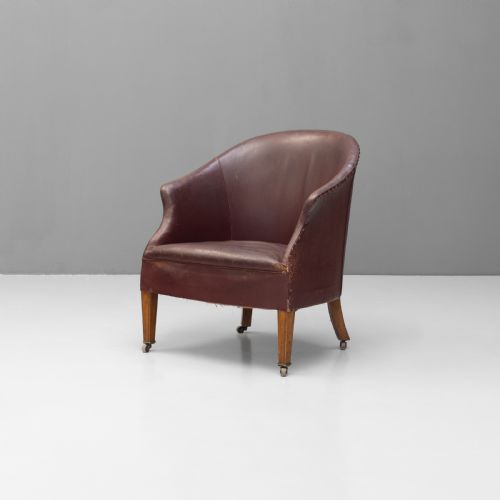
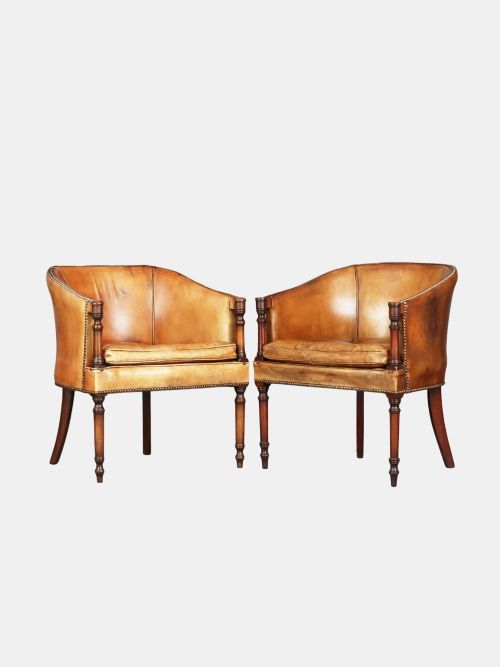
When you search for edwardian barrel back chairs, you encounter seating distinguished by a curved, semi-circular backrest that wraps seamlessly into the armrests. These pieces appear primarily from the Edwardian period and the early twentieth century, alongside Victorian and nineteenth-century antecedents.
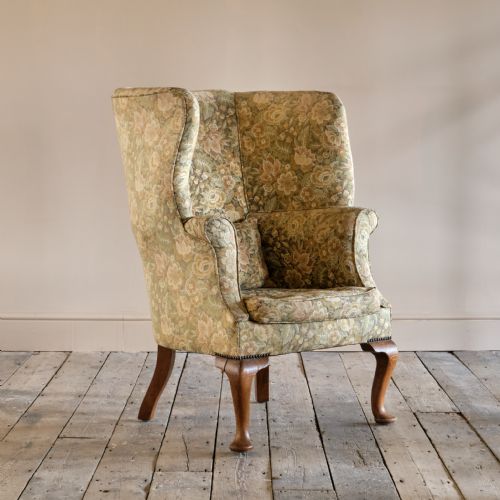
The selections available include single armchairs, matching pairs, desk chairs, and occasional settees. Mahogany and oak form the predominant wooden frames, complemented by upholstery in leather, velvet, fabric, and cane panels.
Stylistic influences span widely across the listings, taking in Jacobean Revival, Queen Anne Revival, Louis XVI design, French Revival, and Arts and Crafts examples. Walnut and ebonised finishes also surface among the armchairs and tub chairs.
Materials and construction methods
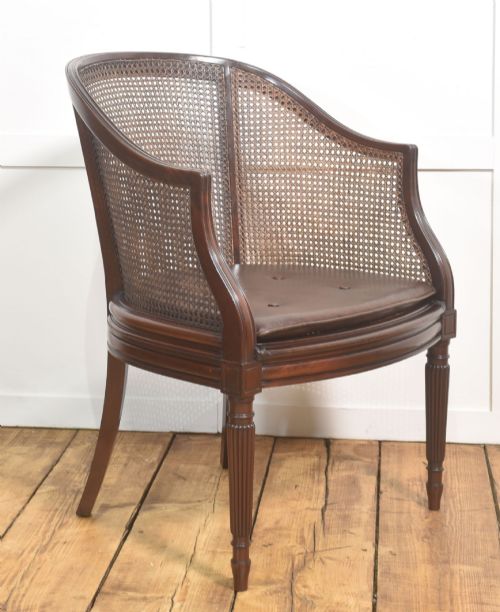
Makers constructed the curved frames of these chairs using solid timbers such as mahogany, oak, and walnut, often shaped to form the continuous tub or barrel back. Brass details appear on select pieces, whilst cane work provides lightweight side or back panels.
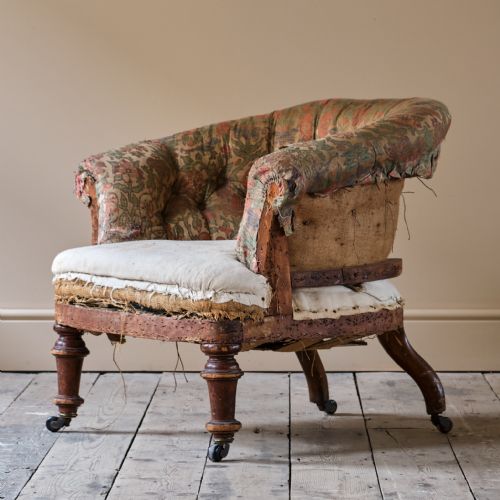
Upholstery techniques involved sprung seats and padded backs covered in leather, velvet, or woven fabric. Showwood frames display polished mahogany or ebonised surfaces, sometimes accented with inlay.
Edwardian Barrel Back Chairs Retail Price Guide 2026
Typical asking prices for edwardian barrel back chairs among the pieces listed under this phrase on Sellingantiques today, from the lower quarter to the upper quarter. They describe what is for sale here now, not the wider market.
One sweet little chair dates from the late Victorian era, whilst another listing simply describes its subject as very cute.
Distinctions in quality and finish
The standard of a piece rests upon the crispness of the timber framing and the integrity of the curved backrest construction. Superior examples exhibit finely figured mahogany or walnut, neat joinery, and refined inlay work rather than plain secondary woods.
Upholstery choices and the preservation of original materials also separate standard production from finer workshop output. Chairs retaining supportive sprung interiors, quality leather, or well-woven cane panels demonstrate superior original manufacture.
The Edwardian Barrel Back Chairs Glossary
- Barrel back
- A chair design featuring a rounded, semi-circular backrest that encloses the sitter. This shape provides substantial lateral support and comfort.
- Tub chair
- An upholstered armchair with a low, curved back that continues down to form the arms. It resembles the hollowed shape of a wooden tub.
- Bergere
- An upholstered armchair with an enclosed wooden or cane frame, typically featuring exposed woodwork. The back and sides often incorporate woven cane panels.
- Showwood
- Furniture framing where the polished timber is intentionally left visible around the upholstered portions. This highlights the grain and quality of the wood.
- Inlay
- Decorative motifs inserted into recesses cut into the wood surface. Common materials include contrasting timbers or light-coloured lines.
Edwardian Barrel Back Chairs: Frequently Asked Questions
How do I identify an Edwardian tub chair?
Edwardian tub chairs typically display lighter mahogany frames, occasional decorative inlay, and slender legs characteristic of the period.
They combine the curved enclosed back of nineteenth-century seating with the brighter, more refined aesthetics favoured around nineteen-ten.
Where should I place a leather tub chair?
Leather tub chairs suit studies, libraries, and sitting rooms where their compact footprint allows them to fit comfortably into corners or beside desks.
Their supportive curved backs make them practical for prolonged seating while adding a traditional focal point to the room.
What is the difference between a tub chair and a club chair?
Tub chairs generally feature a lighter, more upright frame with an enclosed curved back and exposed wooden legs.
Club chairs are typically larger, lower, and more heavily upholstered for lounge use, often finished in deep-buttoned leather.