

Edwardian Barometer
An Edwardian barometer is a domestic weather glass or dial instrument that brings practical science and rich timber grain into a room.
Edwardian Barometer
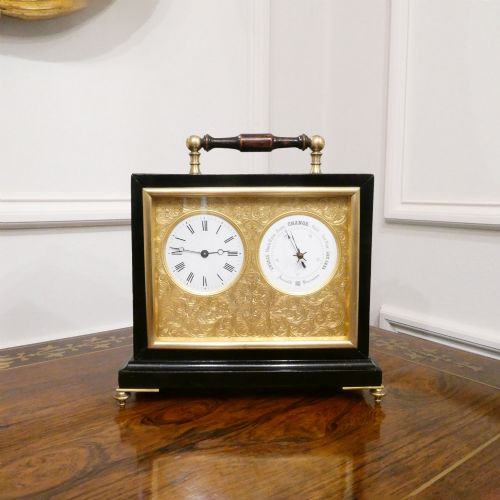
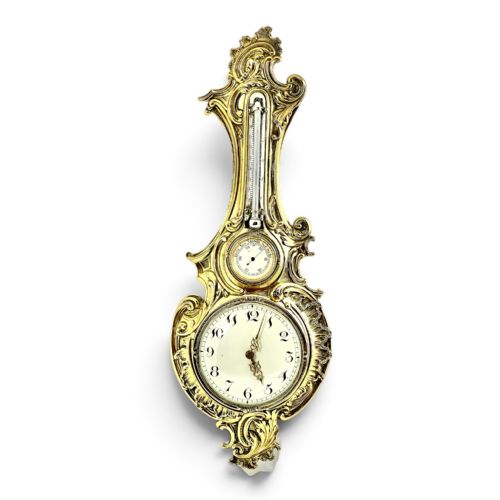
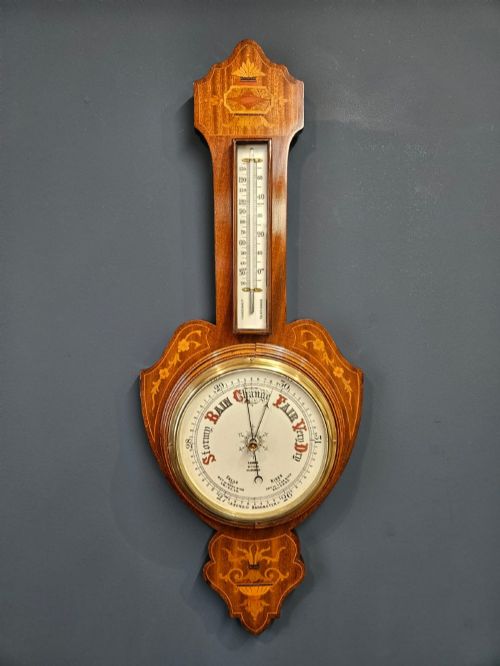
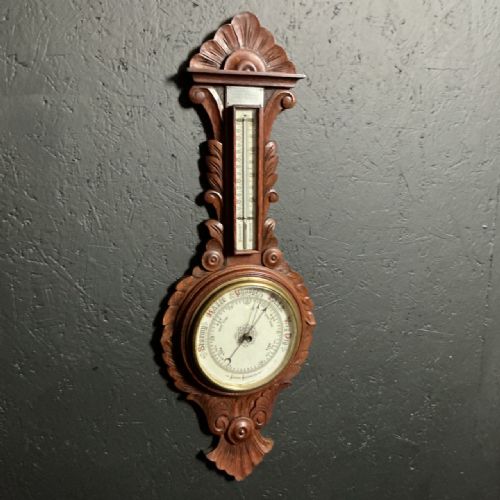
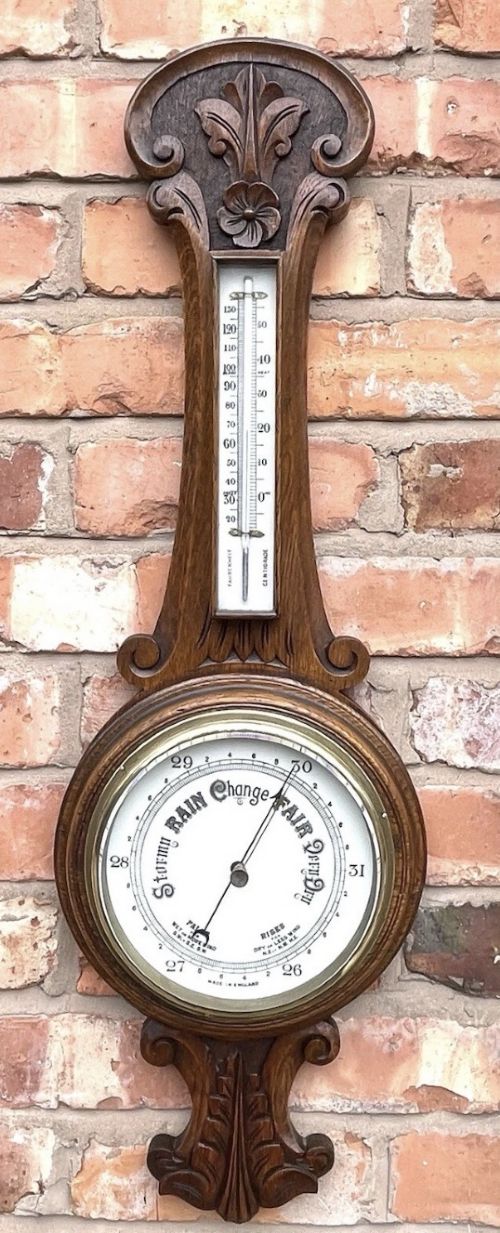
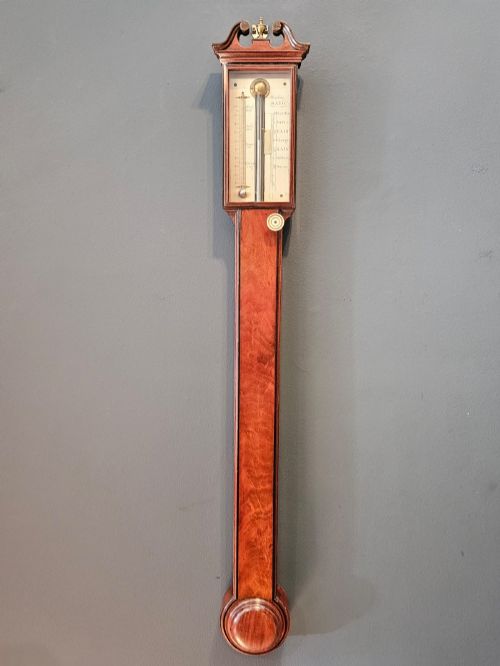
When you search for an edwardian barometer, you encounter wall-hung banjo shapes, desk-mounted weather stations, and brass bulkhead designs spanning the late nineteenth and early twentieth centuries. Oak and mahogany dominate the timber cases, often enriched with carved details, porcelain dials, or bevelled glass panels.
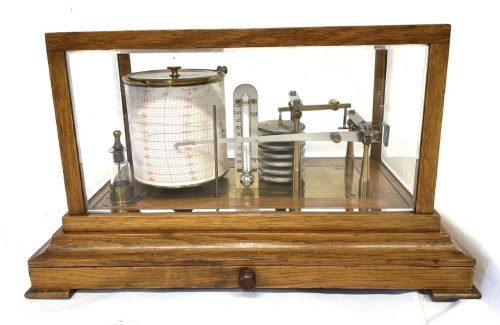
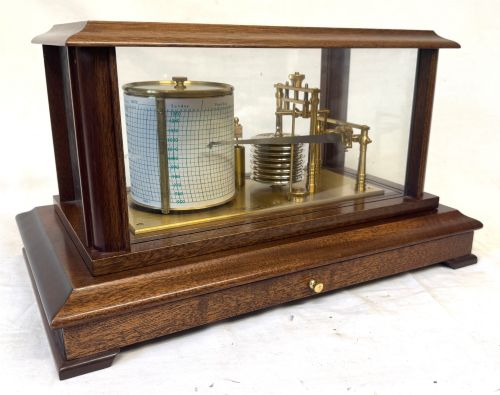
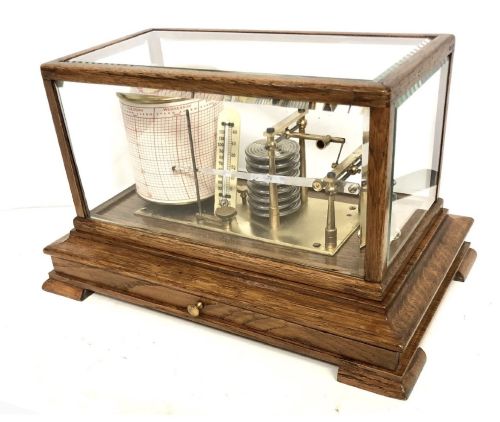
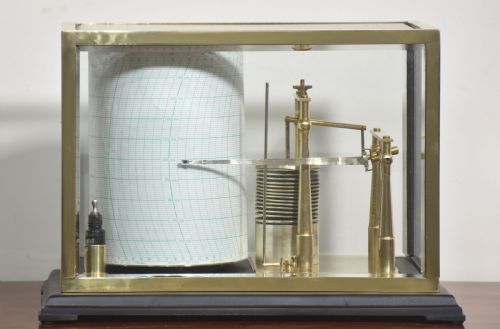
The domestic wall barometer serves as the most frequent meeting point on this page, alongside oak cased barographs that record pressure shifts onto paper charts over a week. These pieces reflect a period when domestic meteorology combined utility with formal hall or study decor.
Materials and construction methods
Cases rely on seasoned oak, rich mahogany, walnut, and polished brass, shaped and joined to house delicate metallic movements and paper chart drums safely. Bevelled glass protects the dials and recording needles, whilst mercury or aneroid capsules respond to atmospheric pressure.
Inlaid woodwork, carved birds, and porcelain faceplates display traditional cabinet-making skills adapted for scientific instruments. Metal components include silvered brass dials, steel pointers, and cast brass bezels.
Edwardian Barometer Retail Price Guide 2026
Typical asking prices for edwardian barometer among the pieces listed under this phrase on Sellingantiques today, from the lower quarter to the upper quarter. They describe what is for sale here now, not the wider market.
Listings feature oak, mahogany, walnut, and brass cases housing aneroid movements, mercury columns, and clockwork recording drums.
Distinctions in craftsmanship and design
Quality rests in the crispness of the timber carving, the weight of the cast brass case, and the legibility of the engraved silvered dial. Maker signatures from established instrument houses add significant distinction to the mechanics inside.
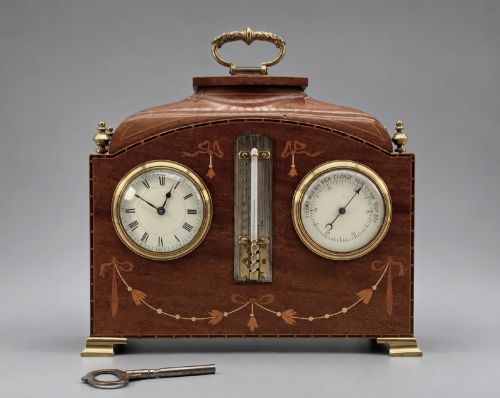
Simpler wall models contrast with comprehensive weather stations that combine thermometers, hygrometers, and clocks in a single carved housing. The precision of the aneroid movement or the clarity of the barograph drum separates standard utility pieces from finer examples.
Russell Norwich·Hezzanith·Aitchison·Short And Mason·C And T·Negretti And Zambra·G And L Guanziroli
The Edwardian Barometer Glossary
- Aneroid barometer
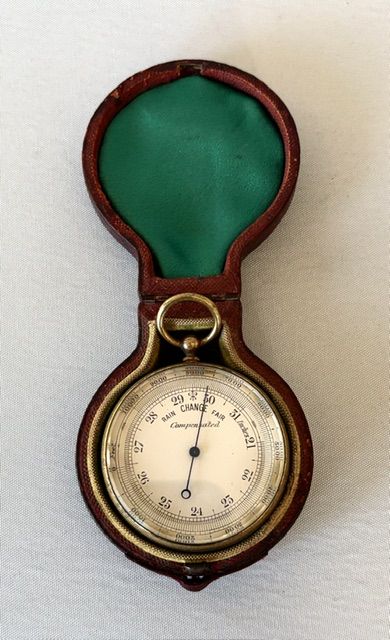
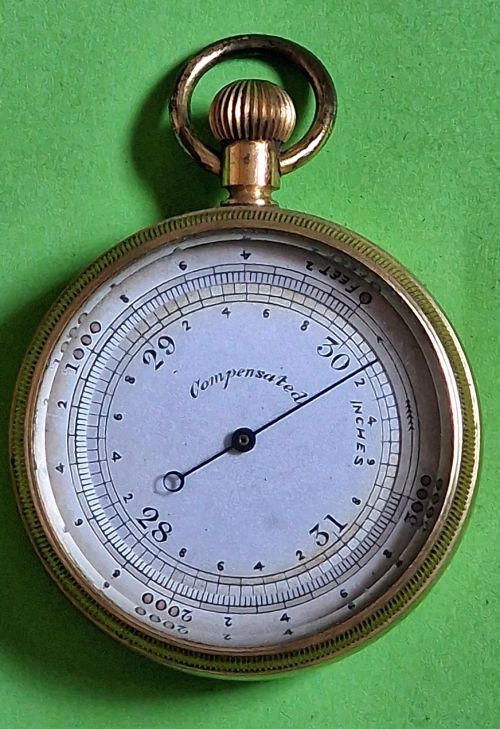
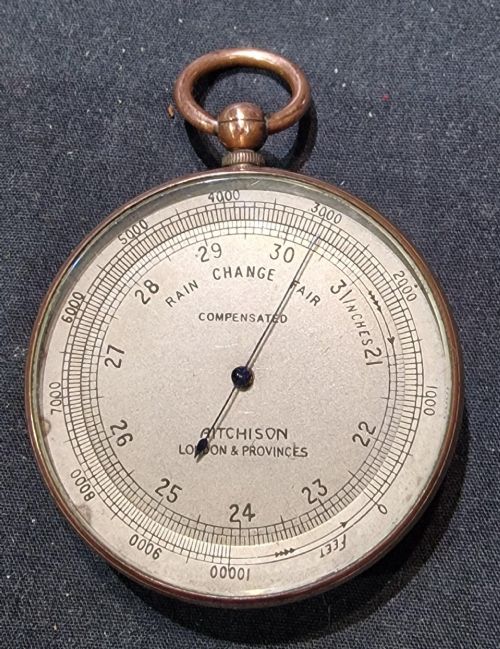
- An instrument that measures atmospheric pressure using a flexible metal box without liquid mercury. It expands or contracts with weather changes to move a dial pointer.
- Barograph
- A self-recording barometer that traces a continuous line of atmospheric pressure onto a rotating paper chart over a week. These instruments usually sit in a glazed oak case with a clockwork drum.
- Banjo barometer
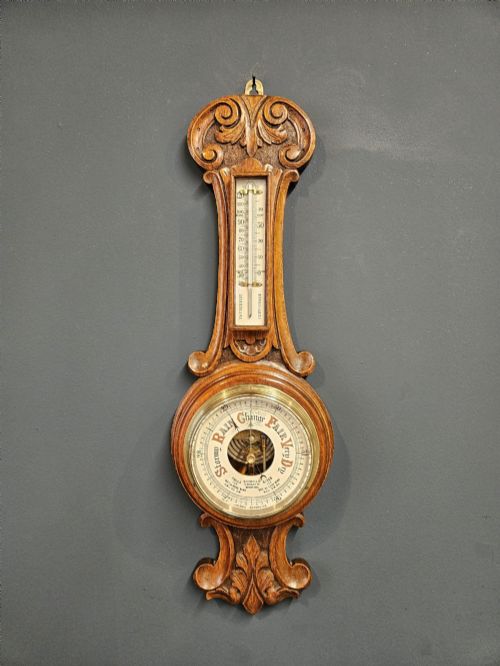
- A wall barometer shaped like a banjo, featuring a circular dial at the top for pressure and a longer stem housing a thermometer or mirror. This form appeared frequently in mahogany and carved oak.
- Bulkhead barometer
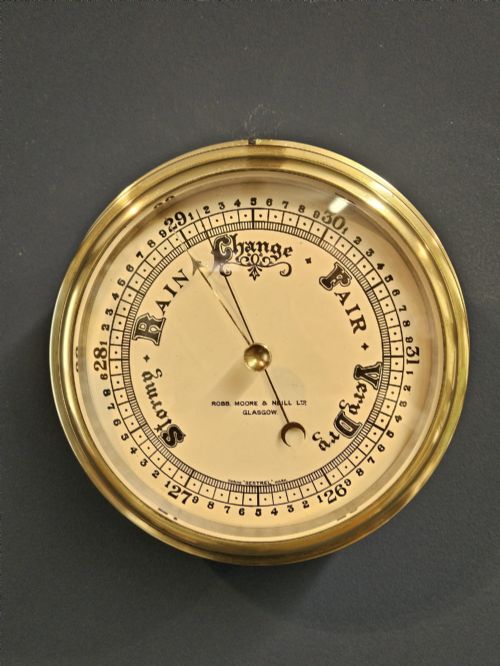
- A heavy brass cased instrument designed to be mounted on a wall, originally styled for marine use on ships. The robust metal bezel and secure screw mount protect the dial from movement.
Edwardian Barometer: Frequently Asked Questions
How do aneroid barometers work?
An aneroid barometer uses a sealed, corrugated metal capsule that compresses or expands as air pressure rises and falls. A system of springs and levers connects this capsule to the pointer on the dial.
Changes in the weather alter the pressure against the metal box, translating invisible atmospheric shifts into a visible reading on the graduated scale.
Where should I place a wall barometer?
Mount your barometer on an interior wall away from direct sunlight, radiators, and draughty doors. Stable room temperatures ensure the internal mechanism registers true atmospheric changes rather than local heat.
Most wall designs hang securely from a single sturdy bracket screwed into masonry or a wall stud.
How do I read a barograph?
A barograph records pressure onto a paper chart wrapped around a clockwork drum that rotates once every seven days. The ink nib rises and falls with the barometer arms to create a continuous pressure graph.
By checking the slope of the ink line, you can see whether pressure has dropped rapidly or risen steadily over the past several hours.
Are these barometers still accurate?
Many vintage barometers retain good working order and respond reliably to local weather shifts. You can calibrate them against a known local pressure reading using the small screw typically found at the back or centre of the dial.
Internal mechanical wear or changes in spring tension over decades mean some instruments serve better as decorative decorative objects than precise meteorological tools.