

Edwardian Astragal China Cabinet
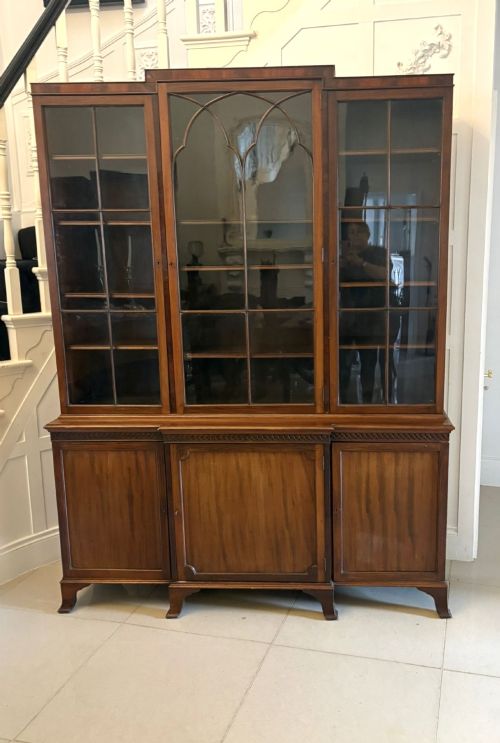
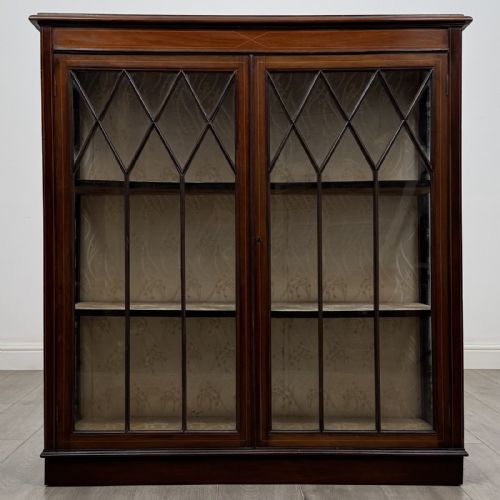
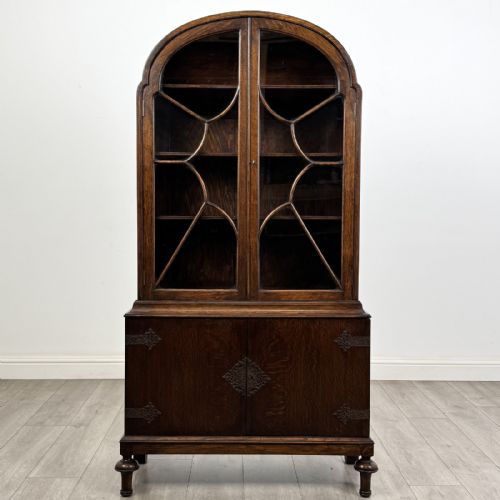
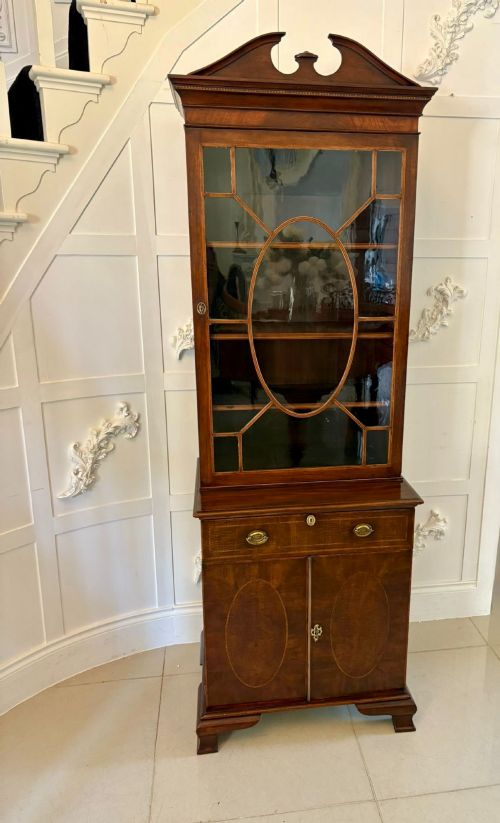
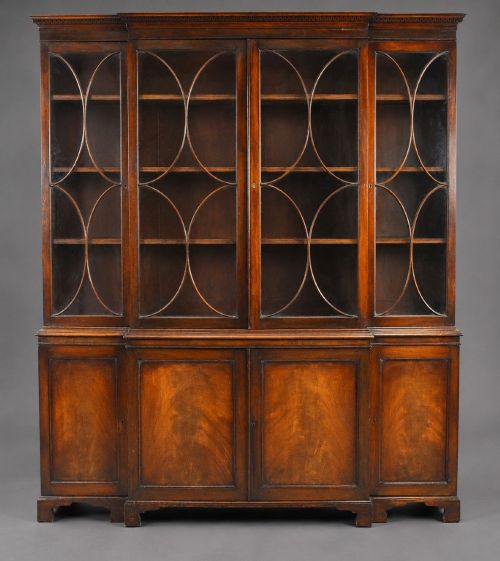
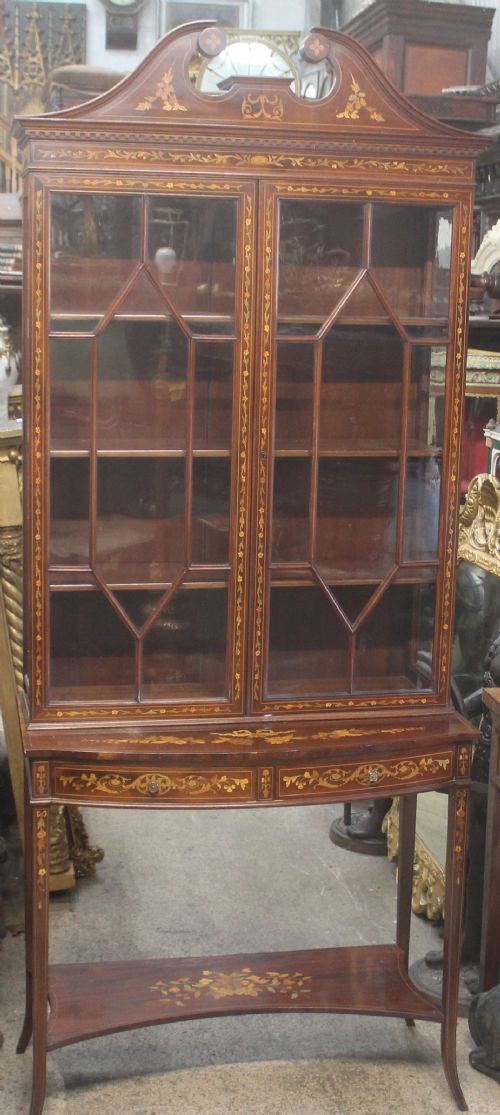
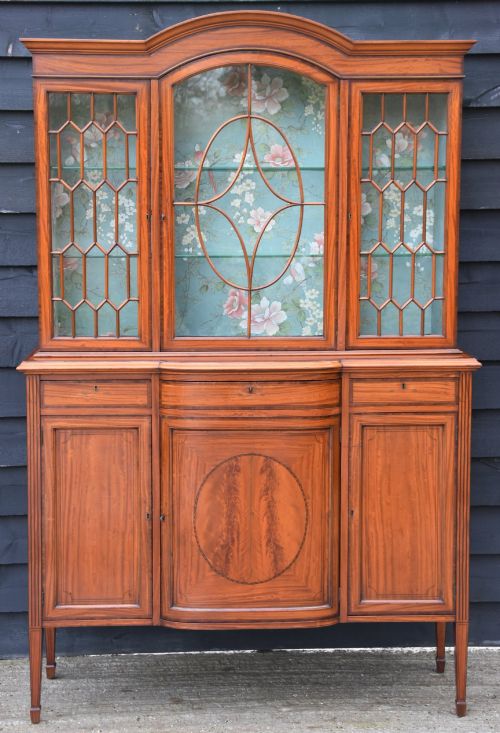
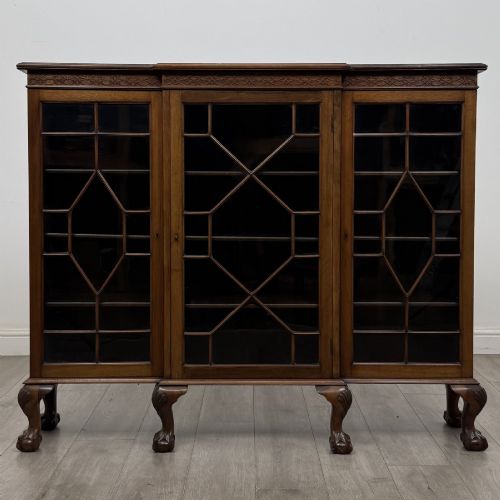
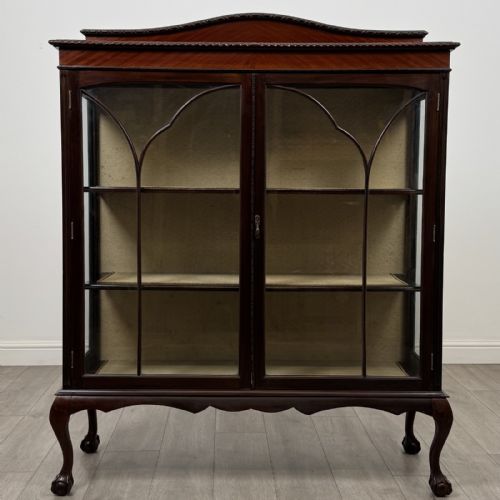
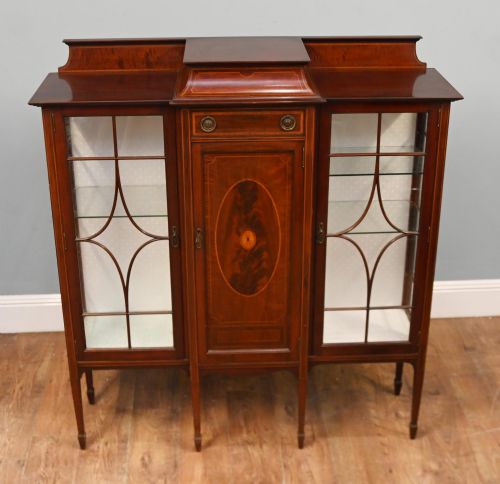
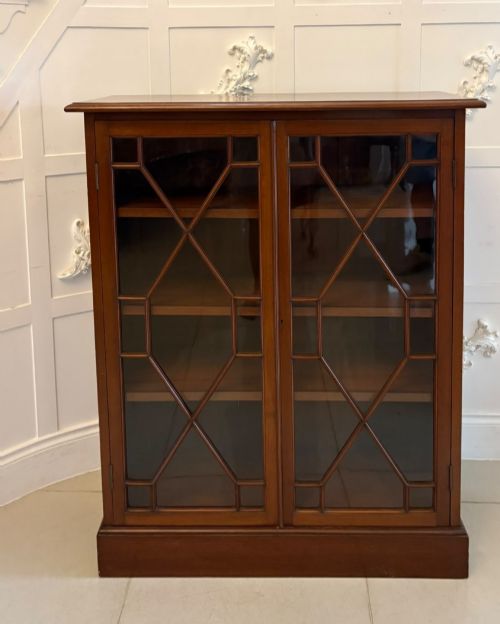
An edwardian astragal china cabinet holds porcelain behind fine glazed wooden bars, combining display space with the warmth of figured timber.
Edwardian Astragal China Cabinet
An edwardian astragal china cabinet is primarily a display piece designed to protect and showcase fine china and books within domestic rooms. These pieces emerge predominantly from the Edwardian period, though related examples span the nineteenth century into the nineteen thirties.
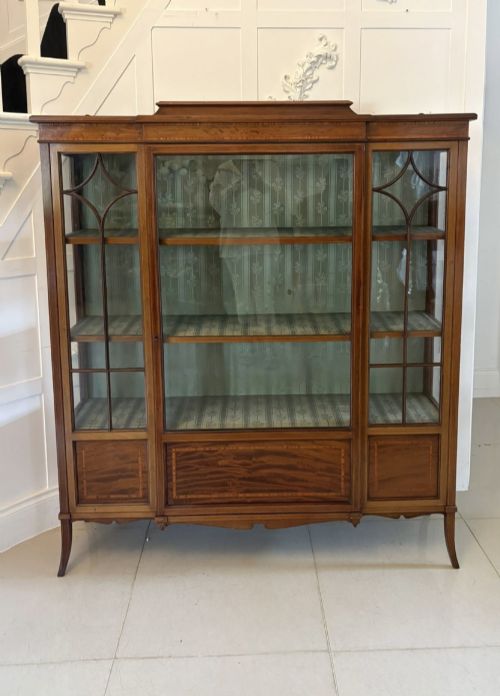
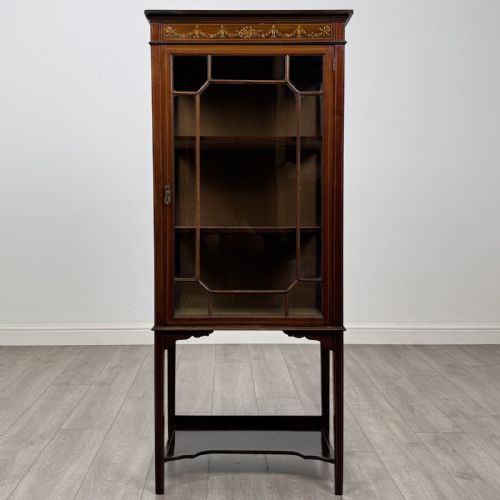
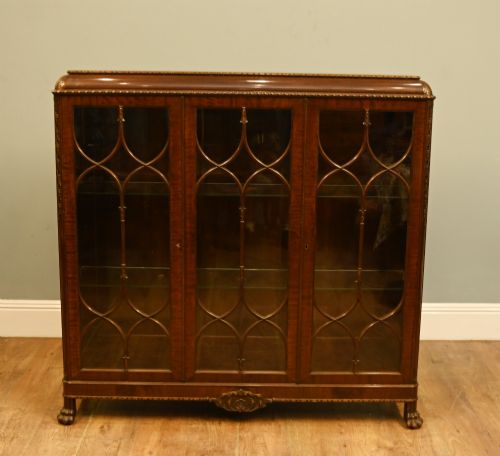
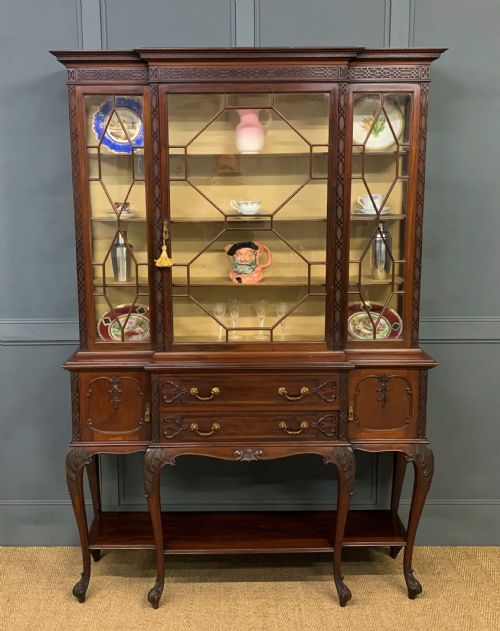
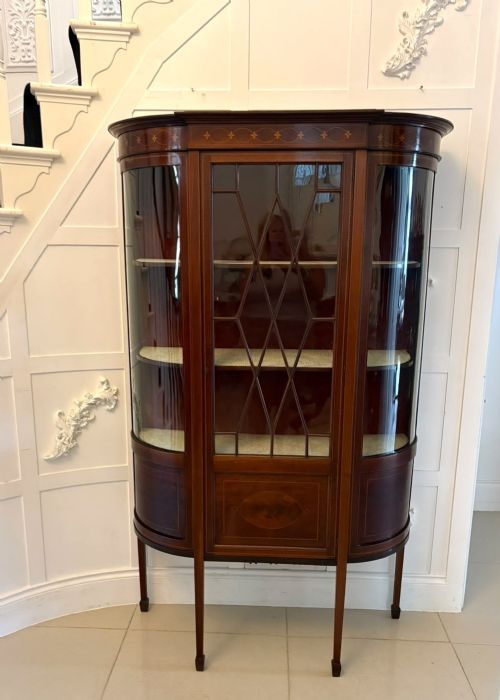
The form appears most frequently as a mahogany glazed cabinet, often featuring satinwood inlay or revival styles such as Sheraton and Chippendale. Buyers encounter variations including breakfront formats, bow-ended designs, corner cabinets, and smaller freestanding vitrines.
How they were made
Construction relies heavily on mahogany and satinwood, frequently enhanced with intricate marquetry, brass fittings, and fabric-lined interiors. Glazing employs wooden astragal bars arranged in geometric or curvilinear patterns to hold individual glass panes.
Cabinet makers applied traditional joinery techniques, combining solid timbers with veneered surfaces for panels and curved bow fronts. Surface decoration includes original painted details and delicate inlaid stringing, supported by carved structural elements such as bracket feet or cabriole legs.
Edwardian Astragal China Cabinet Retail Price Guide 2026
Typical asking prices for edwardian astragal china cabinet among the pieces listed under this phrase on Sellingantiques today, from the lower quarter to the upper quarter. They describe what is for sale here now, not the wider market.
Some cabinets hide their books and china behind glass so securely they even included raised galleries just to keep stray teacups from wandering off.
What varies in quality
Quality differentiates through the precision of the cabinet work, the complexity of the wood selection, and the sophistication of the inlay. Finer examples display carefully matched timber grains, meticulous marquetry, and substantial brass hardware.
Maple and Co.·Wylie and Lochhead
The Edwardian Astragal China Cabinet Glossary
- Astragal
- The moulding profile used to divide glass panes within a glazed door, creating grid or lattice patterns across the front.
- Marquetry
- Decorative veneer work arranged in pictorial or geometric patterns using various coloured woods and shell.
- Breakfront
- A piece of furniture whose central section projects forward from the flanking sections, creating architectural depth.
- Vitrine
- A glass-fronted display cabinet or showcase specifically designed for exhibiting porcelain, curiosities, or small objects.
- Cabriole leg
- A furniture leg that curves outward at the knee and tapers inward to an ankle, finishing in a foot such as a claw and ball.
Edwardian Astragal China Cabinet: Frequently Asked Questions
What is an astragal china cabinet?
An astragal china cabinet is a glazed display piece featuring wooden bars that divide the glass into smaller panes. These cabinets were designed to keep dust away from fine porcelain while allowing maximum visibility.
Most examples utilise mahogany or satinwood, often decorated with inlay or revival styling. They serve as both practical storage and decorative focal points within a room.
Are shelves adjustable in these cabinets?
Many period display cabinets and bookcases incorporate adjustable shelving to accommodate varying heights of china or books. Internal systems often use wooden supports or traditional peg racks.
Two-part bookcase cabinets and larger breakfront formats are particularly likely to offer this internal flexibility for storage.
What woods were used for these cabinets?
Mahogany is the predominant timber found in these cabinets, frequently paired with satinwood for contrasting inlay and marquetry. Walnut also appears among the Edwardian examples.
Secondary materials include brass for hardware, glass for the doors, and sometimes fabric linings within the display space.