


Edwardian Ash Chairs
Edwardian ash chairs are robust country and kitchen seating pieces built from honest local timber, offering both everyday utility and enduring traditional charm.
Edwardian Ash Chairs
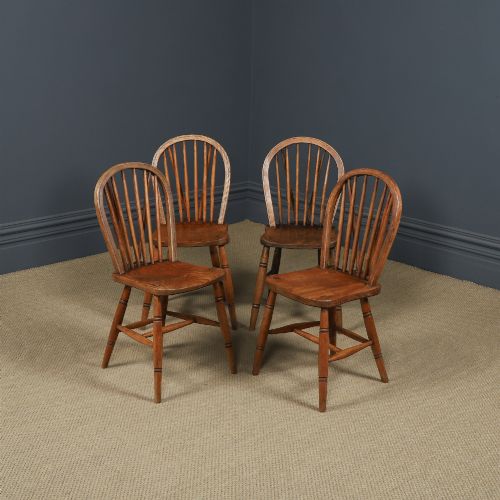
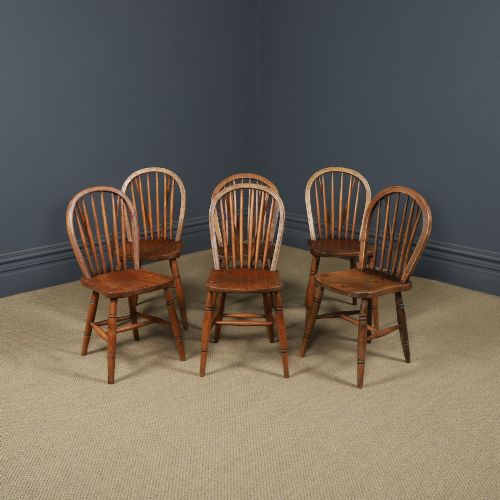
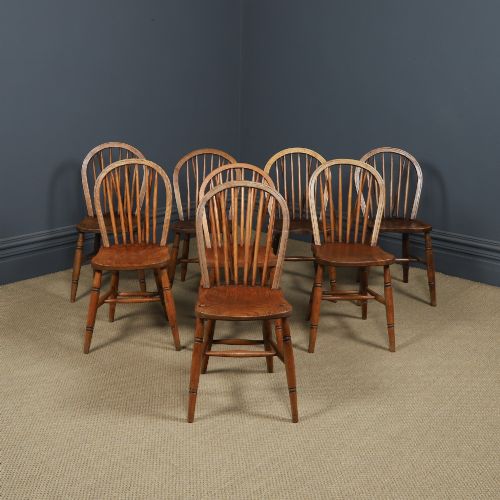
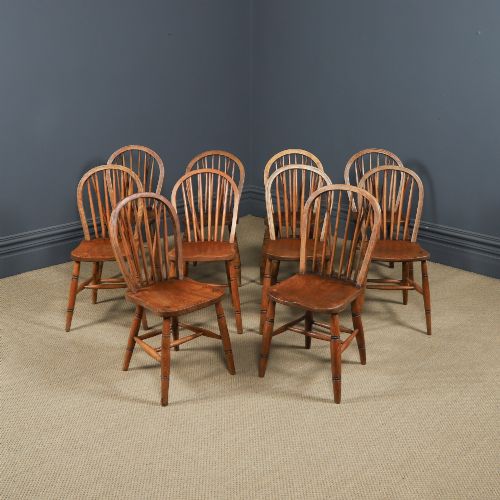
Edwardian ash chairs encompass traditional country seating forms, most frequently appearing here as kitchen dining chairs, Windsor armchairs, and desk chairs. These pieces trace their lineage through English country styles, with vernacular forms that prioritise sturdy construction and practical daily use.
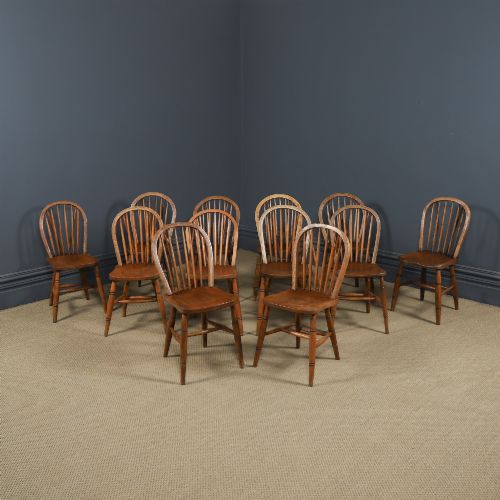
The version most commonly met on this page is the Windsor chair, particularly hoop and stick back designs alongside wheelbacks and comb backs. Sets ranging from pairs up to larger dining groups sit alongside individual armchairs, smoker's bows, and revolving swivel office chairs.
Origins span the turn of the twentieth century, drawing on Victorian vernacular traditions and extending into interwar production. The overarching aesthetic remains rooted in English country workshops rather than formal urban cabinet-making.
What varies in quality
The distinction between tiers rests upon the harmony of the timber selection and the integrity of the original construction. Superior examples display carefully matched grain patterns across the ash frames and deeply sculpted elm seats that show thoughtful hand-shaping.
Proportion and retention of original components dictate the standing of a piece within its type. Chairs that maintain their initial structural firmness without excessive replacement parts or heavy timber shrinkage represent the more accomplished end of the range.
Listings feature ash, elm, beech, alder, and oak across dining chairs, armchairs, and desk chairs spanning the Victorian era to the interwar period.
The Edwardian Ash Chairs Glossary
- Windsor chair
- A wooden chair built with a heavy solid seat into which the legs and back uprights are dowelled directly. This form relies on a combination of turned members and bentwood parts for structural integrity.
- Hoop back
- A continuous bentwood bow that forms the top rail and arm support of a Windsor chair. It provides both ergonomic comfort and lateral strength to the upper frame.
- Smoker's bow
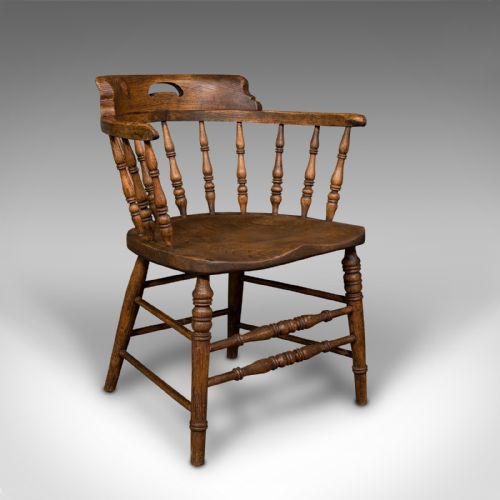
- A low-backed Windsor armchair featuring a rounded continuous arm rail supported by short spindles. It was commonly used in smoking rooms, inns, and studies.
- Wheelback
- A Windsor chair variation featuring a pierced wooden splat carved in the shape of a cartwheel. This decorative motif sits centrally in the stick back.
Edwardian Ash Chairs: Frequently Asked Questions
What is an ash Windsor chair?
An ash Windsor chair is a traditional country seat featuring a solid wooden base that holds the legs and back spindles. The timber frame provides considerable strength while maintaining a relatively light overall structure.
These chairs were designed for practical rooms like kitchens and dining areas. Their construction allows them to endure heavy daily use without losing stability.
How do I identify Edwardian ash chairs?
Identification relies on observing the combination of native English hardwoods like ash and elm, alongside vernacular forms such as hoop backs and wheelbacks. The turn of the twentieth century saw these traditional country styles produced in larger numbers.
Comparing the turning details on the legs and the shaping of the wooden seats helps place them in their proper period context. Examining the joinery beneath the seat reveals traditional pegged and wedged construction methods.
Can I use these chairs at a dining table?
Many of these pieces are specifically suited for dining tables, particularly when found in matched sets of four, six, or more. Their standard proportions allow them to sit comfortably beneath most table heights.
Armchairs and smoker's bows function well as host seating at the heads of a table or as occasional chairs in living spaces. Their sturdy build ensures they remain practical for regular meals.
What woods were used besides ash?
Elm is frequently paired with ash, particularly for the solid seats because its interlocking grain resists splitting when saddled. Beech, alder, and oak also appear in various structural components and spindles.
Country makers selected these native timbers for their specific mechanical properties, such as bending ability or impact resistance. This mixed-wood construction is typical of English vernacular furniture.