


Edwardian Aquamarine Necklace
An Edwardian aquamarine necklace brings together pale blue stones and delicate gold settings, offering a subtle, historic elegance collectors prize.
Edwardian Aquamarine Necklace
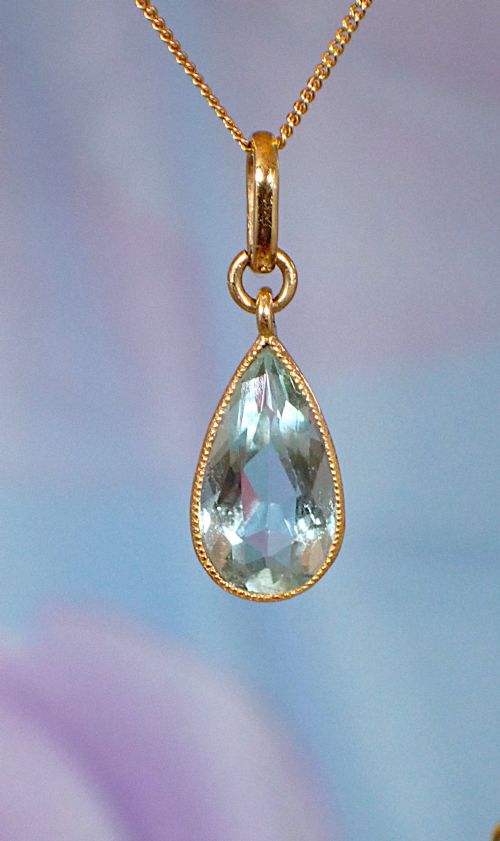
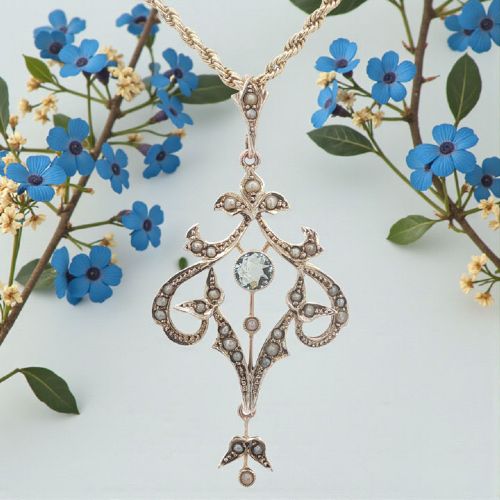
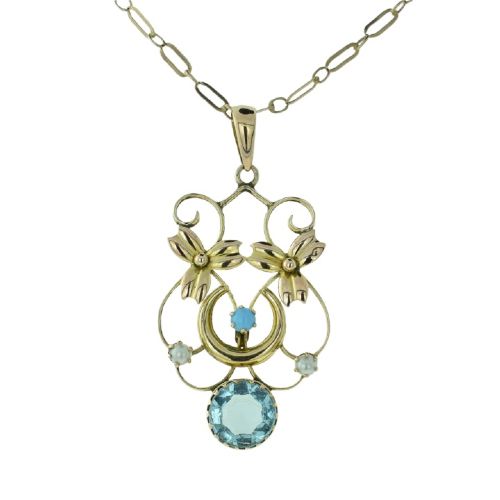
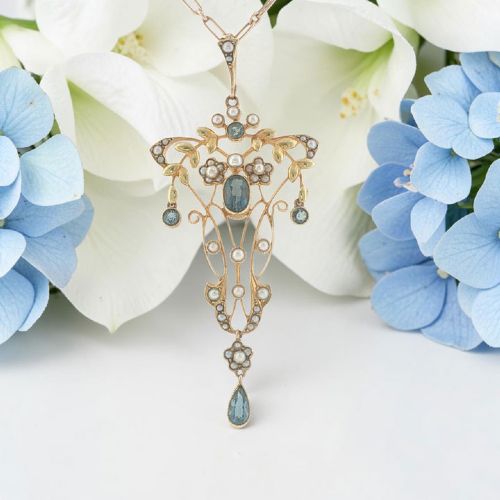
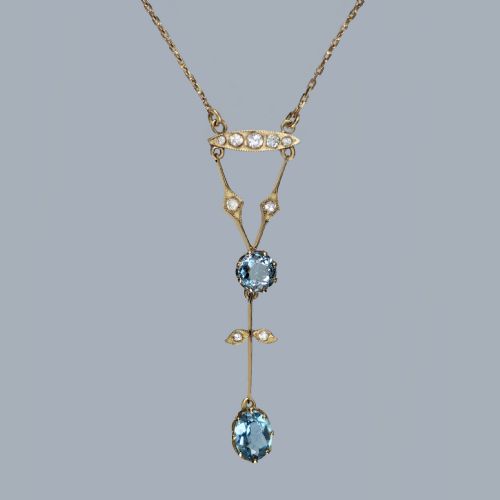
An Edwardian aquamarine necklace typically takes the form of a pendant drop design, often incorporating foliate or Art Nouveau motifs. These pieces date predominantly from the early twentieth century, spanning roughly from 1900 to 1920.
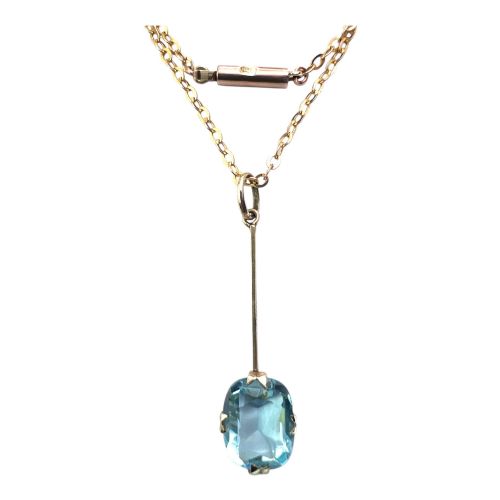
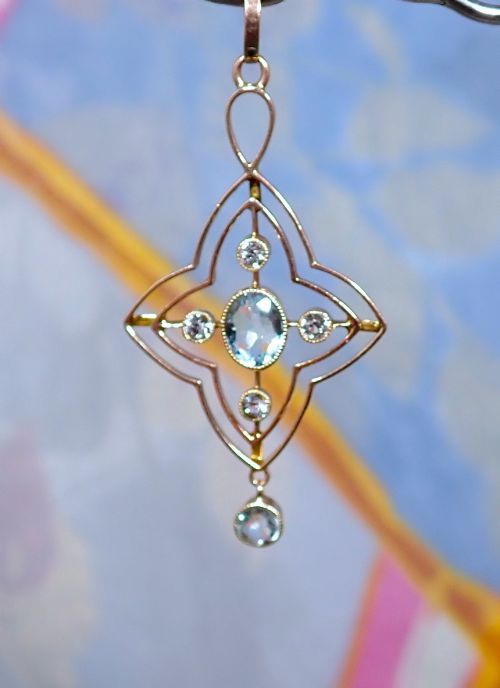
The most common configurations on this page pair central aquamarines with seed pearls or diamonds, suspended from fine gold chains. Drop pendants and lavalier designs dominate the selection, reflecting the lighter aesthetic of the period.
How They Were Made
Goldsmiths of this era worked primarily in nine carat yellow gold, fifteen carat gold, and occasionally platinum or eighteen carat yellow gold. Settings often incorporated knife-edge drops and delicate claw or bezel mounts to maximise light passing through the stones.
Gemstones such as aquamarine, diamond, white sapphire, and paste were hand-set alongside tiny seed pearls. Metal components were shaped into intricate foliate patterns or symmetrical drops characteristic of the early twentieth century.
Edwardian Aquamarine Necklace Retail Price Guide 2026
Typical asking prices for edwardian aquamarine necklace among the pieces listed under this phrase on Sellingantiques today, from the lower quarter to the upper quarter. They describe what is for sale here now, not the wider market.
Listings feature periods from 1900 to 1920, utilising aquamarine, seed pearls, diamonds, and gold alloys up to eighteen carat.
What Varies in Quality
The distinction between standard and superior pieces rests on the saturation and clarity of the aquamarine alongside the complexity of the goldwork. Subtleties in hand-piercing, the matching of seed pearls, and the inclusion of supporting diamonds elevate a piece.
Proportion and balance define the better examples, where the drop pendant integrates seamlessly with the chain rather than appearing heavy or disjointed.
The Edwardian Aquamarine Necklace Glossary
- Aquamarine
- A pale blue to light green variety of beryl, typically cut in faceted drop or rectangular shapes for these pendants.
- Seed pearl
- A very small, naturally formed or cultured pearl used in delicate clusters and borders around central gemstones.
- Lavalier
- A pendant necklace featuring a suspended drop, often with a secondary swinging element, popular during the Edwardian period.
- Foliate
- A decorative design motif inspired by leaves and foliage, frequently seen in the metalwork of Edwardian jewellery.
Edwardian Aquamarine Necklace: Frequently Asked Questions
How do I wear an Edwardian pendant necklace?
These delicate drop pendants sit close to the collarbone on fine gold chains, making them suitable for evening wear or adding historic character to daily outfits.
Their lightweight construction means they pair well with simpler necklines that allow the foliate drops and aquamarines to remain the visual focal point.
What gold purity is typical for this period?
Jewellery from this era frequently turns up in nine carat yellow gold and fifteen carat gold, alongside occasional pieces in eighteen carat gold or platinum.
Markings can sometimes be found on the jump rings or clasps, though many older pieces rely on metal testing to confirm their alloy content.
Are seed pearls durable for everyday wear?
Seed pearls are secured delicately within wire or glue settings, requiring gentle care to avoid moisture damage or impact.
Removing the necklace before swimming or exercising helps preserve the integrity of both the pearls and the fine gold structure.
How do I distinguish Edwardian styles from later periods?
Edwardian pieces favour light, airy wirework, foliate motifs, and combinations of aquamarine with seed pearls or small diamonds.
The prevalence of knife-edge drops and lavalier designs sets this era apart from the heavier geometric forms of later decades.