
Edwardian Server
An edwardian antique server brings practical dining room storage and surface space into a modern interior.
Edwardian Server
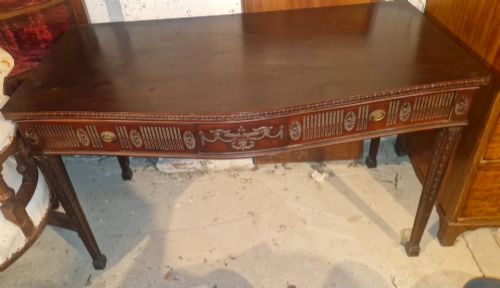
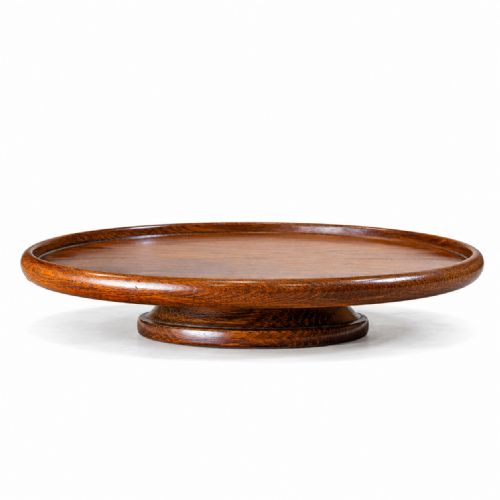
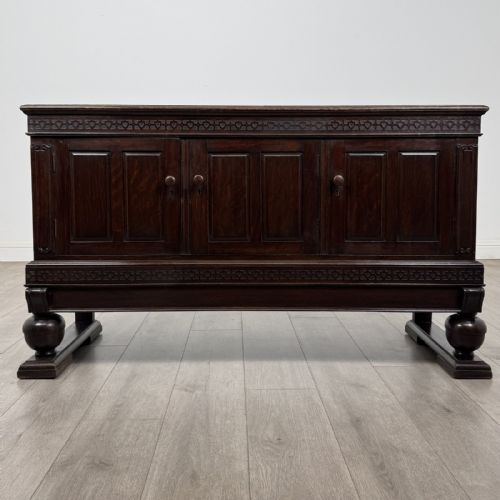
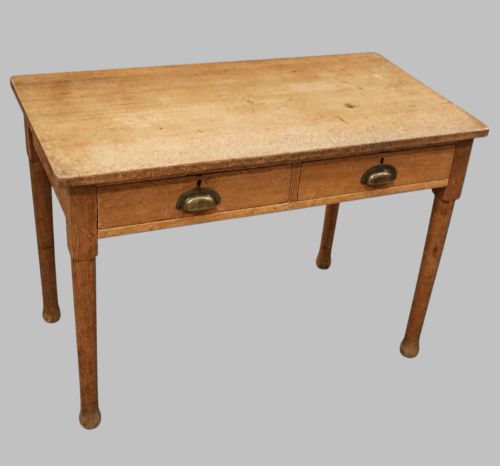
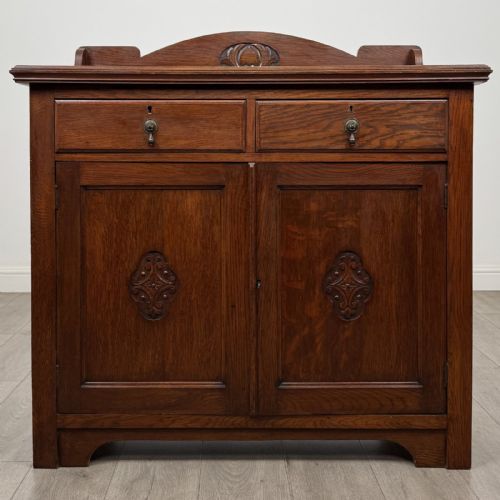
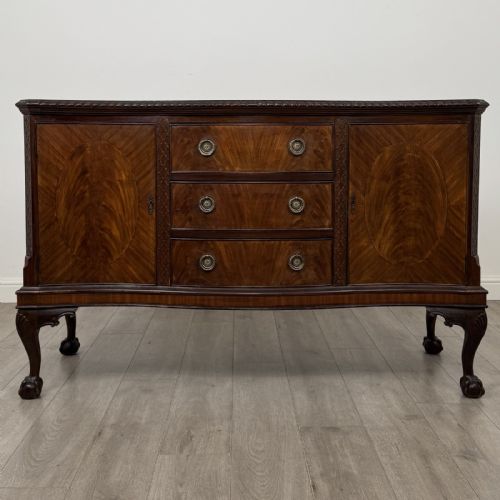
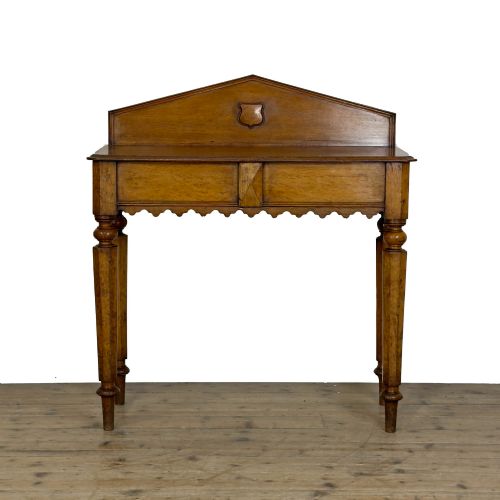
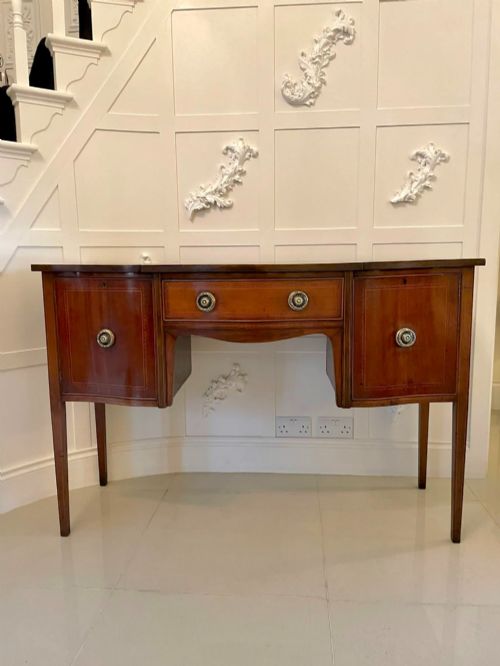
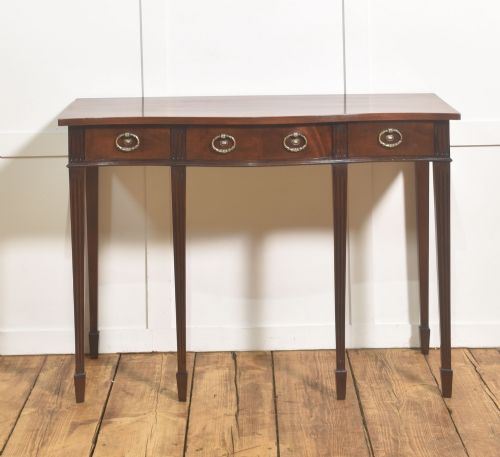
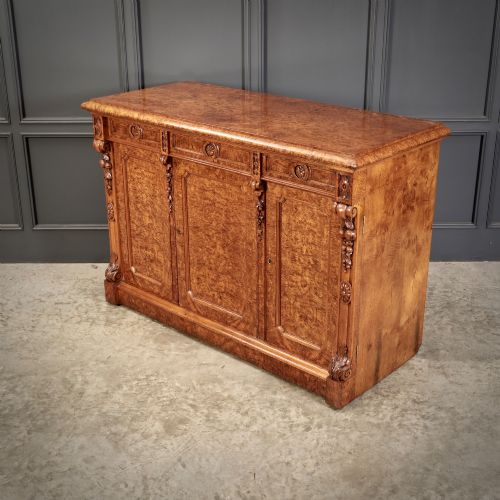
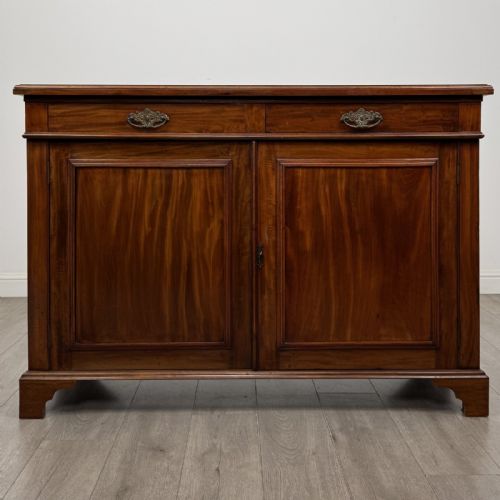
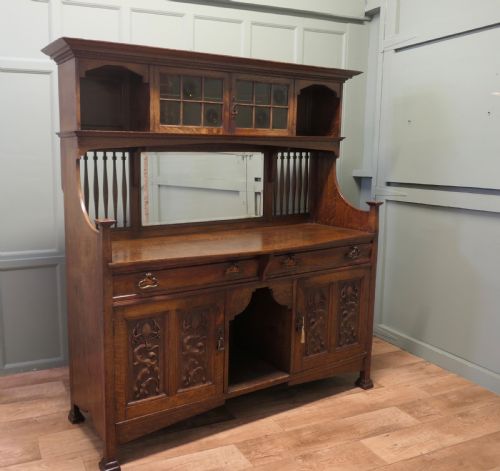
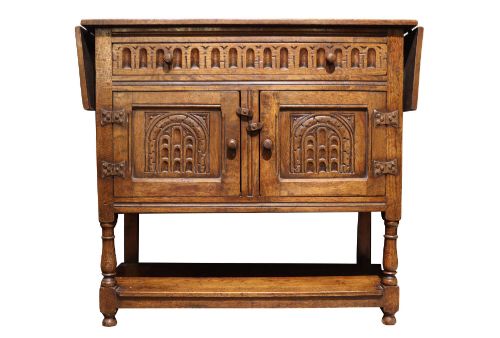
When searching for an edwardian antique server, you examine a category that spans heavy timber sideboards, inlaid mahogany serving tables, and occasional serving trays from the early twentieth century. The pieces recorded in this category range from compact oak cupboards to large breakfront sideboards featuring paw feet and bow fronts.
You are most likely to encounter mahogany and oak forms reflecting Edwardian, Sheraton Revival, and Arts and Crafts styles. These items served dining rooms by holding silver, cutlery, and serving dishes while providing a surface for food presentation during meals.
How they were made
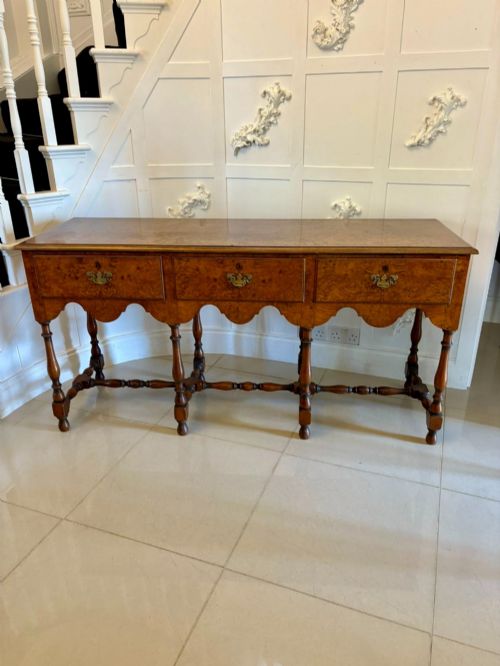
Cabinetmakers constructed these servers using solid timbers such as oak and mahogany, often applying veneers of burr walnut, satinwood, and marquetry inlay for decorative contrast. Structural elements frequently incorporate brass handles, glass doors, and carved details adhering to Jacobean, Adam, or Gothic revival tastes.
Surface decoration relies on skilled craftsmanship, including marquetry panels, shell inlay, and barley twist turnings. Silver and silver-plate items within the category involve smithing, engraving, and hollowware techniques applied to sterling silver and plate.
Listings feature oak, mahogany, burr walnut, and satinwood, spanning Victorian, Edwardian, and George V periods.
What varies in quality
Quality separates mass-produced utility items from bespoke cabinetwork through the selection of timber figures, such as highly figured mahogany and burr walnut. The precision of the marquetry inlay, the depth of the hand-carved detailing, and the integration of solid brass hardware distinguish superior examples.
Construction methods also dictate standard, where secondary timbers used in drawer linings and the tightness of dovetail joints show the maker's hand. Heavier pieces benefit from substantial architectural carcase work and balanced proportions that maintain structural integrity over decades of use.
Hewetsons London·Ambrose Heal for Heal and Son·Whytock and Reid
The Edwardian Server Glossary
- Sideboard
- A large dining room piece designed for storage and serving, frequently featuring drawers, cupboards, and a flat top. These forms often anchor the dining space.
- Marquetry
- The art of applying decorative pieces of veneer to a structure to form intricate patterns and pictures. Craftsmen use contrasting woods to achieve pictorial depth.
- Bow-front
- A convex curved furniture front that projects outward in an arc. This shaping softens the heavy geometry of large dining furniture.
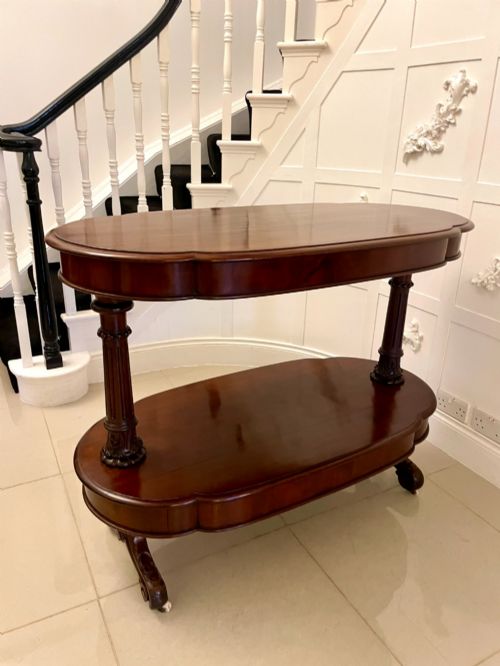
- Dumbwaiter
- A multi-tiered freestanding piece of furniture used for holding food and tableware without requiring servant assistance. They typically feature rotating or stacked circular shelves.
- Sterling silver
- An alloy containing ninety-two point five percent silver and seven point five percent other metals, usually copper. It forms the standard for high-grade antique tableware and servers.
Edwardian Server: Frequently Asked Questions
How do I use an edwardian antique server today?
An edwardian antique server functions effectively as a sideboard in a dining room or a media console in a living space. The cupboards and drawers provide concealed storage for tableware, linens, or modern media equipment.
The flat top surface offers ample room for lamps, decorative objects, or serving food and drinks during gatherings. Their compact proportions allow them to fit into hallways and smaller reception rooms without dominating the floor plan.
What is the difference between a server and a sideboard?
A server generally refers to a more compact, lighter piece of dining furniture designed primarily for passing food and holding serving dishes. They often lack the massive bank of lower cupboards found on traditional full-size sideboards.
Sideboards tend to be larger, heavier structures built to store extensive dinner services and cutlery sets. However, historical overlap in terminology means many Edwardian pieces serve both functions equally well.
How do I identify Sheraton Revival style?
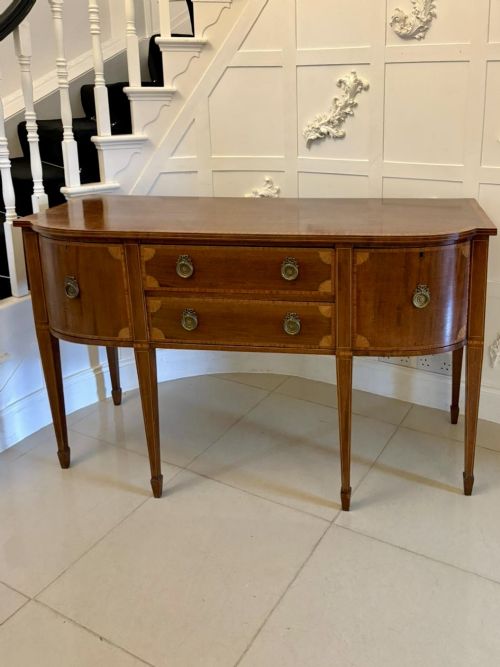
Sheraton Revival pieces draw inspiration from eighteenth-century neoclassical designs popularized by Thomas Sheraton. Look for satinwood veneers, painted or inlaid floral swags, tapering legs, and geometric bow fronts.
These items appear lighter and more delicate than heavy Victorian or Jacobean revival pieces. The focus rests on symmetrical lines, contrasting wood stringing, and refined neoclassical motifs.