


Edwardian Amethyst Lavalier
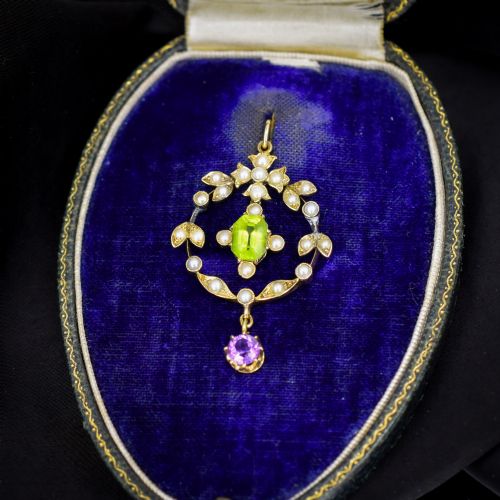
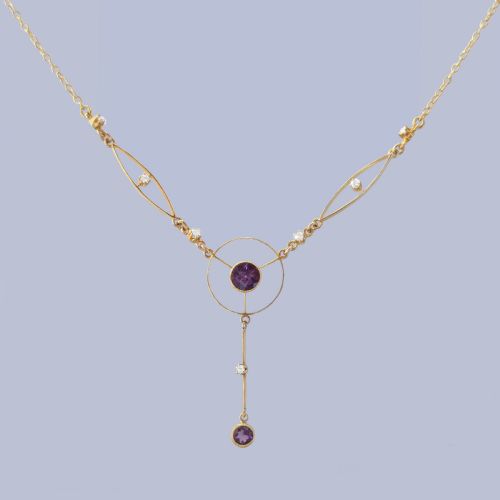
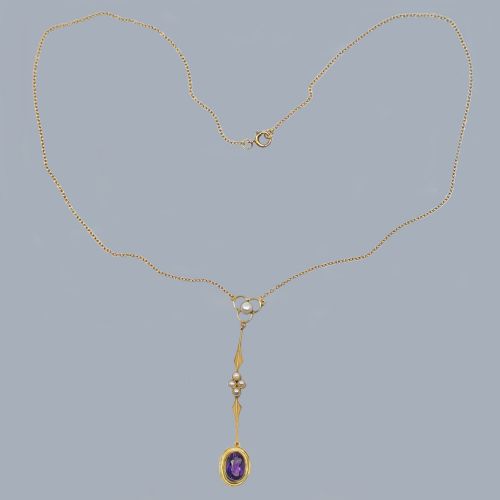
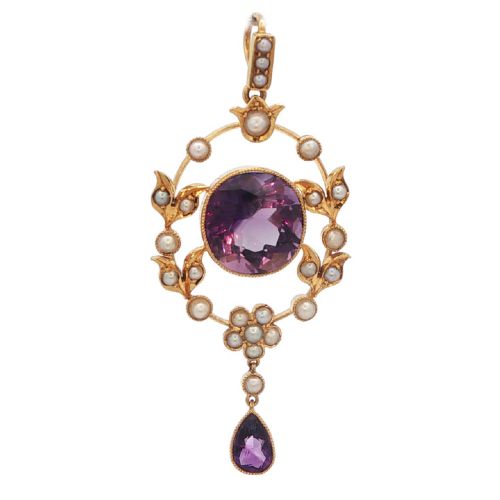
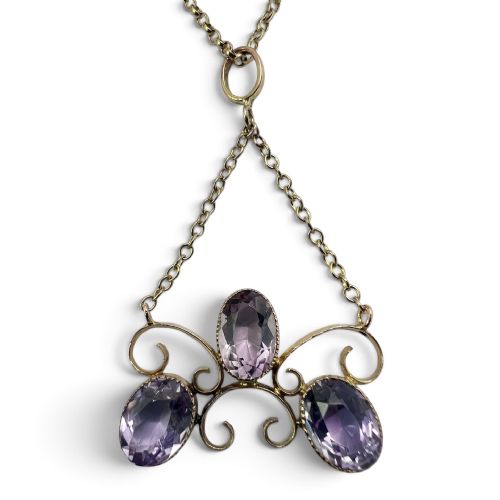
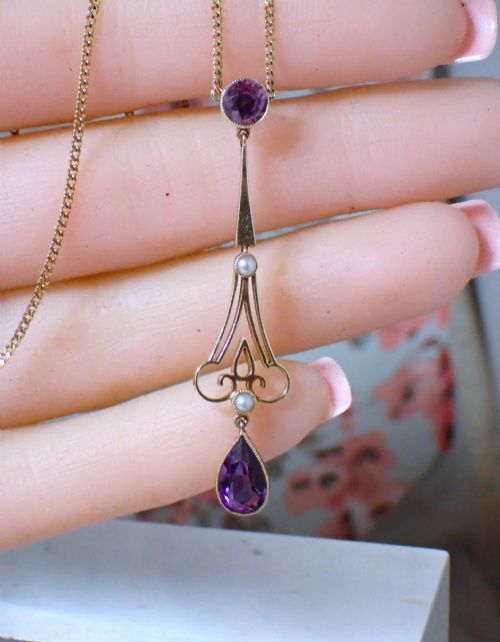
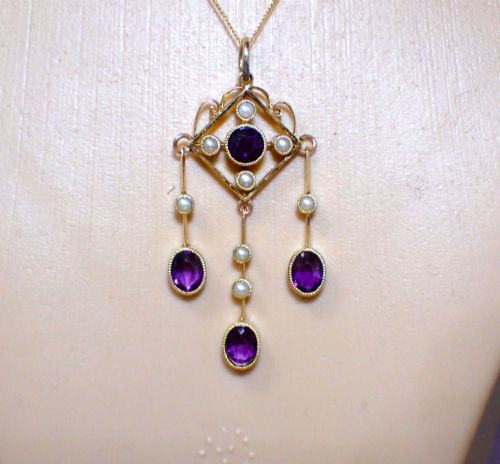
An edwardian amethyst lavalier suspends purple quartz stones from delicate chains, offering the characteristic swinging drops that collectors seek for period elegance.
Edwardian Amethyst Lavalier
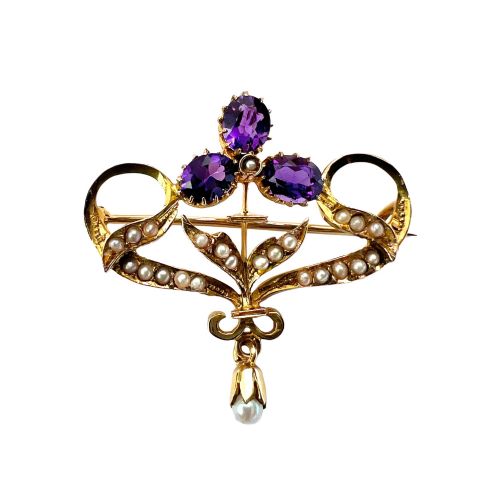
The edwardian amethyst lavalier is a pendant necklace designed with cascading drops, most commonly appearing from the Edwardian period alongside Art Nouveau and Victorian influences. These pieces combine central amethyst stones with seed pearls or diamonds, suspended on fine gold or silver chains.
Most examples found here date around nineteen-ten, though items span from the late nineteenth century into the nineteen-twenties and nineteen-thirties. Buyers frequently encounter convertible brooch-pendant combinations alongside traditional pendant necklaces.
Materials and construction
These pieces are constructed primarily from nine-carat or fifteen-carat gold, alongside silver settings. Master jewellers combined faceted or cabochon amethysts with delicate seed pearls, and occasionally old-cut diamonds or peridots.
The metalwork utilises intricate wire-work, foliate motifs, and fluid Art Nouveau lines to secure the central stones and hanging drops. Barrel clasps and fine chains complete the traditional construction of the period.
Factors determining quality
The distinction between tiers rests upon the purity of the metal, typically separating nine-carat and fifteen-carat gold or silver builds. Higher quality versions incorporate superior gemstone clarity in the amethysts and properly matched natural seed pearls rather than substitutes.
Execution of the metalwork also divides the range, distinguishing standard commercial production from refined Art Nouveau or Arts and Crafts handiwork. Original boxes and signed maker components further elevate individual pieces.
S. Blanckensee & Son·Hamilton & Co
The Edwardian Amethyst Lavalier Glossary
- Lavalier
- A pendant necklace featuring a central stone with one or more hanging drops suspended below. This style gained immense popularity during the Edwardian era.
- Seed pearl
- A very small, naturally formed pearl, often pierced and threaded onto fine wire or silk within period clusters.
- Cabochon
- A gemstone shaped and polished with a smooth, rounded convex surface rather than being faceted.
- Old-cut diamond
- A vintage diamond cutting style characterised by a small table, high crown, and large culet, common in early twentieth-century jewellery.
Edwardian Amethyst Lavalier: Frequently Asked Questions
What is an edwardian amethyst lavalier?
An edwardian amethyst lavalier is a pendant necklace featuring purple quartz stones and swinging drops created during the early twentieth century. These jewels often incorporate seed pearls and delicate gold or silver chains.
They reflect the graceful aesthetic of the period, frequently drawing upon Art Nouveau or Arts and Crafts design motifs.
How do I wear a lavalier?
These necklaces sit close to the collarbone, allowing the central drops to move with the wearer. They pair well with period attire or simple contemporary necklines.
Some pieces also function as brooches, offering versatility in how they are displayed.
How do I identify Edwardian jewellery?
Edwardian pieces typically showcase light, airy metalwork in gold or silver, frequently pairing amethysts with seed pearls and diamonds. Look for fine craftsmanship and fluid plant-based motifs.
Date attribution often relies on hallmarks, clasp types, and stylistic indicators from the nineteen-hundreds to nineteen-tens.
What is the difference between nine-carat and fifteen-carat gold?
Fifteen-carat gold contains a higher proportion of pure gold than nine-carat gold, resulting in a richer colour tone. This higher purity alloy appears frequently in finer antique pendants.
Both standards are authentic to the period, with the choice depending on the original maker and commission.