




Ecclesiastical Brass Light
These ecclesiastical brass light pieces bring altar and church metalwork into domestic settings, offering heavy casting, gothic detailing, and candle-centric design.
Ecclesiastical Brass Light
When you search for an ecclesiastical brass light, you encounter metalwork originally made for church altars, chapels, and monastic spaces. The selection on this page leans heavily toward Victorian pieces, particularly items carrying Gothic Revival and neo-gothic styling.
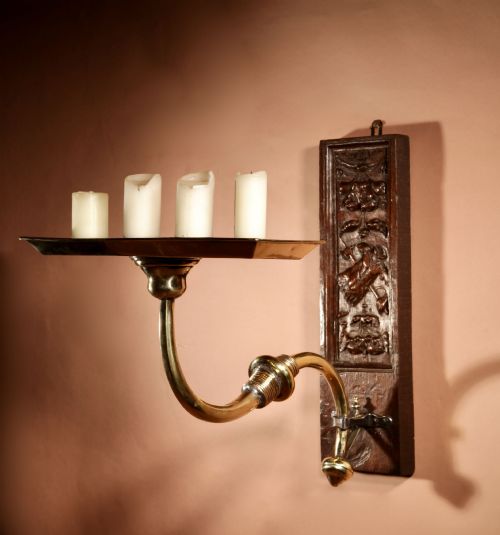
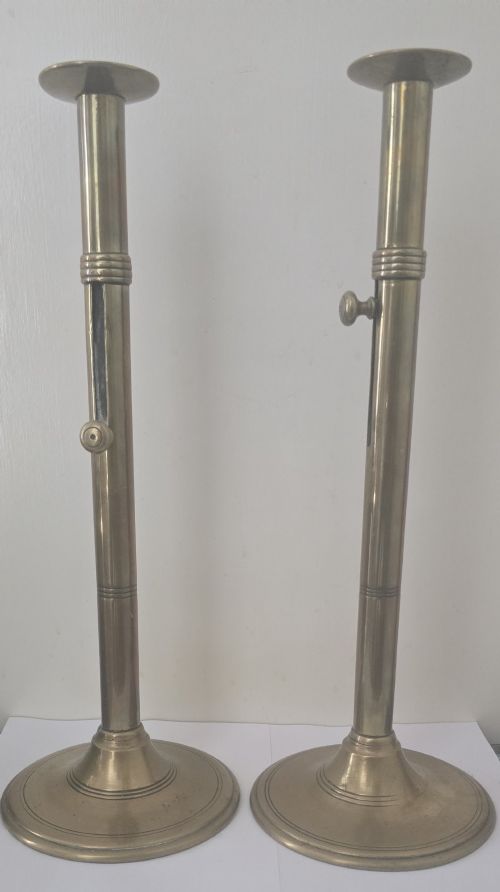
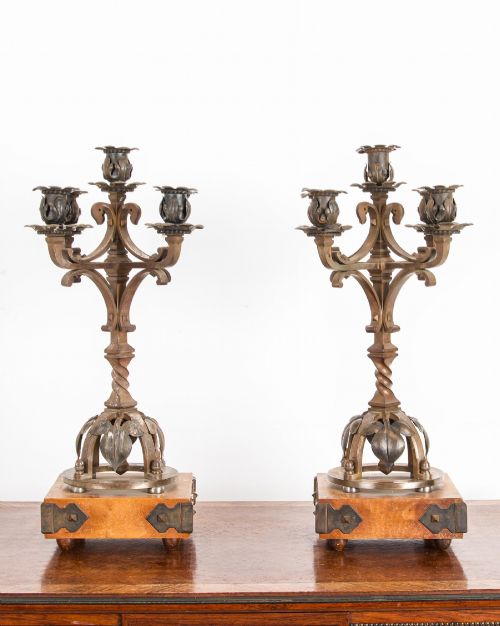
Candlesticks dominate the forms, appearing alongside pricket candlesticks, candelabra, chandeliers, and wall sconces. Many of these items date from the nineteenth century, with examples stretching from Georgian origins through to the early decades of the twentieth century.
Quality factors in church metalwork
The distinction between ordinary production and finer items rests on the crispness of the casting and the weight of the metal. Heavier gauge brass and deeply chased ornamentation signal superior craftsmanship.
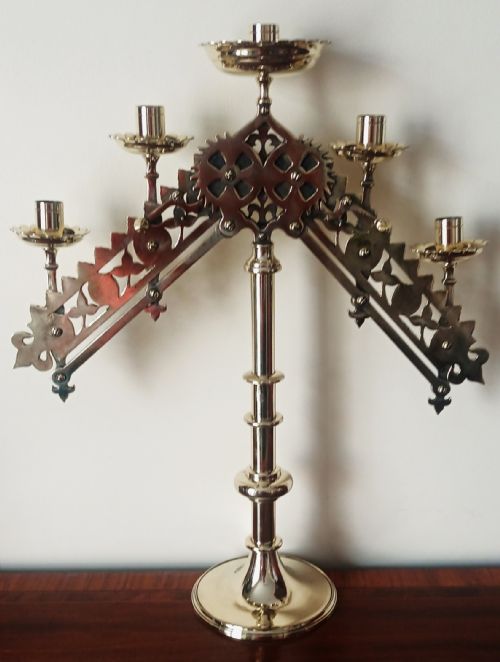
Design complexity also sets examples apart, as pieces featuring architectural tracery, articulated branches, or complete matching sets of four command stronger interest than basic single candlesticks.
Ecclesiastical Brass Light Retail Price Guide 2026
Typical asking prices for ecclesiastical brass light among the pieces listed under this phrase on Sellingantiques today, from the lower quarter to the upper quarter. They describe what is for sale here now, not the wider market.
Listings span the 1800s, Victorian era, and 1930s, incorporating brass, bronze, gilt brass, and glass elements.
Joseph Wilmotte Liege·T Thomason Co
The Ecclesiastical Brass Light Glossary
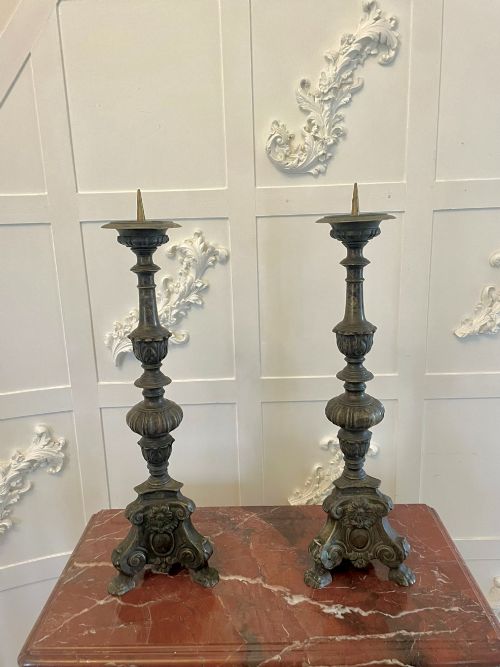
- Pricket candlestick
- A candle holder featuring an upright metal spike that pushes directly into the base of a candle, rather than sitting inside a socket. This style is frequently found on church altars.
- Gothic Revival
- An architectural and decorative style reviving medieval forms, characterised by pointed arches, trefoils, and heavy vertical lines. It shapes much of the Victorian metalwork seen here.
- Ormolu
- Finely ground high-carat gold applied to a bronze base using a mercury amalgamation process, or simply cast gilt bronze used for decorative highlights. It gives objects a warm, luminous surface.
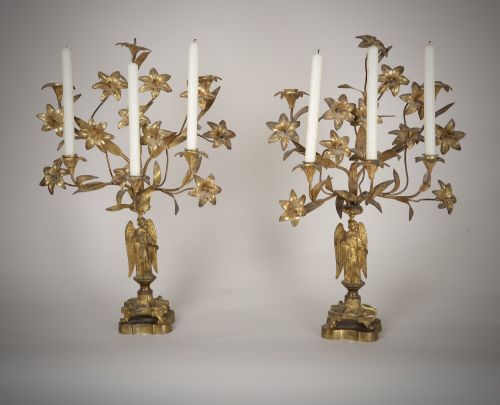
- Candelabra
- A branched candlestick holding multiple candles on separate arms. These pieces range from simple two-branch designs to large five-branch altar fittings.
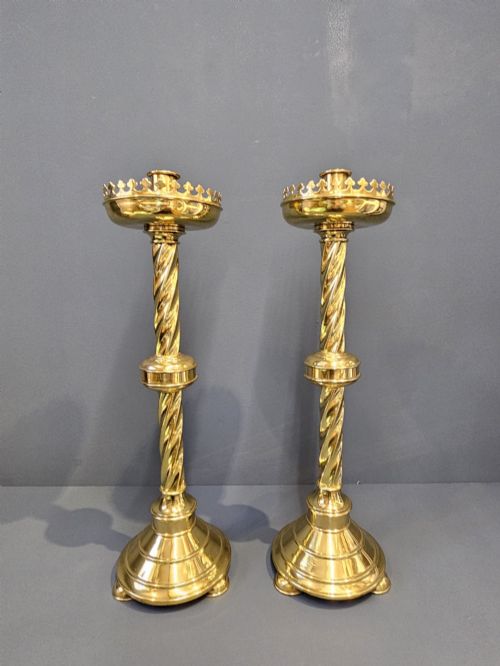
- Altar candlestick
- A tall, stable candlestick designed specifically for placement upon a church altar. They often display substantial bases to prevent tipping.
Ecclesiastical Brass Light: Frequently Asked Questions
What is a pricket candlestick?
A pricket candlestick uses a sharp metal spike at the top to secure the candle instead of a traditional socket cup. This design dates back to medieval liturgical practices.
You find this form frequently on heavy church altar pieces meant to hold large, thick wax candles during services.
How do I date an ecclesiastical candlestick?
Dating relies on stylistic clues like Gothic Revival motifs, casting weight, and construction seams. Victorian pieces often display heavy ornamentation and distinct patination.
Evidence in these listings points predominantly to the nineteenth century, with Georgian roots and later twentieth-century iterations also appearing.
Can these altar lights take modern bulbs?
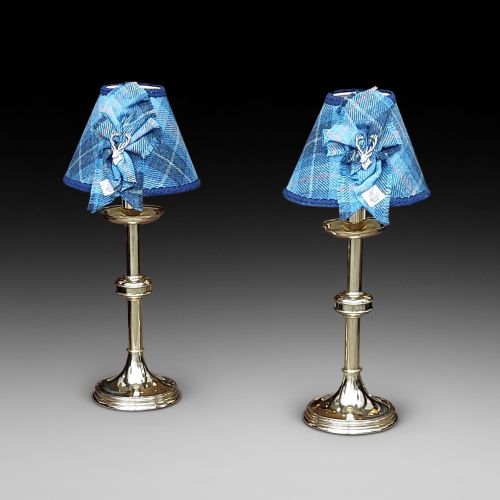
Many altar candlesticks and prickets are later converted into table lamps using discreet wiring and fitted lamp holders. This allows them to function safely as domestic lighting.
Unconverted pieces retain their original prickets or sockets for traditional candle use.
Are matching pairs common?
Matching pairs and occasionally sets of four appear regularly among church metalwork because altars required symmetrical arrangements. These paired pieces tend to hold strong appeal for interior placement.
Single items also surface, often surviving independently from larger church assemblages.