

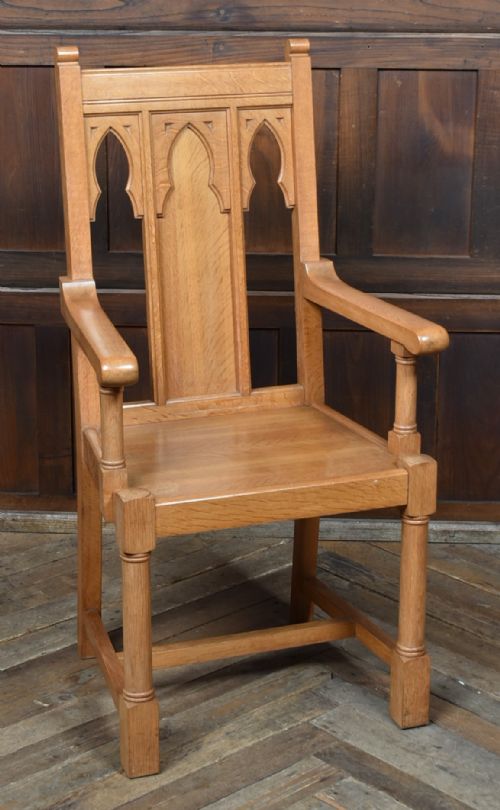


Ecclesiastical Armchair
An ecclesiastical armchair brings severe lines and solemn presence into a room, rooted firmly in Gothic Revival design.
Ecclesiastical Armchair
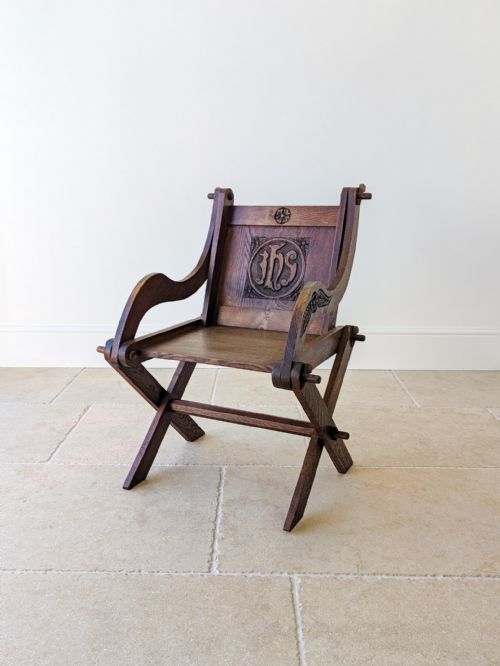
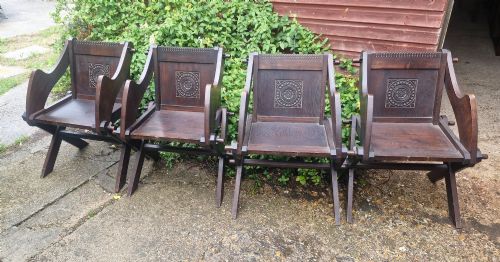
The ecclesiastical armchair search phrase gathers substantial seating drawn from chapel, church and monastic contexts, spanning the Victorian and Edwardian eras. Buyers encounter imposing throne chairs alongside the distinctive X-framed Glastonbury chair.
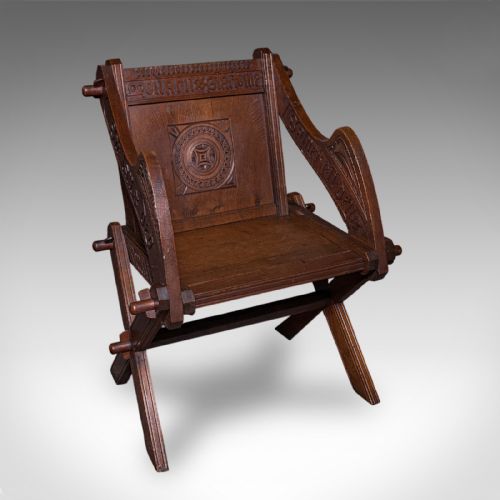
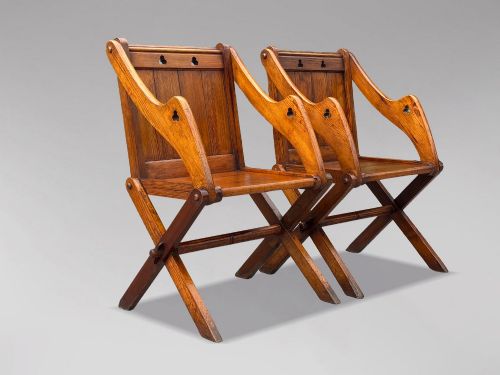
Glastonbury chairs dominate the selections, offering low elbow seats and intersecting wooden supports that mirror ancient ecclesiastical models. Alongside these, chapel throne chairs and larger Gothic revival armchairs provide high backs and architectural presence.
Materials and Construction
Makers utilised solid timbers such as oak and pitch pine to build these sturdy seats, often selecting regional woods like English, Welsh or Scottish oak. Painted wood and structural metal also appear across the listings.
Joinery techniques focus on strength and architectural weight, reflecting Gothic revival design principles with carved inscriptions and supportive armrests. Upholstery is minimal, relying instead on the timber grain and substantial frame.
Ecclesiastical Armchair Retail Price Guide 2026
Typical asking prices for ecclesiastical armchair among the pieces listed under this phrase on Sellingantiques today, from the lower quarter to the upper quarter. They describe what is for sale here now, not the wider market.
Some Glastonbury chairs bear carved inscriptions, turning a quiet chapel seat into a silent storyteller.
Judging Quality
Quality rests in the fidelity of the Gothic revival detailing and the selection of timber, distinguishing simple utilitarian chapel seats from imposing throne armchairs. Crisp carving and substantial proportions elevate certain pieces above standard vernacular seating.
The integrity of the timber framing and the balance of the X-frame construction define the better examples. Original painted finishes and authentic period inscriptions also contribute to the distinction between ordinary church chairs and finer works.
The Ecclesiastical Armchair Glossary
- Glastonbury chair
- A traditional X-framed wooden armchair with a sloping back and panel seat, closely associated with ecclesiastical revival designs. This form relies on intersecting structural members for stability.
- Gothic Revival
- An architectural and decorative style drawing on medieval ecclesiastical forms, prominent throughout the nineteenth century. It uses pointed arches, heavy timber, and solemn proportions.
- Pitch pine
- A resinous softwood utilised for sturdy Victorian church furniture due to its durability and distinct grain pattern. It provides a robust alternative to oak in ecclesiastical settings.
- Throne chair
- A high-backed, imposing armchair designed for ceremonial use within a chapel or church. These pieces command attention through elevated height and carved architectural details.
Ecclesiastical Armchair: Frequently Asked Questions
Where were ecclesiastical armchairs originally used?
These chairs served primarily within churches, chapels, and monastic environments, often reserved for clergy or dignitaries during services.
Over time, the Gothic revival taste brought these solemn seating forms into domestic libraries, halls, and studies.
What is the difference between oak and pitch pine?
Oak is a dense hardwood valued for its strength and rich grain, frequently employed in English and Welsh church furniture.
Pitch pine is a durable softwood with high resin content, selected by nineteenth-century makers for large institutional seating.
How should I place an ecclesiastical armchair at home?
These substantial chairs work well as singular statement pieces in hallways, studies, or rooms with high ceilings.
Their architectural lines pair naturally against plain walls where the timber frame and Gothic details remain unhindered.