




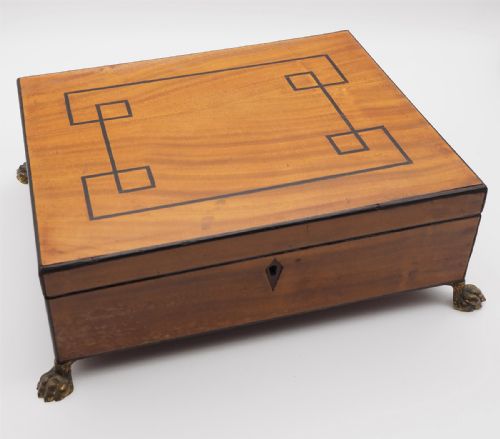


Ebony Trinket Box
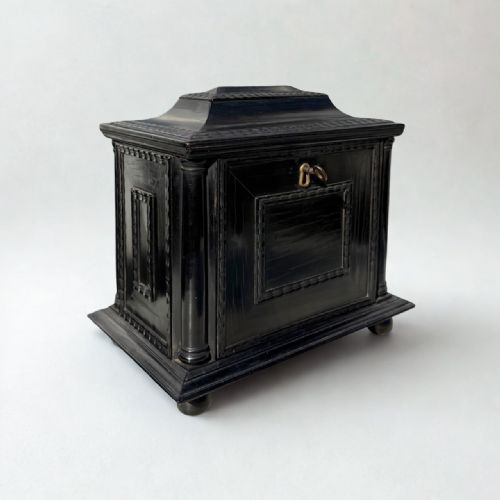
An ebony trinket box offers a dark, dense wooden housing for small treasures, shaped by centuries of global craftsmanship.
Ebony Trinket Box
When you search for an ebony trinket box, you encounter a range of dark wooden vessels designed for small valuables, often created across the nineteenth and eighteenth centuries. The pieces on this page span several eras, from Regency and Victorian to Edwardian and the nineteen-thirties, reflecting diverse international workshops.
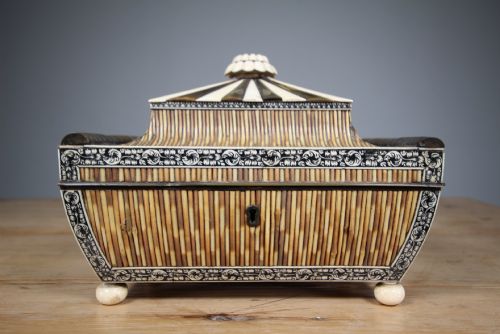
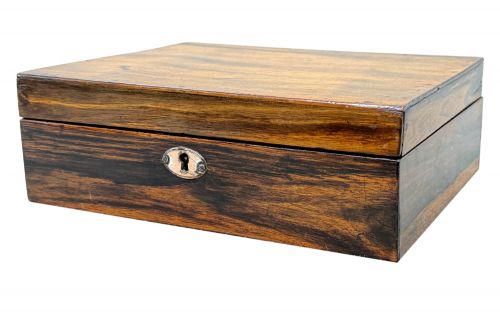
You are most likely to meet solid ebony examples alongside veneered boxes incorporating coromandel, burr yew, and macassar. Forms vary from simple rectangular trinket boxes and snuff boxes to sarcophagus-shaped quill boxes and elaborate table caskets.
Materials and technique
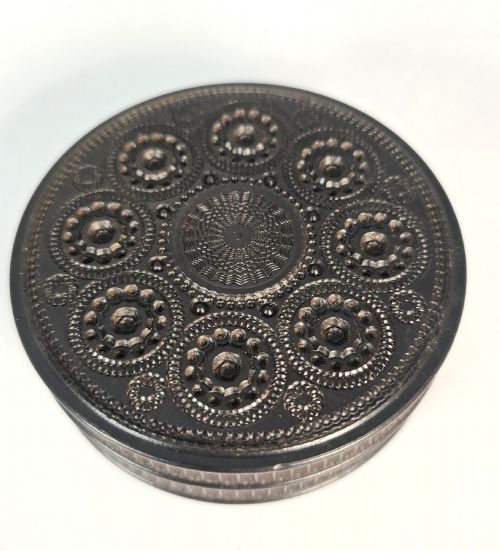
Maker techniques rely heavily on dense tropical hardwoods, paired with contrasting natural inlays such as bone, mother-of-pearl, and porcupine quill. Craftspeople also utilised engine-turning, parquetry, and meticulous mosaic work like Tunbridge ware to decorate the surfaces.
Many of the global pieces feature intricate geometric patterns formed by contrasting materials embedded directly into the dark wood ground. Others incorporate metal mounts in brass or silver, adding structural corners and hinged hardware.
Ebony Trinket Box Retail Price Guide 2026
Typical asking prices for ebony trinket box among the pieces listed under this phrase on Sellingantiques today, from the lower quarter to the upper quarter. They describe what is for sale here now, not the wider market.
Materials documented across the inventory include solid ebony, coromandel, burr yew, brass, bone, and mother-of-pearl.
Quality factors
Quality rests upon the precision of the surface inlays and the stability of the dense timber frame. Pieces with complex pictorial pietra dura plaques or intricate quill and bone work demonstrate superior workshop skill.
The sophistication of the internal compartments and the survival of original hinges and escutcheons distinguish finer boxes from simpler utility pieces. Structural joinery and the depth of the engine-turning also mark the distinction between standard and exceptional examples.
The Ebony Trinket Box Glossary
- Ebony
- A dense, heavy black or very dark brown heartwood obtained from several species of tropical trees. It provides a smooth, dark surface that accepts fine carving and polishing.
- Porcupine Quill
- Quills harvested and arranged in geometric patterns across box surfaces, frequently associated with nineteenth-century Ceylonese and Anglo-Indian work. They create a distinctive textured mosaic.
- Pietra Dura
- An artistic technique using cut and fitted polished coloured stones to create pictorial images. These panels are often mounted into the lids of fine boxes.
- Engine-Turning
- A mechanical method of ornamenting a metal or wood surface with intricate geometric patterns using a specialised lathe. This creates precise, repeating decorative lines.
- Parquetry
- Geometric mosaic woodwork arranged in patterns such as cubes or stripes to ornament box surfaces. It forms durable and visually striking decorative panels.
Ebony Trinket Box: Frequently Asked Questions
What are these boxes used for?
These vessels served historically to contain small personal valuables, stamps, snuff, or jewellery upon a dressing table or desk. Their compact scale made them suitable for private chambers and travel.
Today, they function well for holding modern rings, cufflinks, and keepsakes while displaying the rich grain and inlay of historical woodwork in a room.
How do I date an ebony box?
Dating relies upon observing the construction methods, secondary timbers, hinge types, and stylistic indicators such as Regency sarcophagus shapes or Victorian parquetry. Materials like porcupine quill or pietra dura also point to specific regional manufacturing periods.
Examining the interior linings and paper currency or trade labels left inside can occasionally narrow the timeline further.
How should I care for ebony and quill?
Keep these boxes away from direct sunlight and rapid humidity fluctuations to prevent the dense woods from splitting and the delicate inlays from lifting. Natural waxes applied sparingly help maintain the finish of the timber.
Handle quill and bone elements with care, as dried natural materials remain sensitive to heavy impacts and moisture.
Where were Anglo-Indian boxes made?
Anglo-Indian and Ceylonese boxes were produced in South Asia during the nineteenth century, often combining local timbers like ebony with indigenous decorative elements. Workshops utilised materials such as porcupine quill, ivory, and bone to appeal to European tastes.
These objects reflect the colonial trade routes and the exchange of decorative arts between Britain and the Indian subcontinent.