



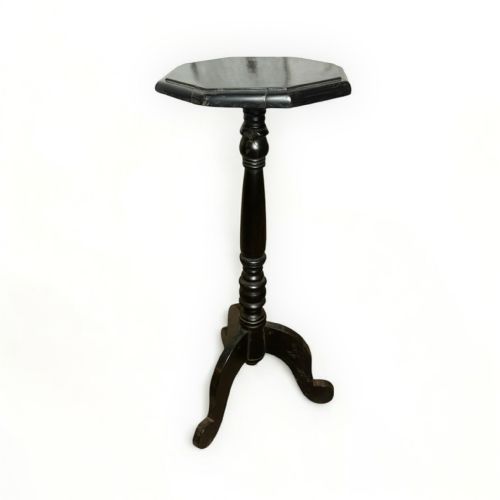
Ebony Side Table
Solid ebony side table forms bring rich, dark timber and precise contrast into a room.
Ebony Side Table
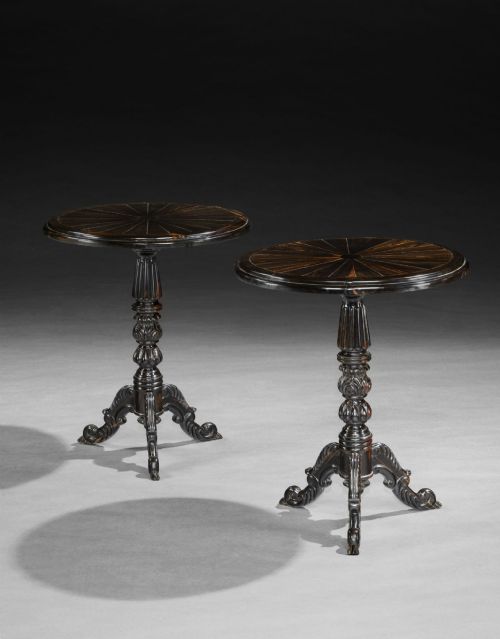
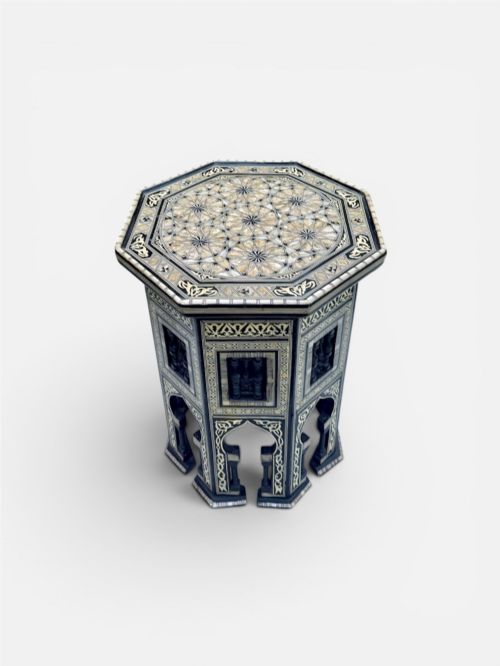
An ebony side table functions as a compact surface for lamps, books or display, appearing in forms from tripod tables to octagonal occasional pieces. Buyers seeking this phrase encounter pieces spanning the nineteenth century through the art deco period, alongside regional work from Ceylonese, Anglo-Indian and Middle Eastern workshops.
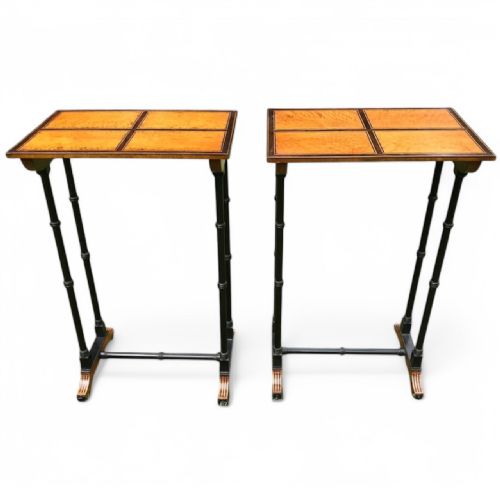
The material vocabulary ranges from solid ebony and ebonised wood to lighter secondary timbers banded, strung or inlaid with ebony lines. Forms include fold-over card tables, multi-tiered etageres, writing tables and low coffee tables.
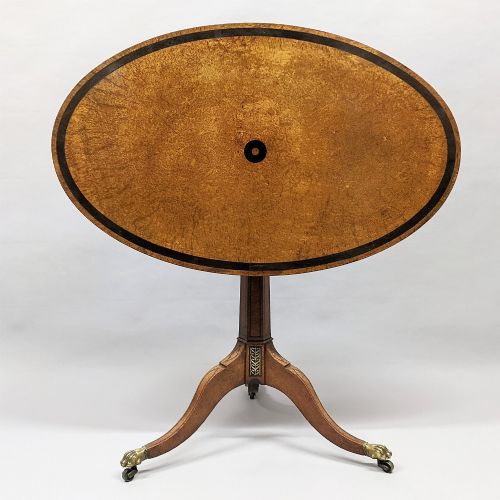
Victorian and Regency examples frequently pair ebony with burr walnut, mahogany, satinwood or amboyna. These combinations deliver the dark, dense linear contrast characteristic of the aesthetic movement and nineteenth-century neoclassical design.
How they were made
Turning, carving and structural assembly varied by region, from the intricate pierced woodwork of Hoshiarpur tables to the crisp, classical banding found on Regency and Edwardian occasional tables.
Several tables feature hidden compartments designed for cards, letters or secrets.
What varies in quality
Execution of inlay and timber selection separate standard production from exceptional examples. Dense, figured veneers like burr walnut, amboyna and macassar ebony elevate a piece alongside finely turned tripod bases and intricate bone or mother-of-pearl work.
Structural integrity in joints, stability in tilt-top or folding mechanisms, and the crispness of carved details determine the overall standard of construction.
Maison Millet·George Oakley·Gillows·Henry Clay·Lamb of Manchester
The Ebony Side Table Glossary
- Ebonised
- Timber treated to imitate the dark, heavy properties of true ebony. Fruitwood and oak frequently received this dark finish during the nineteenth century.
- Strung
- Inlaid with narrow strips of contrasting wood or metal. This technique creates fine border lines around table tops and drawer fronts.
- Tripod table
- A small freestanding table supported by three legs radiating from a central pillar. These forms frequently feature tilt-top mechanisms.
- Etagere
- A set of open shelves for displaying small objects. These tiered pieces often incorporate slender supports and delicate wood inlay.
- Boulle
- A form of marquetry using brass and tortoiseshell inlaid into a dark ground. Named after the French cabinetmaker, it appears on nineteenth-century continental tables.
Ebony Side Table: Frequently Asked Questions
How were ebony side tables used historically?
These versatile tables served various domestic functions, acting as lamp stands in reception rooms, writing surfaces in private chambers, or card tables for evening entertainment.
Smaller occasional and tripod forms allowed servants to reposition them easily around a drawing room depending on the daily activity.
How do I care for an antique ebony table?
Maintain stable indoor humidity levels away from direct heat sources to prevent timber movement or veneer lifting. Regular dusting with a soft, dry cloth preserves the polished surface.
Avoid silicone-based polishes and excessive moisture, applying occasional traditional wax if the timber appears dry.
What defines an Aesthetic Movement side table?
Aesthetic movement pieces reject excessive ornamentation in favour of clean architectural lines and contrasting dark timbers. They frequently combine ebonised or ebony elements with gilt highlights, brass mounts or exotic secondary woods.
These designs reflect a late nineteenth-century shift toward craftsmanship and visual balance.
How do I distinguish Regency from Victorian examples?
Regency tables rely on classical restraint, featuring clean brass stringing, mahogany or satinwood carcasses, and architectural proportions influenced by neoclassical design.
Victorian pieces embrace heavier contrast, dense burr veneers, intricate marquetry, and regional influences such as Anglo-Indian carving or ebonised gothic revival forms.