
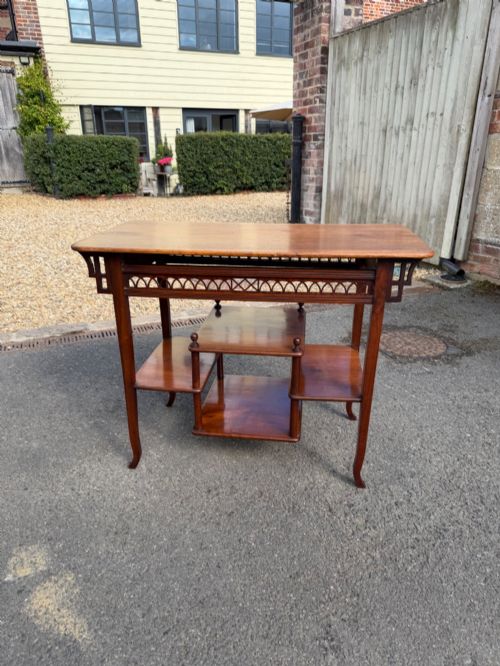
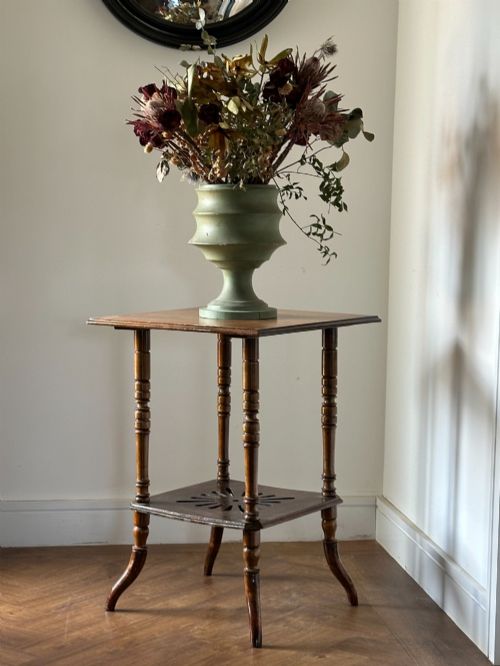
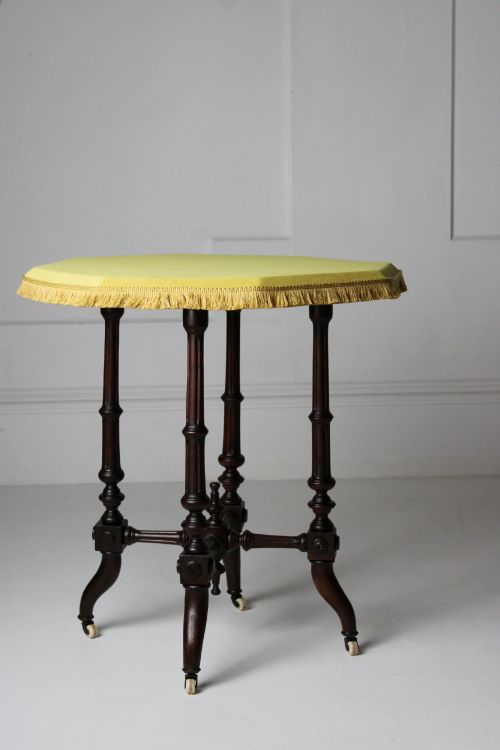

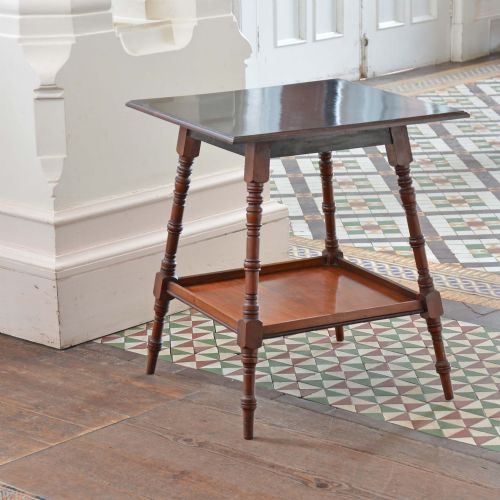


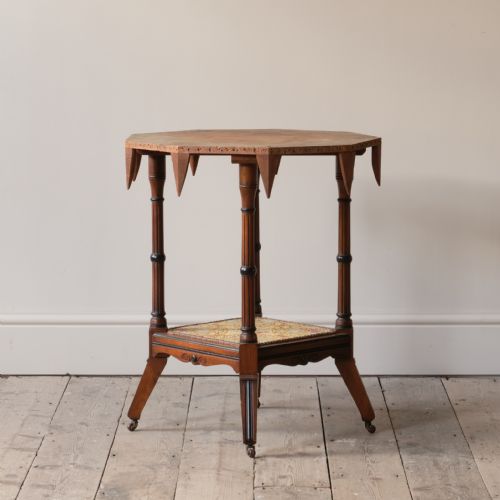


Ebonised Walnut Lamp Table
An ebonised walnut lamp table brings dark, striking contrast and rich timber grain to a room.
Ebonised Walnut Lamp Table
An ebonised walnut lamp table combines the deep, dramatic finish of blackened wood with the warmth and figure of walnut. These pieces primarily manifest as occasional and side tables designed to sit beside seating or display lighting.
The selections span distinct historical periods, with nineteenth century Victorian and Aesthetic movement examples appearing alongside later Art Deco pieces. Makers from these eras utilised the stark contrast of ebonised surfaces against rich walnut to create visually arresting furniture.
Buyers frequently encounter compact occasional tables and multi-tiered stands suited for modern spaces. The forms range from simple nineteenth century occasional pieces to sophisticated Art Deco two-tier and three-tier designs.
How they were made
The construction relies heavily on walnut timber, frequently enhanced with burr walnut or figured veneers to provide intricate grain patterns. Woodworkers applied ebonisation to mimic expensive exotic hardwoods like ebony, creating a dense black finish.
Brass mounts, casters, and marble inserts appear as decorative and functional elements on select pieces. Marquetry and contrasting maple or ebony details further enrich the surfaces of these tables.
Listings feature walnut, ebonised wood, burr walnut, mahogany, and marble across nineteenth century and Art Deco periods.
What varies in quality
Quality rests in the handling of the dual materials, where the depth of the ebonised finish meets the clarity of the walnut grain. Superior examples display precise joinery and well-preserved surface treatments that highlight the natural timber beneath the black polish.
E.W Godwin·H Ogden of Manchester
The Ebonised Walnut Lamp Table Glossary
- Ebonised
- Wood treated with stain, dye, or paint to imitate the dark, heavy appearance of ebony. This finish gained immense popularity during the nineteenth century for furniture requiring sharp visual contrast.
- Burr walnut
- Timber taken from a tree growth or burl, yielding swirling, knotty grain patterns prized for decorative veneer work. Cabinet makers selected these sections to add rich visual texture to table tops.
- Aesthetic movement
- A late nineteenth century design style emphasising art for art's sake, often drawing inspiration from Japanese motifs. Tables from this current feature clean lines and ebonised surfaces.
- Occasional table
- A small, movable table designed for specific, intermittent uses such as holding a lamp or drinks. These pieces prioritise versatility alongside decorative presence.
- Marquetry
- The art of applying pieces of veneer to a structure to form decorative patterns and pictures. Craftsmen used various woods to create intricate surface designs on select tables.
Ebonised Walnut Lamp Table: Frequently Asked Questions
What is an ebonised walnut lamp table?
An ebonised walnut lamp table is a small surface combining dark, blackened wood with walnut timber. These pieces function as occasional or side tables for domestic spaces.
They appear in various styles ranging from Victorian Aesthetic movement designs to Art Deco multi-tiered tables.
How do I date an ebonised walnut table?
Dating depends on stylistic cues, construction methods, and materials recorded in the piece. Victorian and Aesthetic movement examples show nineteenth century characteristics, while stepped forms point to the 1930s.
Cabinet making techniques and secondary woods also help confirm the period of manufacture.
Where should I place a lamp table?
These tables suit placement beside armchairs, sofas, or in hallways where surface space is needed without a large footprint. Their compact dimensions make them adaptable to different rooms.
Multi-tiered versions offer extra storage or display levels for books and small objects.
How do I care for ebonised wood and walnut?
Care involves keeping the furniture away from direct sunlight and moisture to protect the delicate ebonised finish and wood veneer. Regular dusting with a soft cloth maintains the surface sheen.
Avoiding harsh chemical cleaners ensures the historic polish remains intact.