
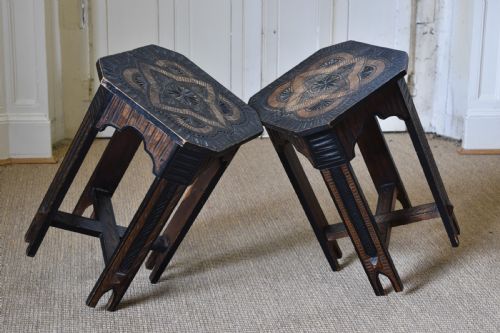
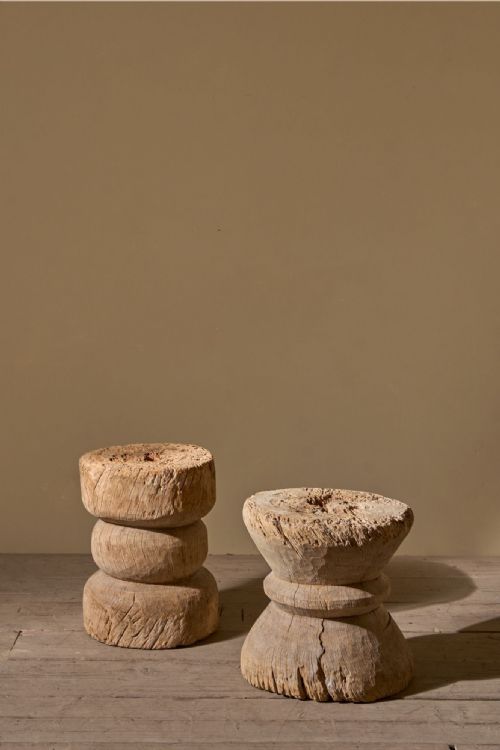
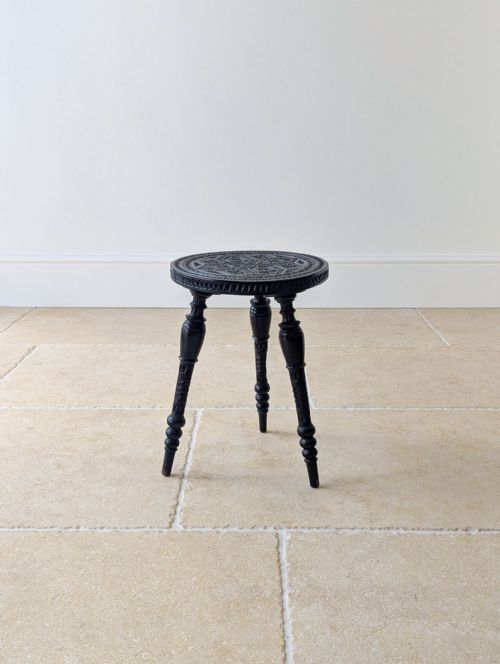
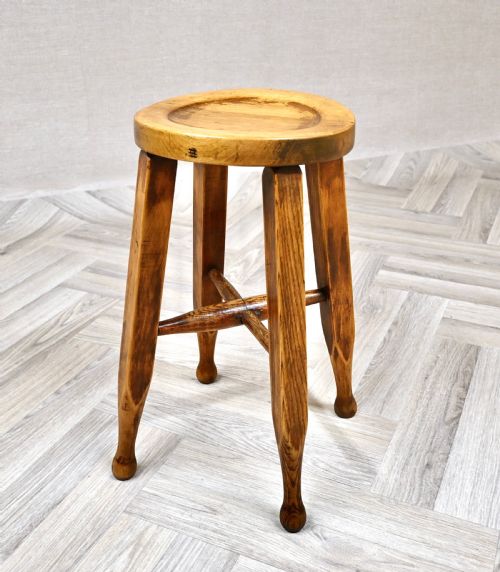
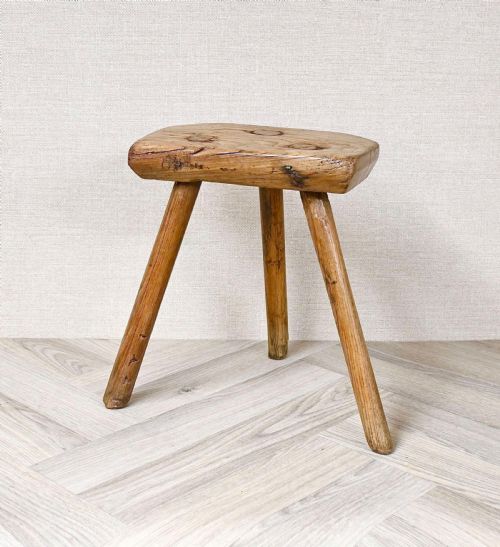


Vintage Carved Plant Stool
A vintage carved plant stool brings organic texture and architectural height to a corner, functioning as a pedestal for trailing foliage or as a low occasional seat.
Vintage Carved Plant Stool
A vintage carved plant stool encompasses compact low furniture originally designed to elevate greenery, ceramics, or lamps within domestic interiors. These pieces frequently double as side tables, candle stands, or accent seats depending on their height and top configuration.
The selections found here draw from diverse stylistic traditions including Jacobean revival oak, Anglo-Indian colonial craftsmanship, and African tribal forms. You will commonly encounter solid timber surfaces supported by turned legs, figural supports, or chip-carved aprons.
Execution spans multiple centuries, reaching from eighteenth-century rustic milking stools through nineteenth-century Victorian ebonised designs to early twentieth-century Arts and Crafts output. Each period contributes distinct joinery methods and decorative vocabularies to the category.
Assessing quality and execution
Superior examples demonstrate crisp depth in the hand-carved motifs, particularly across figural elements like elephant legs or geometric panels. The precision of the joinery and the selection of well-figured timber distinguish bespoke workshop creations from simpler utilitarian items.
Proportion and stability dictate the functional success of these pieces. Higher-grade items maintain balance across three or four legs without rocking, while retaining their original surface patination rather than undergoing aggressive modern refinishing.
The inventory bridges multiple eras, including eighteenth-century primitive forms and twentieth-century Arts and Crafts designs.
The Vintage Carved Plant Stool Glossary
- Chip carving
- A technique where small chips are removed from a flat wooden surface with knives or chisels to create geometric patterns. This method appears frequently on regional European and colonial pieces.
- Joint stool
- A sturdy wooden stool constructed with mortise and tenon joints pegged together rather than glued. These items served functional seating and household support roles.
- Ebonised
- Wood treated with a chemical stain or black finish to imitate expensive ebony. This treatment gained popularity during the Victorian period for accent furniture.
- Bobbin turned
- Legs or stretchers shaped on a lathe to resemble a series of wooden bobbins or spools strung together. It remains a hallmark of seventeenth-century revival design.
- Pokerwork
- The art of decorating wood by burning designs into the surface with heated metal tools. Scottish and European folk pieces occasionally utilise this method.
Vintage Carved Plant Stool: Frequently Asked Questions
How do I style a plant stool at home?
Position a sturdy oak or hardwood stool in an empty corner to add vertical interest to trailing houseplants. Ensure the top surface has a water-resistant finish or use a saucer beneath pots to protect the timber.
Alternatively, use the piece beside an armchair as an occasional table for books or a small lamp. The compact footprint allows these items to fit into tight spaces without overwhelming the room.
What is the difference between a plant stool and a side table?
Plant stools generally feature taller, narrower proportions or smaller top surfaces designed specifically to elevate botanical specimens or decorative objects. Side tables offer broader surfaces intended for daily utility and arm-level placement.
Despite these original distinctions, many vintage examples function interchangeably in modern interiors. Height and surface area remain the best guides for determining daily use.
How should I clean antique carved wood?
Dust carved surfaces regularly with a soft, dry brush to prevent debris from settling into deep recesses. Avoid using wet cloths or modern silicone polishes that can degrade historical wax finishes.
Apply a microcrystalline wax sparingly once or twice a year if the timber appears dry. Buff gently with a clean cloth to maintain the natural sheen of the wood.