


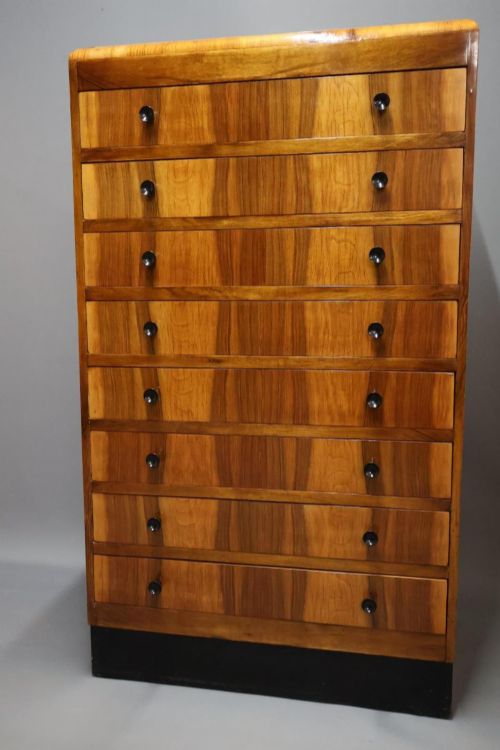


Ebonised Walnut Chest
An ebonised walnut chest brings together rich dark timber and warm figured grain, offering a striking presence in any interior.
Ebonised Walnut Chest
An ebonised walnut chest combines the deep, dramatic finish of ebonised wood with the distinctive grain of walnut, spanning forms from tallboys and commodes to bedside cabinets and collectors' pieces on stands. These items originate across various eras, notably the seventeenth, eighteenth, and nineteenth centuries, alongside twentieth-century Art Deco and Biedermeier examples.
The pieces appearing on this page range from Italian serpentine bedside chests and Georgian commodes to Swiss music boxes and Flemish cabinets. Buyers will encounter both grand continental forms and compact bedside furniture, reflecting diverse European cabinet-making traditions.
How they were made
Cabinet makers utilised solid walnut and walnut veneer, frequently incorporating burr walnut for its complex, swirling figures. Surfaces were treated to achieve a dark ebonised finish, creating a sharp contrast against the natural golden-brown tones of exposed wood.
Construction methods involved traditional joinery, complemented by decorative techniques such as marquetry, wooden inlay, and brass hardware. Certain pieces integrate marble tops or structural elements in oak and rosewood to add stability and visual weight.
Ebonised Walnut Chest Retail Price Guide 2026
Typical asking prices for ebonised walnut chest among the pieces listed under this phrase on Sellingantiques today, from the lower quarter to the upper quarter. They describe what is for sale here now, not the wider market.
Several music boxes hide within wooden cases alongside the chests and cabinets, ready to play a tune.
What varies in quality
The distinction between tiers of quality rests on the precision of the cabinet-making and the selection of timber veneers. Finely figured burr walnut and meticulous marquetry indicate higher craftsmanship, whereas simpler constructions rely on plain walnut surfaces.
Proportion and the execution of the ebonised detailing dictate the visual success of a piece. Superior examples display harmonious balance and crisp execution in their decorative elements.
H. Ogden Manchester
The Ebonised Walnut Chest Glossary
- Ebonised
- Wood finished to resemble ebony through staining or painting. This technique creates a dense, dark surface that highlights adjacent natural wood grains.
- Burr walnut
- Timber taken from a growth on a walnut tree, yielding intricate swirling patterns. It is typically sliced into veneers for decorative cabinet fronts.
- Commode
- A low chest of drawers or cabinet originating in France. These pieces often feature ornamental hardware and shaped fronts.
- Marquetry
- Inlaid woodwork forming decorative patterns using various veneers. Artisans fit pieces of contrasting timber into a prepared background.
- Tallboy
- A tall chest of drawers, often constructed in two sections. This form maximises vertical storage space while maintaining a compact footprint.
Ebonised Walnut Chest: Frequently Asked Questions
How do I care for ebonised walnut?
Dust regularly with a soft, dry cloth to prevent accumulation. Avoid placing the furniture near direct heat sources or strong sunlight to protect the finish.
Apply specialised furniture wax sparingly when the timber appears dry. Buff gently to maintain the lustre of both the ebonised surfaces and the walnut grain.
Where should I place this chest?
These pieces suit living rooms, hallways, or bedrooms depending on their scale. Bedside chests fit beside a bed, while commodes and tallboys anchor larger wall spaces.
Ensure the room has stable humidity levels to preserve the wooden structure and veneers. Position the item away from damp walls or radiators.
How can I tell the period?
Examine the construction methods, drawer linings, and hardware types used in the piece. Hand-cut dovetails and specific timber preparation indicate earlier centuries of manufacture.
Compare the silhouette and decorative motifs against known historical styles such as Biedermeier or Art Deco. Details like marble tops and inlay styles often point to specific European regional traditions.
Are these pieces suitable for daily use?
Antique chests of drawers and cabinets remain functional storage items for modern interiors. The internal space accommodates everyday belongings while providing a decorative surface.
Handle drawers and doors with care to preserve historic mechanisms and joints. Regular, gentle use helps maintain the moving parts of these older pieces.