
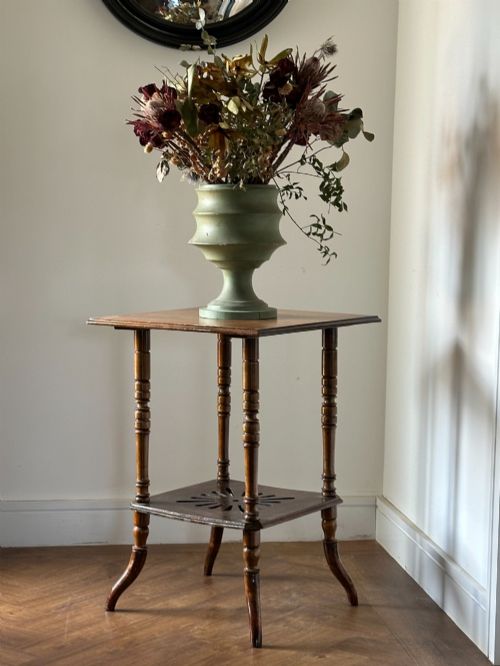
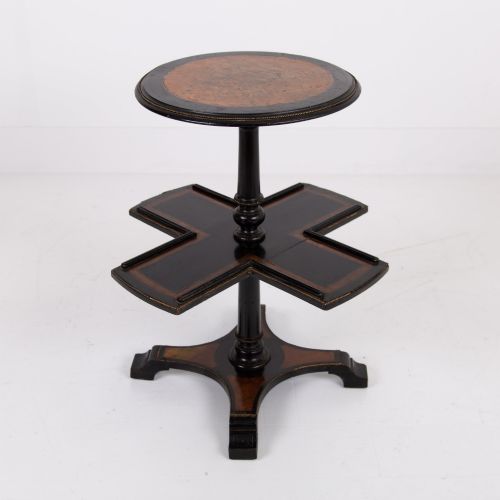
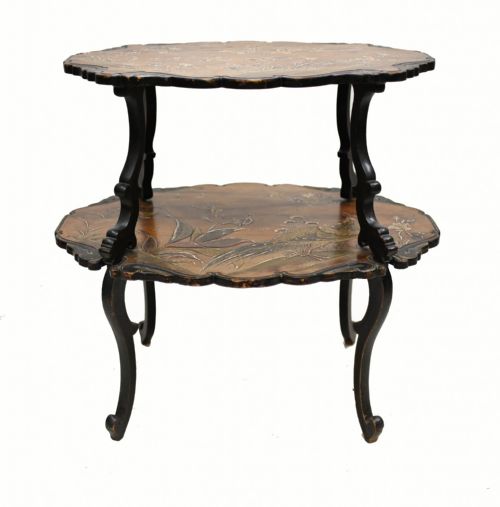


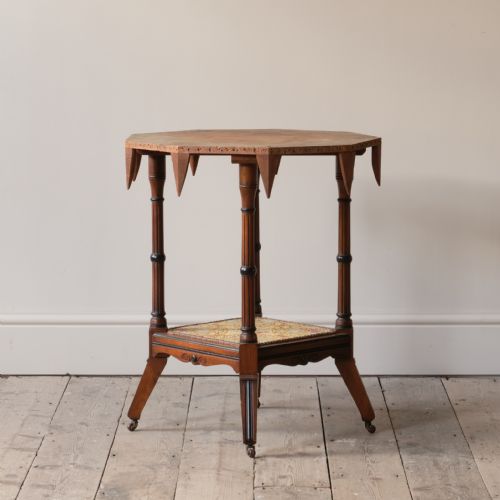


Ebonised Two Tier Table
An ebonised two tier table brings dark, striking surfaces and double the display space to a room, rooted firmly in nineteenth-century design.
Ebonised Two Tier Table
When you search for an ebonised two tier table, you encounter practical multi-level furniture designed for display and convenience across various nineteenth-century and early twentieth-century periods. These pieces function as occasional tables, side tables, plant stands, and etageres, offering a primary top surface complemented by a lower shelf for books or ornaments.
The most common examples on this page date from the Victorian era and the Aesthetic Movement around eighteen eighty, heavily influenced by Japanese design principles and the Anglo-Japanese taste. You also meet later Art Deco interpretations in walnut and oak alongside French etageres.
Makers and designers of the period, notably associated with E.W. Godwin, shaped a distinct aesthetic of slender supports, rectilinear frames, and dark finishes. The double tier format maximises utility in smaller spaces without sacrificing decorative impact.
Materials and construction
Timbers such as hardwood, walnut, mahogany, and amboyna veneer form the core structure, treated with ebonisation to imitate expensive ebony. Craftsmen frequently applied parcel gilt, brass mounts, or inlaid boxwood and mother of pearl to highlight the dark surfaces.
Surface decoration ranges from japanning and hand painting to intricate marquetry and floral inlays, particularly on pieces originating from Sorrento or French workshops. Structural joints rely on traditional cabinet-making techniques to support the dual tiers securely.
Listings feature pieces spanning the nineteenth and twentieth centuries, predominantly showcasing Victorian, Aesthetic Movement, and Art Deco styles.
Judging quality and craftsmanship
Quality reveals itself in the crispness of the carving, the depth of the ebonisation, and the selection of underlying timbers like burr walnut or amboyna veneer. Superior examples display refined proportions, secure tier joints, and subtle decorative details such as brass fittings or hand-painted motifs rather than plain, heavy construction.
The distinction between standard commercial production and high-end design lies in the fidelity to Aesthetic Movement principles or the signature of a notable maker. Finer pieces balance delicate structural framing with robust material integrity, ensuring the multi-tier form remains stable and elegant.
Liberty of London·Bertram and Son·H Ogden of Manchester
The Ebonised Two Tier Table Glossary
- Ebonised
- Wood treated with a dark stain, paint, or chemical process to simulate solid ebony. This finish became immensely popular during the Victorian period for achieving a sleek, dramatic look.
- Etagere
- A piece of furniture consisting of several open shelves or tiers for displaying small objects or ornaments. Originating in France, it combines decorative appeal with vertical storage.
- Aesthetic Movement
- A late nineteenth-century design reform movement that emphasised art for art's sake and drew heavy inspiration from Japanese art. It produced slender, ebonised furniture with geometric lines.
- Amboyna veneer
- A highly prized, richly figured wood veneer obtained from the burrs of the Pterocarpus indicus tree. It provides a warm, mottled pattern that contrasts sharply with ebonised framing.
Ebonised Two Tier Table: Frequently Asked Questions
What is an ebonised two tier table used for?
These pieces serve primarily as occasional tables, bedside stands, or plant holders in a drawing room or hallway. The lower shelf offers extra space for books or small decorative objects.
Their compact footprint makes them versatile additions to modern and traditional interiors alike, providing a distinct dark accent against lighter walls.
How do I date an ebonised table?
Dating relies on stylistic clues, timber selection, and construction methods. Pieces from around eighteen eighty often display Aesthetic Movement or Anglo-Japanese geometric lines.
Later twentieth-century examples shift towards Art Deco forms in oak and walnut, while Victorian versions frequently incorporate amboyna veneer or brass details.
How do I care for ebonised wood?
Maintain the finish by dusting gently with a soft, dry cloth and avoiding harsh chemical polishes that can degrade the surface. Keep the table away from direct sunlight and rapid temperature changes.
Applying a suitable wax occasionally helps preserve the sheen of the ebonised surface and protects the underlying timber.