


Ebonised Taxidermy Glass Case
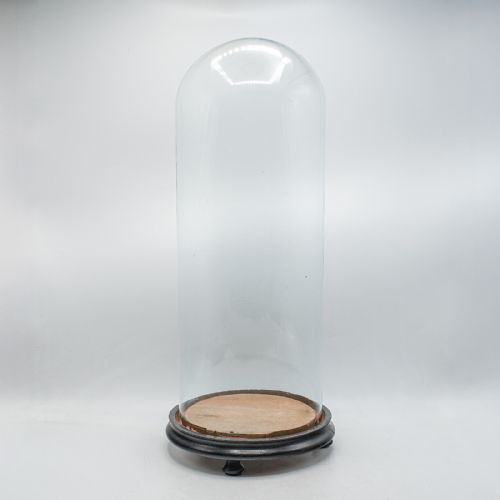
An ebonised taxidermy glass case offers a preserved interior protected by clear glazing and framed in dark timber.
Ebonised Taxidermy Glass Case
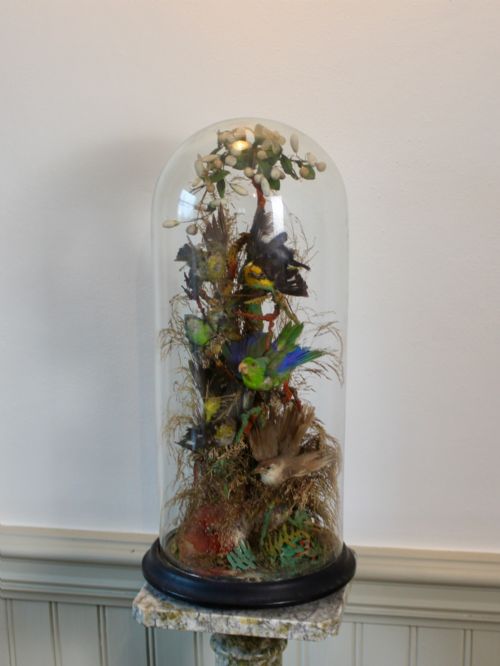
An ebonised taxidermy glass case brings together preserved specimens and protective glazing within a dark timber or ebonised frame. These pieces span the Victorian, Edwardian, and late Victorian periods, taking forms such as tall display domes, oval dioramas, flat-sided domes, and clock cases.
The specimens housed inside range from pairs of waxwings and snow buntings to colourful Indian birds, golden carp, and botanical collections. English examples dominate the selection, often serving as ornamental showcases or collector's domes mounted on timber bases.
How they were made
Makers constructed these enclosures using blown or drawn glass shaped into domes, cloches, and ovoid covers designed to fit securely over wooden bases. The wooden frames and display bases received an ebonised finish to imitate ebony, providing a dark, uniform contrast to the specimens inside.
Interiors frequently incorporate felt, fabric, paper, and velvet as backing or ground materials to stage birds, fish, and botanical specimens. Natural elements such as snow scenes, branches, and artificial foliage completed the miniature habitats before the glass cover was sealed in place.
What varies in quality
Quality rests upon the proportion and clarity of the glass dome, alongside the joinery and finish of the ebonised wooden base. Thicker, clearer glass with minimal distortion elevates an enclosure, while refined turning on the timber base adds structural elegance.
The taxidermy composition itself dictates the standing of the piece, depending on the realism of the mounting, the preservation of plumage or scales, and the artistry of the internal diorama. Signed work from notable taxidermy firms introduces an additional layer of distinction.
James Gardner·J Cooper And Sons
The Ebonised Taxidermy Glass Case Glossary
- Ebonised
- Wood treated with stain, dye, or paint to simulate the dark, dense appearance of genuine ebony. This finish became widely popular in Victorian furniture and display framing.
- Dome
- A rounded glass cover used to protect and display delicate objects or specimens. Domes can be tall, oval, flat-sided, or ovoid.
- Cloche
- A bell-shaped glass cover traditionally used in gardening or display to shield specimens. It sits directly upon a flat base.
- Diorama
- A three-dimensional scene depicting animals, plants, or objects in a simulated natural setting. These arrangements often include painted backdrops or physical scenery like snow or foliage.
- Taxidermy
- The art of preparing, stuffing, and mounting the skins of animals for display. Victorian and Edwardian examples often placed these specimens inside glass enclosures to protect them from dust.
Ebonised Taxidermy Glass Case: Frequently Asked Questions
Where should I place a dome?
Position your display case away from direct sunlight and damp environments to protect the fragile feathers, fabrics, and taxidermy materials inside. Stable indoor conditions prevent the ebonised wood from warping.
A sturdy surface such as a mantelpiece or a dedicated cabinet ensures the heavy glass and wood combination remains secure.
How do I date a dome?
Examine the thickness and slight imperfections of the glass, as older blown glass often exhibits subtle waviness or bubbles. Victorian examples frequently feature heavier timber bases and specific mounting styles compared to later Edwardian pieces.
Makers' labels or stamps underneath the wooden base also provide direct clues to the period of origin and the workshop responsible.
Were these made for homes?
These cases served as popular drawing room ornaments and scientific displays during the Victorian and Edwardian eras. Natural history enthusiasm led collectors to house birds, fish, and botanical specimens safely behind glass.
They allowed households to display exotic or native wildlife and natural curiosities while keeping them free from dust and handling.