




Ebonised Standing Desk
An ebonised standing desk brings dark elegance to a study, offering a commanding platform for writing or reading that dates across several centuries.
Ebonised Standing Desk
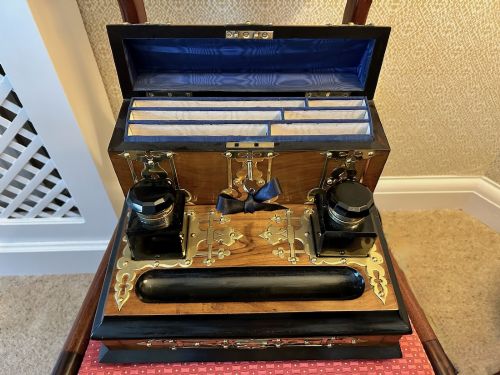
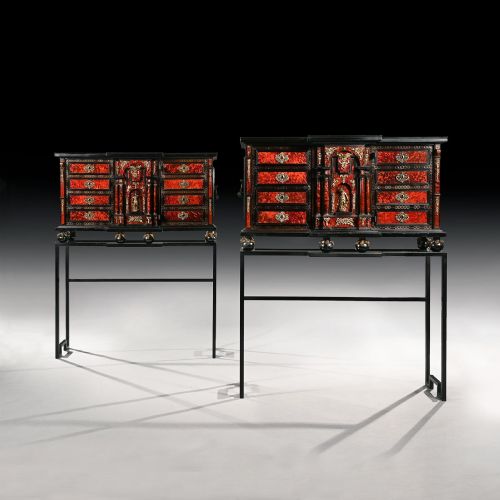
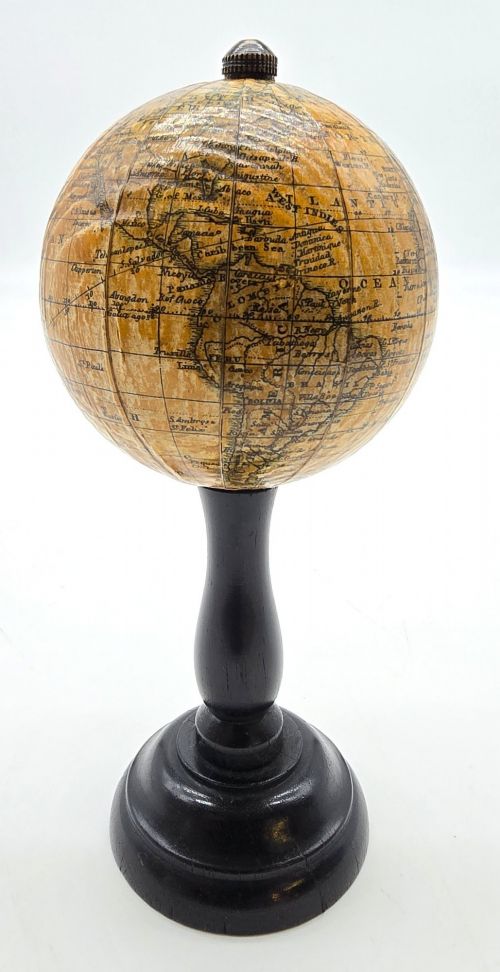
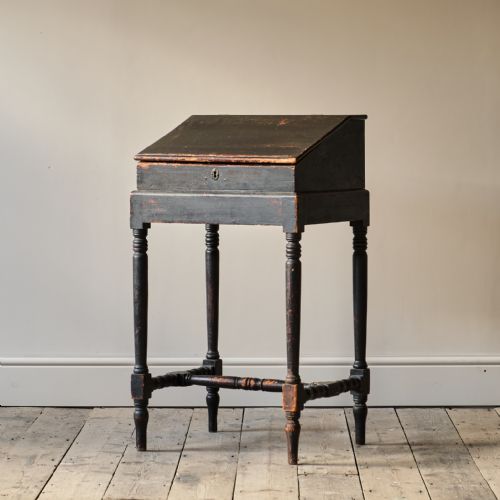
When you search for an ebonised standing desk, you encounter pieces that range from Victorian pine clerks' desks to elaborate Spanish Baroque cabinets on stands and interwar globe supports. These works combine practical writing heights with darkened or ebonised wood surfaces.
The selections span the seventeenth century through to the mid-twentieth century, showing how cabinetmakers adapted the standing form. You find both simple pine work furniture and highly decorative pieces featuring brass mountings.
The most common interpretations on this page merge the dark finish with related desk accessories, scientific instruments, and auxiliary stands. Each object serves the dual purpose of utility and display.
Materials and construction methods
Makers utilised woods such as hardwood, walnut, oak, and pine, frequently applying an ebonised finish to imitate more costly ebony. This dark treatment provided a uniform backdrop for contrasting decorative elements.
Craftsmen enhanced these pieces with brass fittings, gilt bronze mounts, and tortoiseshell inlays, particularly in French and Spanish examples. Paper mache and glass frequently appear in the associated globes and scientific instruments mounted upon or near the stands.
Form variations include scientific desk globes, thermometer stands, inkstands, and traditional clerks' desks alongside elevated cabinets.
Distinctions in quality
Superior examples display precise joinery and refined surface treatments, where the ebonised finish remains deep and even across the wood. The integration of secondary materials like tortoiseshell, brass, and gilt bronze demonstrates higher workshop skill.
Finer pieces maintain their original stands and mounts without clumsy replacements. The balance between the utilitarian function of the desk or stand and its decorative embellishment dictates the overall standing of the piece.
The Ebonised Standing Desk Glossary
- Ebonised
- Wood treated with a stain, dye, or paint to simulate true ebony. This dark finish gained popularity in various periods for its formal appearance.
- Cabinet on Stand
- A primary storage compartment elevated on a separate supporting base or frame. These often feature elaborate mounts and distinct period styles.
- Desk Accessory
- An item designed for use on a writing surface, such as an inkstand, book slide, or thermometer. These objects complement the main desk structure.
- Terrestrial Globe
- A spherical map of the Earth mounted on a stand or axis for desk use. Many examples from the nineteenth and twentieth centuries sit on turned wooden bases.
Ebonised Standing Desk: Frequently Asked Questions
What is an ebonised standing desk?
An ebonised standing desk is a raised writing surface or supporting stand finished in dark, ebony-simulating wood. These pieces range from utilitarian nineteenth-century clerks' desks to decorative seventeenth-century Spanish Baroque cabinets.
They provide an elevated platform suited for working while standing or displaying specialised desk instruments.
How do I date an ebonised stand?
Dating relies on examining the timber construction, fastening methods, and accompanying decorative styles. Pieces from the seventeenth century often show heavier baroque mounts, while Victorian examples lean towards functional pine or inlaid brass.
Comparing the secondary materials, such as tortoiseshell or gilt bronze, helps narrow down the period of manufacture.
Where were these pieces used?
These desks and stands functioned in offices, studies, libraries, and formal reception rooms. Tall clerks' desks served practical administrative duties in commercial settings.
More decorative cabinets on stands occupied prominent domestic spaces to display wealth and scholarly interests.
How do I care for ebonised wood?
Ebonised wood requires gentle dusting with a soft, dry cloth to prevent surface scratching. Avoid placing these pieces in direct sunlight or near heat sources to protect the dark finish.
Applying appropriate mild furniture waxes helps maintain the deep lustre of the surface without harming the underlying grain.