


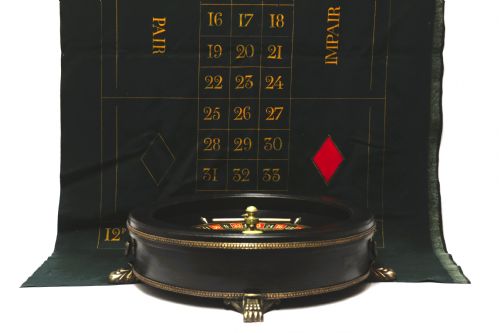


Ebonised Parlour Table
An ebonised parlour table brings dark, striking presence to a room, offering the polished surfaces and decorative detail collectors prize in period furniture.
Ebonised Parlour Table
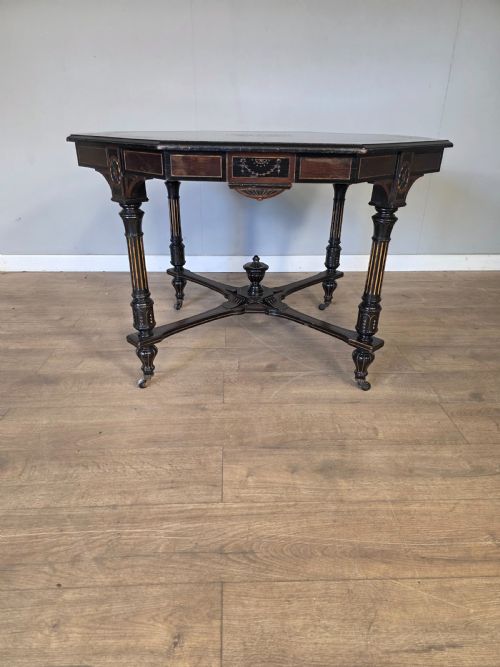
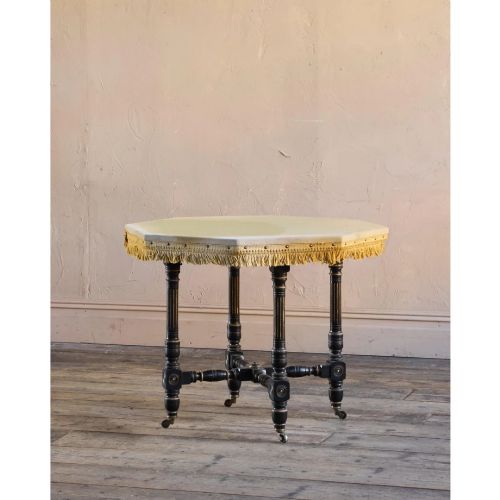
An ebonised parlour table is a formal piece of Victorian or nineteenth-century furniture designed for drawing rooms and reception spaces, finished to resemble expensive ebony. Buyers searching for an ebonised parlour table encounter centre tables and occasional tables dating from the Victorian era up to around nineteen-thirty, often reflecting Aesthetic Movement or French revival tastes.
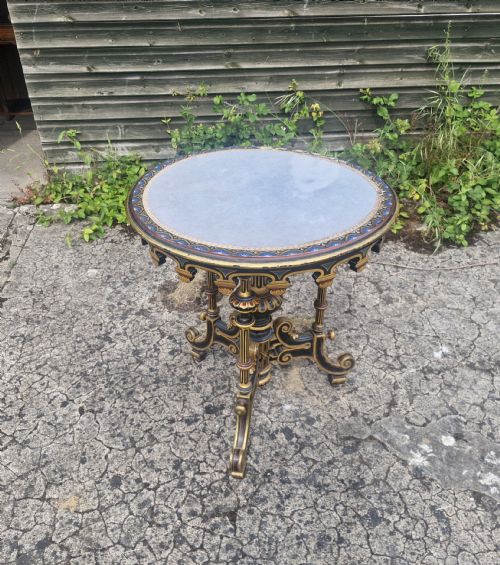
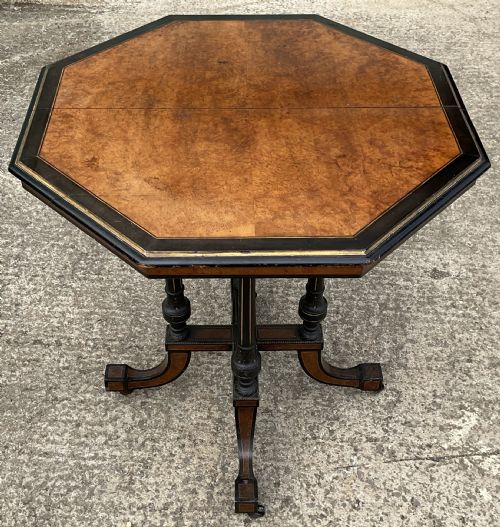
The pieces on this page span round, circular, and large octagonal forms, alongside pedestal designs and gaming antiques such as roulette wheels with original felt. Walnut, burr walnut, and hardwood form the structural basis of these tables, frequently enhanced with painted decoration, marquetry, or contrasting gilt highlights.
How they were made
Cabinet makers utilised dense hardwoods and walnut as a solid foundation, applying a dark ebonisation process to simulate exotic timber. Surfaces were painstakingly polished to achieve a deep, light-absorbing sheen that contrasted sharply with applied details.
Gilt bronze, ormolu, and brass mounts were secured to corners, legs, and aprons, while marquetry and painted motifs added intricate surface pattern. Fine joinery techniques ensured stability for large octagonal and pedestal formats intended for central room placement.
One eighteen-eighty table doubles as a roulette wheel with its original felt cloth intact.
What varies in quality
The standard of an ebonised parlour table rests on the crispness of its carved ornament and the depth of the dark finish. Superior examples display restrained, harmonious proportion alongside meticulous marquetry or intact gilt detailing rather than heavy, indistinct decoration.
Integrity of surface materials distinguishes finer pieces, particularly where burr walnut or painted elements remain undisturbed beneath the dark lacquer. Tables featuring original mounts, felt cloths, or documented workshop provenance command greater attention from discerning collectors.
Hindley and Sons
The Ebonised Parlour Table Glossary
- Ebonisation
- The chemical or finishing process applied to timber to darken the grain and colour, imitating solid ebony wood. This technique gained immense popularity during the nineteenth century for formal reception furniture.
- Ormolu
- Gilded bronze ornamentation applied to furniture mounts, feet, and decorative borders. The term derives from the French for milled gold.
- Marquetry
- Inlays of different coloured woods arranged to form pictorial or geometric patterns on a surface. Craftsmen cut veneers precisely to fit flush into the table top.
- Centre table
- A freestanding piece designed to be viewed from all sides and placed in the middle of a room rather than against a wall. These often feature octagonal or circular tops supported by a central pedestal.
- Aesthetic Movement
- A late nineteenth-century design style emphasising art for art's sake, drawing on Japanese and Anglo-Indian motifs. Pieces from this movement often utilise ebonised finishes and geometric simplicity.
Ebonised Parlour Table: Frequently Asked Questions
Where did people use parlour tables?
These tables stood in the centre of Victorian drawing rooms or parlours to display ornaments, books, or writing materials.
They served as focal points for social gatherings and tea service in formal homes.
How do I clean an ebonised surface?
Dust gently with a soft, dry cloth to prevent scratching the dark finish and avoid harsh chemical polishes.
Wax formulated for dark wood can be applied sparingly to maintain the subtle lustre.
What is an occasional table?
An occasional table is a small, versatile piece moved about a room for specific uses like gaming or holding drinks.
Victorian examples often featured decorative marquetry or painted tops suited to light domestic tasks.
How to spot French influence?
French influence appears through gilt mounts, curved cabriole legs, and elaborate Louis-style ornamentation.
Black lacquer and refined marquetry also point to nineteenth-century continental workshop traditions.