


Ebonised Mahogany Table
An ebonised mahogany table brings a sharp, dark finish to period rooms, pairing rich timber with deep black polish.
Ebonised Mahogany Table
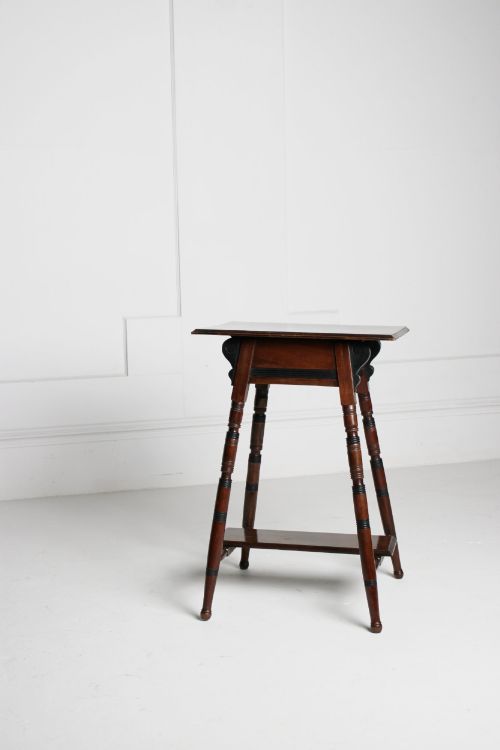
When you search for an ebonised mahogany table, you encounter a refined group of furniture where dense timber receives a dark, opaque finish. These pieces span centuries, moving from Georgian and William IV designs through Victorian and Edwardian periods into the twentieth century.
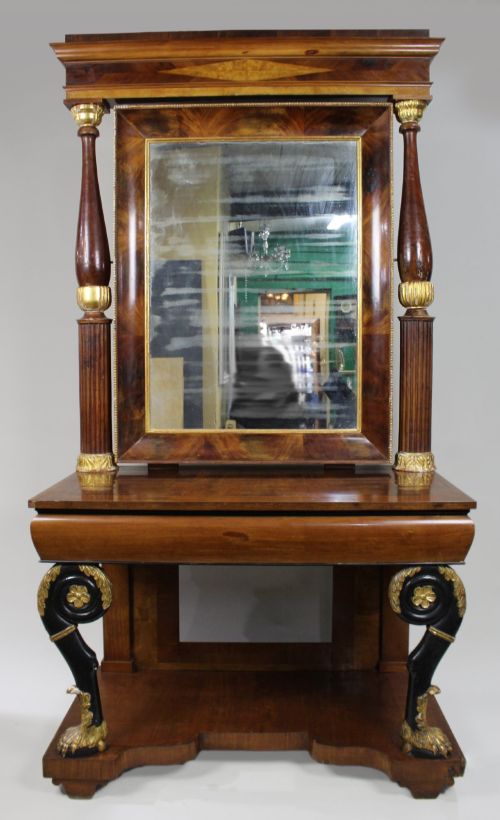
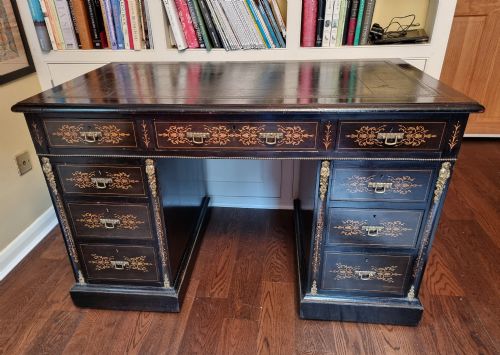
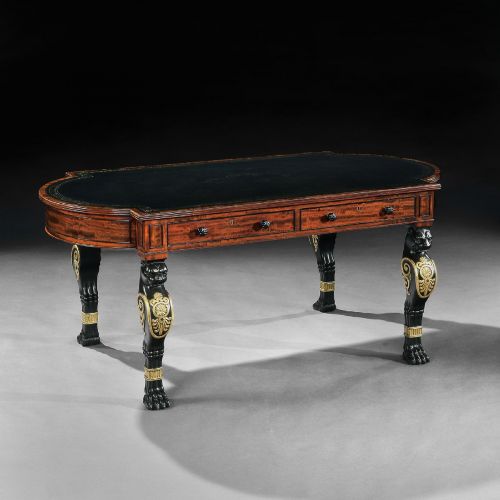
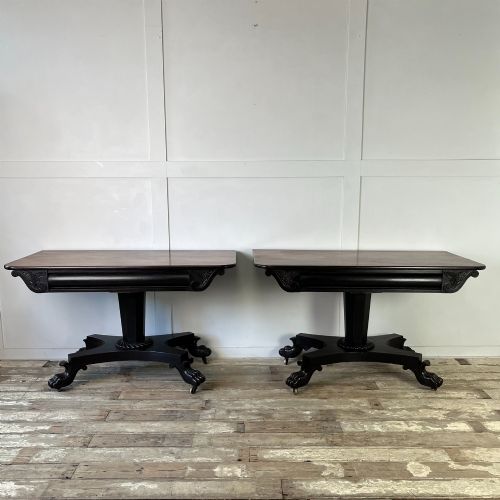
The form varies widely across the selection, ranging from console and card tables to writing desks, centre tables, and occasional pieces. Many incorporate contrasting details such as parcel gilt, brass mounts, mother-of-pearl inlay, or leather inserts.
You are most likely to meet Victorian and nineteenth-century examples on this page, often featuring Aesthetic Movement or Regency styling. Smaller occasional items and larger library partners desks appear regularly alongside console tables.
How they were made
Cabinetmakers constructed these pieces using solid mahogany or mahogany veneers, applying a dark ebonisation process to achieve the dense black surface associated with the style. This finish often highlights the underlying grain while providing a stark contrast to gilded elements or lighter wood crossbanding.
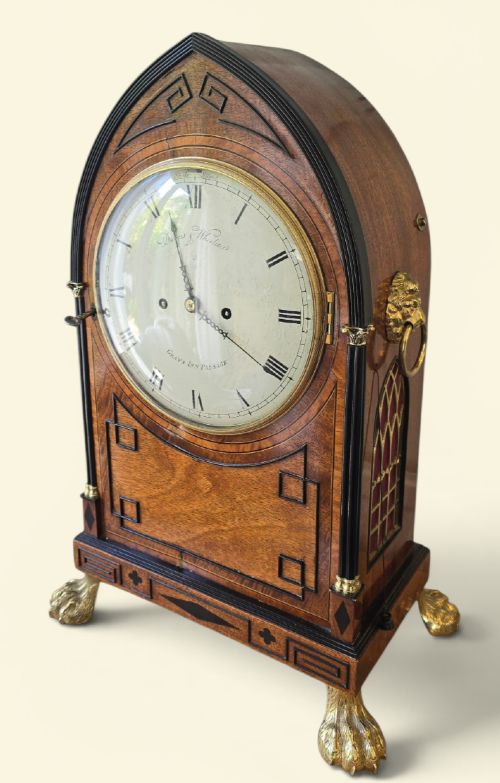
Decoration relied on skilled craftsmanship, incorporating brass mounts, ormolu details, mother-of-pearl inlay, and tooled leather writing surfaces. Tables from the nineteenth century frequently employ parcel gilt accents or contrasting timbers like amboyna to frame the dark surfaces.
Listings feature periods from the 18th Century through to 1930, utilising mahogany, ebonised wood, brass, leather, parcel gilt, glass, and walnut veneer.
What varies in quality
The standard of a piece rests upon the crispness of its ebonised finish and the integrity of the underlying mahogany structure. Superior examples maintain an even, deep black tone without masking the grain, while lesser pieces show cloudy or uneven pigment application.
The refinement of secondary materials dictates distinction at the higher end of the range. Finely chased ormolu mounts, well-executed parcel gilding, and crisply inlaid mother-of-pearl or contrasting veneers separate workshop output from standard commercial production.
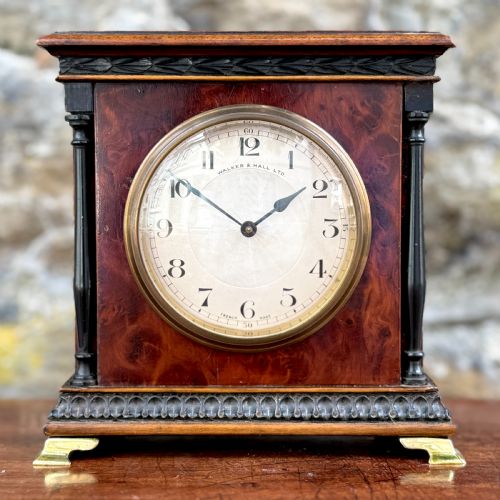
Edwards & Roberts·Walker and Hall·Druce & Co London·Desbois & Wheeler·Lamb of Manchester
The Ebonised Mahogany Table Glossary
- Ebonised
- Wood treated to imitate ebony, giving a dark, opaque finish that became particularly popular during the Victorian and Aesthetic Movement periods.
- Parcel Gilt
- Partially gilded decoration applied to specific carved details or mouldings, often accentuating the dark surfaces of nineteenth-century furniture.
- Partners Table
- A large double-sided desk or library table designed with drawers and workspaces on both long sides for simultaneous use.
- Crossbanded
- A border technique where thin strips of veneer are laid around the perimeter of a tabletop with the grain running perpendicular to the centre.
- Ormolu
- Gilded bronze mounts and decorative hardware used to adorn the corners, legs, and drawers of finer French and English tables.
Ebonised Mahogany Table: Frequently Asked Questions
What is an ebonised mahogany table?
An ebonised mahogany table is a piece of furniture fashioned from mahogany timber that has been finished with a dark, black coating to imitate ebony. These pieces appear across Georgian, Victorian, and Edwardian periods.
They encompass various forms, from small lamp and occasional tables to large partners desks and console tables.
How do I date an ebonised table?
Dating relies on observing the structural form, decorative motifs, and materials associated with specific design movements like Regency, William IV, or Aesthetic Movement. Construction methods and secondary timbers also offer clues.
Cabinetmakers working in different eras employed distinct styles of brass hardware, inlay, and leg profiles.
Where were these tables used?
These tables served multiple functions in period interiors, acting as writing desks in studies, centre tables in libraries, or console tables in hallways and drawing rooms. Card tables and games tables provided entertainment in formal reception spaces.
Smaller occasional and Sutherland tables offered flexible surfaces that could be moved around domestic rooms as needed.
How do I care for ebonised wood?
Maintaining ebonised wood involves dusting with a soft cloth and avoiding direct sunlight or excessive moisture, which can damage the dark finish. Gentle cleaning preserves the sheen without stripping the specialised surface treatment.
Wax polish suited for dark woods helps maintain the lustre of the polished timber over time.