

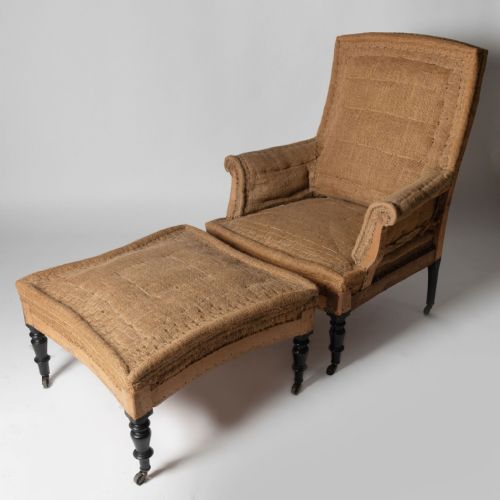
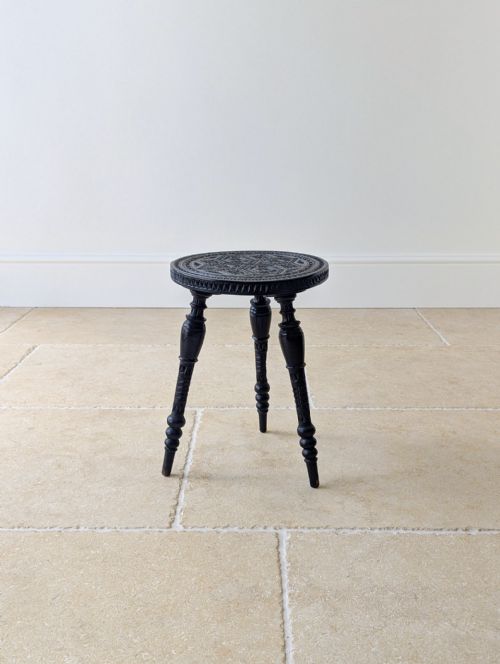
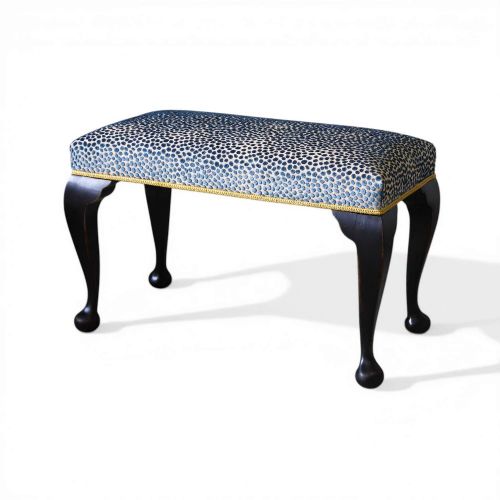


Ebonised Leg Stool
An ebonised leg stool brings dark, polished timber and tactile textile tops together across Victorian, Edwardian and earlier periods.
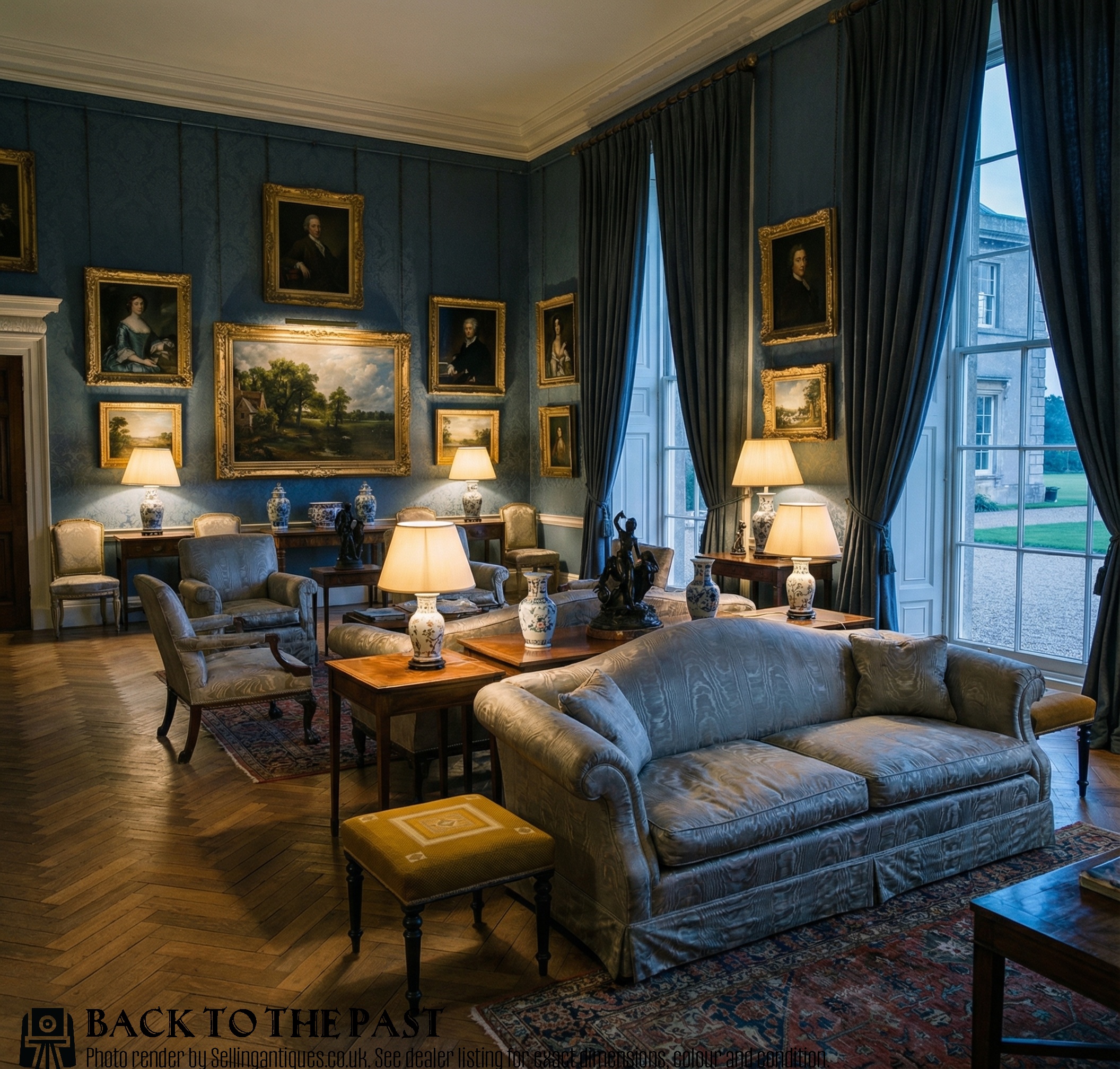
Ebonised Leg Stool
When you search for an ebonised leg stool, you enter a field defined by turned, tapered or parcel gilt supports carrying upholstered or woven tops. The pieces meeting this description span the nineteenth century, the Edwardian era, and occasionally earlier decades, taking forms that range from low footstools to long dressing benches and piano stools.
Victorian and Edwardian examples dominate the offerings, appearing alongside occasional daybeds and window seats that share the distinctive dark wood finish. Buyers encounter everything from simple pine and hardwood frames to elaborate chip-carved tables and buttoned ottomans resting upon these dark supports.
Materials and construction
The frames rely upon ebonised wood and hardwood, sometimes incorporating pine or mahogany beneath the dark finish to achieve the desired silhouette. Turned legs and tapered supports provide the structural foundation, occasionally enhanced with parcel gilt details or brass fittings.
Top surfaces employ a variety of textiles, including traditional horsehair, calico, ticking, Hessian, cane, and contemporary upholstery fabric. Buttoning and traditional stuffing methods secure the coverings to square, long or low forms.
Ebonised Leg Stool Retail Price Guide 2026
Typical asking prices for ebonised leg stool among the pieces listed under this phrase on Sellingantiques today, from the lower quarter to the upper quarter. They describe what is for sale here now, not the wider market.
Listings feature periods from the 18th century through to the Edwardian era, utilising ebonised wood, textile, brass, and pine.
Factors of quality
Quality rests upon the crispness of the turning and the depth of the ebonised finish across the timber frame. Superior examples display careful joinery and well-executed decorative details like chip-carving or parcel gilding.
The integrity of the underlying structure and the fidelity of the upholstery materials, from horsehair to ticking, determine the enduring character of each piece. Finer items maintain their structural rigidity while presenting balanced proportions between the dark supports and the textile top.
The Ebonised Leg Stool Glossary
- Ebonised
- Wood finished to resemble ebony through staining, painting, or polishing. This dark treatment creates a striking contrast against lighter upholstery fabrics.
- Parcel Gilt
- Partially gilded with gold leaf or powder, highlighting specific carved details on the frame. It frequently appears alongside ebonised surfaces.
- Horsehair
- Traditional stuffing material used beneath upholstery fabric to provide firm and resilient support. It appears in period pieces alongside calico and ticking.
- Turned
- Shaped on a lathe to create curved, cylindrical, or spindle profiles on legs and supports. This method produces the characteristic legs found on many stools.
Ebonised Leg Stool: Frequently Asked Questions
What periods do these stools come from?
The pieces span the eighteenth, nineteenth, and early twentieth centuries. Victorian and Edwardian examples appear most frequently in the listings.
Earlier items from the eighteenth century or late seventeenth century occasionally supplement the selection alongside nineteenth-century variations.
How were these stools originally used?
They served multiple domestic functions as footstools, piano seats, dressing benches, and window seats. Their versatile forms allowed them to move easily between rooms.
Longer variations accommodated multiple sitters or functioned as daybeds and ottomans for resting feet.
What fabrics cover the tops?
Upholstery materials include horsehair, calico, ticking, Hessian, and various contemporary fabrics. Caning also appears on specific daybed and stool designs.
Many pieces retain their original stuffing methods or feature recent upholstery that respects the historic character of the frame.
How do I identify the leg styles?
Legs are typically turned, tapered, or straight, fashioned from ebonised hardwood or pine. Some examples incorporate brass elements or parcel gilt highlights upon the wood.
The turning style often points toward Victorian or Edwardian manufacturing techniques.