



Ebonised Leg Footstool
An ebonised leg footstool brings dark, refined woodwork and tactile upholstery into a room, offering a versatile seat that sits easily beside firesides or dressing tables.
Ebonised Leg Footstool
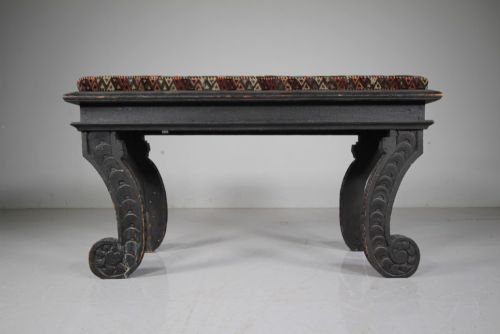
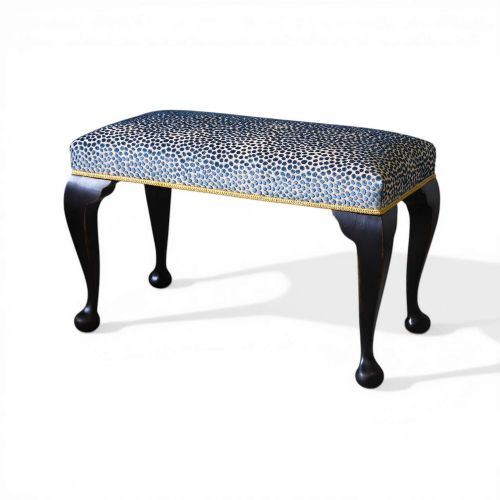
An ebonised leg footstool combines a dark, simulated ebony finish on its wooden supports with a soft upholstered top. These pieces span several eras, appearing across Victorian, Edwardian, and earlier periods with various leg forms including turned or parcel gilt designs.
The selection on this page demonstrates the wide range of forms these pieces take, from compact individual seats to longer dressing stools and benches. While some retain their original fabric, many carry later textile coverings applied during subsequent upholstery updates.
Origins vary across English and French workshops, encompassing distinct regional styles like Regency, Napoleon III, and Queen Anne. Buyers searching for an ebonised leg footstool will encounter pieces ranging from formal parcel gilt parlour seats to simpler painted pine window seats.
Materials and construction
Makers achieved the characteristic dark finish of an ebonised leg footstool by staining or painting timber such as pine and mahogany to imitate expensive ebony. Some examples incorporate parcel gilt detailing, applying thin layers of gold leaf to carved highlights on the wooden frame.
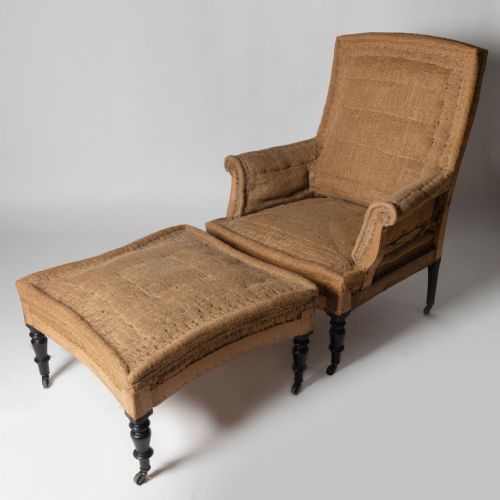
Frames rely on traditional joinery methods to support the weight placed upon them during daily use. Upholstered tops utilise materials like hessian and various decorative fabrics stretched over internal padding and secured to the wooden base.
Ebonised Leg Footstool Retail Price Guide 2026
Typical asking prices for ebonised leg footstool among the pieces listed under this phrase on Sellingantiques today, from the lower quarter to the upper quarter. They describe what is for sale here now, not the wider market.
Materials recorded across the inventory include ebonised wood, hessian, painted pine, mahogany, and various decorative textiles.
Distinctions in quality
The refinement of the woodwork dictates much of the distinction between pieces, particularly where turnings are crisp and finishes have aged evenly. Examples featuring parcel gilt decoration or sophisticated leg profiles display a higher degree of artisan effort than plain utility seating.
Upholstery execution and the choice of covering material also influence character, noting that fabric is frequently renewed over time. Original structural integrity and timber selection remain central to how well a piece survives the decades.
The Ebonised Leg Footstool Glossary
- Ebonised
- Wood treated with stain, paint, or chemical processes to turn it black, mimicking genuine ebony. This finish gained immense popularity during the Victorian period for formal and occasional furniture.
- Parcel Gilt
- Woodwork decorated with partial applications of gold leaf on specific carved details or mouldings. It creates a striking contrast against the dark ebonised background.
- Hessian
- A coarse woven fabric, typically made from jute fibres, used as a traditional foundation layer beneath upholstery topcovers. It provides necessary tension and support for the internal padding.
- Turned Leg
- A wooden support shaped on a lathe to create cylindrical, spiral, or bulbous profiles. Turnings often help indicate the period and stylistic influences of the piece.
Ebonised Leg Footstool: Frequently Asked Questions
Where should I place a footstool?
These compact seats fit easily beside armchairs in a sitting room or function as dressing stools in a bedroom. Their versatile proportions mean they occupy minimal floor space while adding a decorative focal point.
They also work well beneath windows or tucked into corners as convenient extra seating when guests visit.
Can I reupholster my footstool?
Reupholstering is a straightforward process that allows you to match the top fabric to your existing interior scheme. Traditional methods utilise hessian and appropriate padding to maintain the correct profile and firmness.
Choosing a textile that complements the dark wooden frame ensures the piece retains its intended aesthetic balance.
What is ebonised wood?
Ebonised wood is standard timber that has been stained, painted, or chemically treated to achieve the deep black appearance of ebony. This technique allowed cabinetmakers to produce luxurious-looking furniture using more accessible woods like pine or mahogany.
The resulting dark finish provides a formal, uniform appearance that highlights any gilded accents or carved details on the frame.