



Ebonised Framed Religious Art
Ebonised framed religious art brings together solemn devotional subjects and dark timber mouldings, offering collectors centuries of sacred imagery.
Ebonised Framed Religious Art
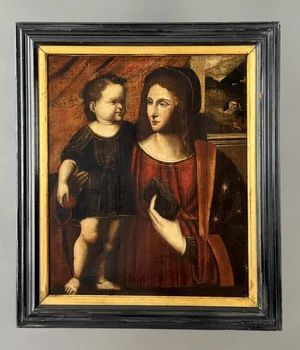
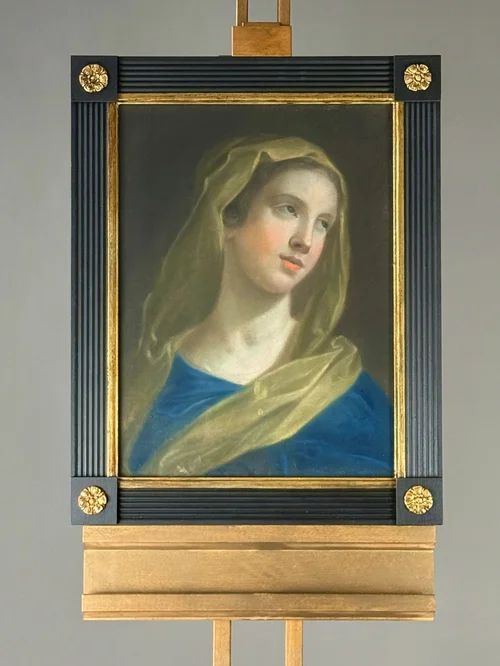
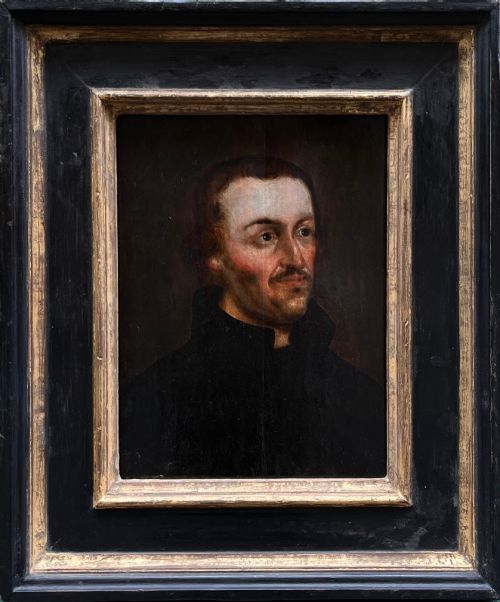
When you search for ebonised framed religious art, you encounter devotional pieces housed within dark, simulated or treated wood moulding. The selection spans the sixteenth, eighteenth, and nineteenth centuries, featuring works created across European centres.
The objects take several distinct forms, ranging from reverse glass coloured mezzotints and pastels to oil paintings and bronze plaques. These works portray saints, the Madonna and child, and biblical scenes derived from Renaissance and Baroque traditions.
You are most likely to meet eighteenth-century examples on this page, alongside Italian school paintings and nineteenth-century prints. Each piece carries the distinct aesthetic of its period while retaining a sombre, dark timber boundary.
Materials and construction
The physical objects rely on wood for their protective frames, often treated with an ebonised finish to create a uniform, dark surface. Glass is utilised to protect delicate media such as paper prints and pastels from environmental damage.
Artistic execution involves oil on canvas, pastel, pigment, and gold leaf applied by hand. Bronze plaques demonstrate metalcasting techniques, while reverse glass paintings require meticulous application directly onto the glazing material.
The listings on this site span from the sixteenth century to nineteen hundred, encompassing oil on canvas, pastel, bronze plaques, and glass.
Assessing quality and execution
Quality rests in the fidelity of the draughtsmanship and the expressive depth of the religious subject matter. Works associated with named historical artists or specific European schools display superior hand execution in pigments or metal.
The integrity of the ebonised wood frame and the preservation of original glass or canvas contribute significantly to the overall standing of the piece. Superior examples maintain their original constituent materials without heavy modern intervention.
Sebastiaan Vrancx·Benedetto Luti·Gian Federigo Bonzagna
The Ebonised Framed Religious Art Glossary
- Ebonised wood
- Timber treated to imitate ebony, producing a dark, dense appearance popular in antique framing. This finish provides a stark, formal boundary for devotional imagery.
- Reverse glass painting
- A technique where the artist paints directly on the back of a glass sheet, viewed from the unpainted front. This method imparts a distinct gloss and preservation to eighteenth-century works.
- Ex-voto
- A votive offering presented to a saint or divinity in fulfilment of a vow. These devotional items often appear in collections reflecting personal piety.
- Old Master
- A term for a European artist of skill before about eighteen hundred. Works in this category carry the stylistic weight of historic painting traditions.
Ebonised Framed Religious Art: Frequently Asked Questions
How old is ebonised framed religious art?
The pieces span from the sixteenth century through the nineteenth century, capturing distinct periods of European religious devotion and craftsmanship.
Most surviving examples date from the eighteenth century, reflecting prevailing tastes in domestic and ecclesiastical framing.
What materials are used in these pieces?
Construction primarily involves wood frames treated with an ebonised finish, paired with glass for surface protection. The artwork itself incorporates oil on canvas, pastel, pigment, gold leaf, and cast bronze.
Paper also appears in printed works, while reverse glass pieces utilise glass as the primary painting surface.
How were reverse glass paintings made?
Artists painted the image directly onto the reverse side of a glass panel, working backwards from foreground details to background elements. This required precise execution since initial brushstrokes were the first to be seen through the glass.
Once finished, the glass protected the pigments from atmospheric degradation.
What subjects do these artworks depict?
The imagery focuses on Christian devotion, including depictions of the Madonna and child, saints such as Francis of Paola, and scenes from the life of Christ. Many works derive from broader European and Italian school traditions.
Collections may also comprise ex-votos created for specific religious observances.