


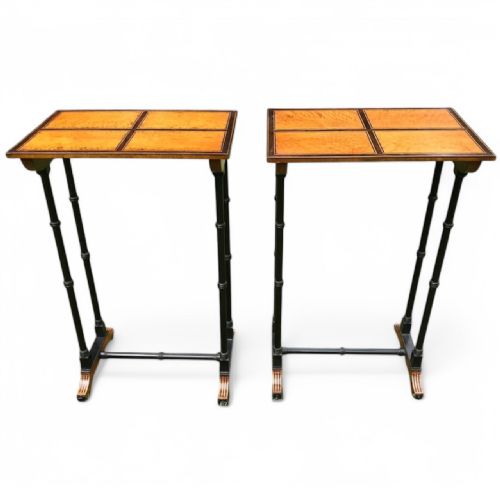
Ebonised End Table
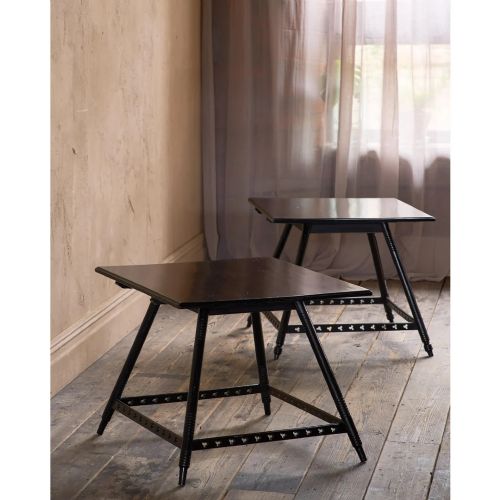
An ebonised end table brings dark, striking contrast to a room, drawing the eye with its deep finish and fine period detail.
Ebonised End Table
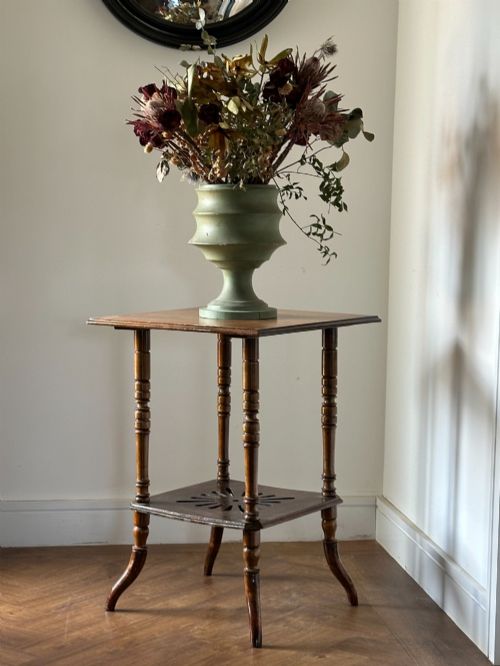
When you search for an ebonised end table, you encounter a variety of compact surfaces intended for placement beside seating or against walls. The selections span from the nineteenth century into the Art Deco period, taking forms such as side tables, occasional tables, étagères, and writing desks.
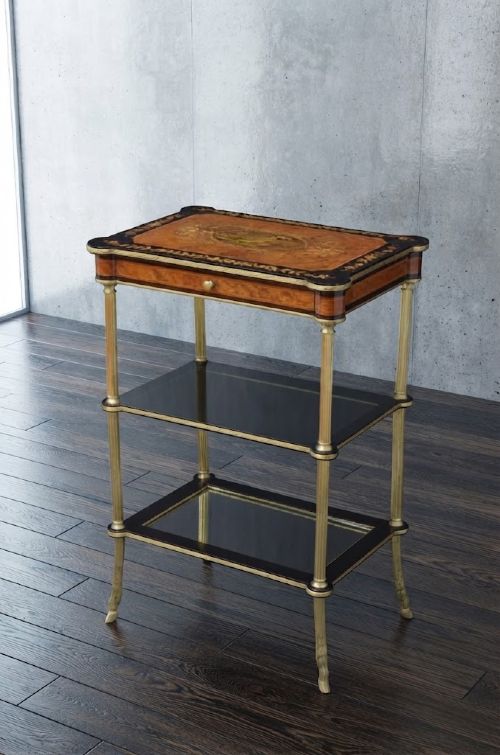
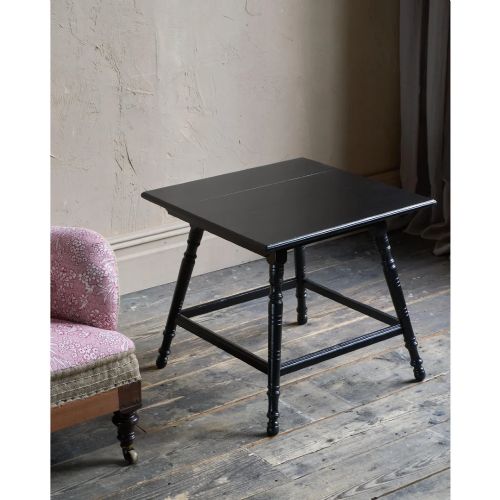
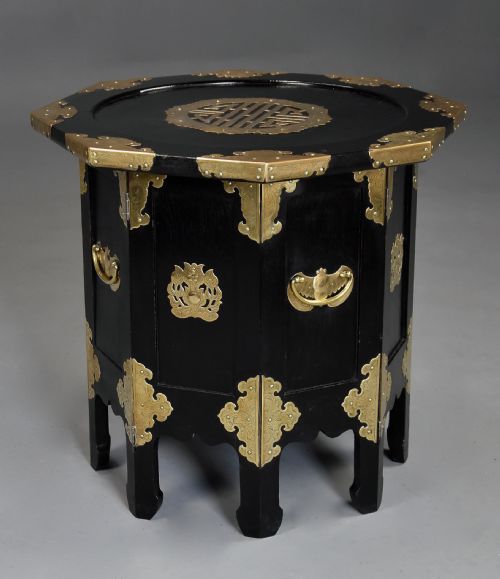
The Victorian era is heavily represented through nineteenth-century examples displaying Aesthetic Movement and Gothic influences, alongside French nineteenth-century models featuring brass mounts and mirrored tiers. Edwardian mahogany versions and Anglo-Japanese designs round out the traditional offerings.
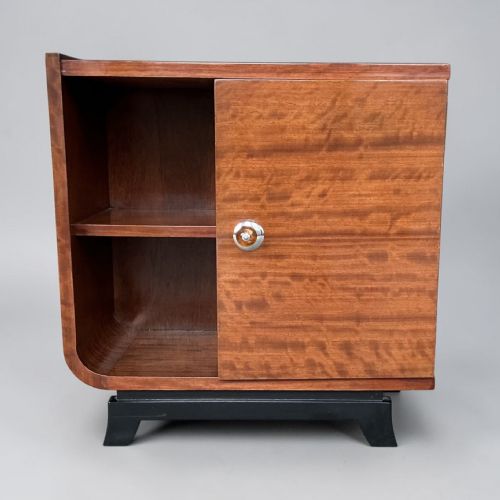
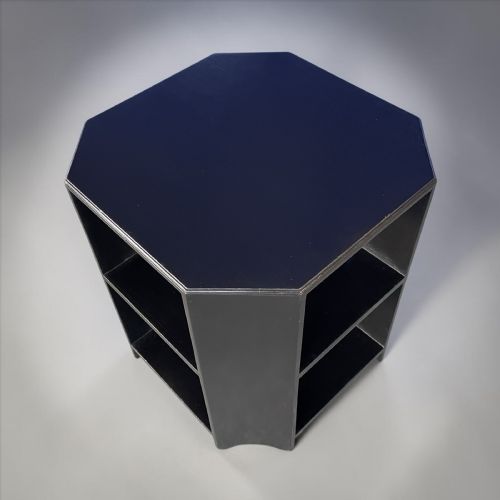
Art Deco interpretations from the nineteen-thirties appear frequently, utilising walnut, maple, and oak alongside ebonised wood. These twentieth-century pieces often incorporate multiple tiers and modern structural lines while retaining the signature dark finish.
How they were made
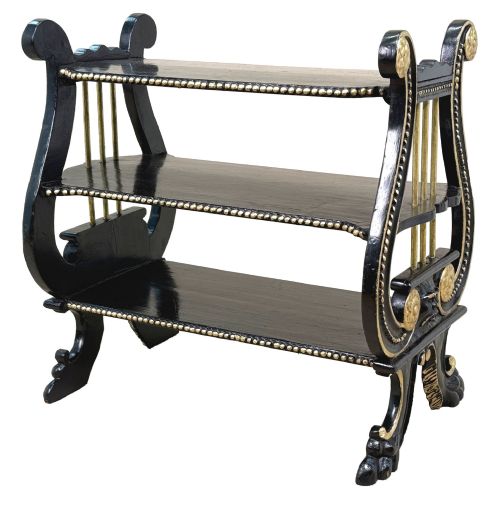
The primary visual characteristic relies on ebonised wood or solid ebony, which mimics the dense, dark qualities of premium tropical timber. Artisans frequently paired this darkened surface with contrasting materials such as brass mounts, ormolu, and parcel gilding to highlight structural edges and decorative motifs.
Construction incorporates a range of hardwoods, including mahogany, walnut, and satinwood, sometimes applied as veneers over a sturdy core. Specialised forms like étagères and side cabinets incorporate secondary elements like mirrored glass tiers and inlaid patterns to add textural depth.
Camel tables and games tables sneak into the lineup, proving that Victorian side furniture loved a good secret compartment or a quirky silhouette.
What varies in quality
The distinction between standard production and exceptional work rests on the precision of the joinery and the depth of the ebonised finish. Finer nineteenth-century examples demonstrate careful application of parcel gilding and secure mounting of brass or ormolu elements.
Art Deco and Edwardian pieces show variation in the selection of secondary timbers, such as figured walnut and birds-eye maple veneers. Superior items maintain integrity in their tiered structures, casters, and inlaid surfaces without structural wobble.
Hindley and Sons·Gillows
The Ebonised End Table Glossary
- Ebonised
- Wood treated with a stain, dye, or paint process to simulate natural ebony. This dark finish became particularly popular during the Victorian and Aesthetic periods.
- Étagère
- A piece of furniture consisting of open shelves for displaying small objects or ornaments. These often feature multiple mirrored or tiered levels.
- Parcel Gilt
- Partially gilded with gold leaf or gold paint, usually applied to carved highlights or decorative mouldings on a contrasting dark ground.
- Ormolu
- Gilt-bronze furnishings and mounts applied to furniture. This technique is frequently seen on nineteenth-century French side tables.
- Anglo-Japanese
- A nineteenth-century design style reflecting Japanese aesthetic influences combined with British craftsmanship. It is notably associated with designers like E.W. Godwin.
Ebonised End Table: Frequently Asked Questions
What is an ebonised end table?
An ebonised end table is a small surface finished to resemble dark ebony wood, produced across various historical eras from the nineteenth century through the Art Deco period.
These pieces serve practical functions as side tables, lamp tables, or occasional tables while introducing strong visual contrast to an interior space.
How do I date an ebonised table?
Dating relies on observing structural forms, secondary woods, and decorative motifs associated with specific periods like Victorian gothic, Aesthetic movement, or Art Deco.
Nineteenth-century examples often display hand-applied gilding or brass mounts, whereas nineteen-thirties pieces favour geometric two-tier designs in walnut and maple.
Were these tables used as bedside tables?
Many compact tables listed from the early twentieth century function well as bedside stands or lamp tables.
Their modest footprints and multi-tiered surfaces provide convenient space for lamps and nighttime reading materials without dominating a room.
What styles are common in ebonised tables?
Common styles include nineteenth-century Victorian, Aesthetic Movement, and French Napoleon III designs alongside twentieth-century Art Deco.
Each style employs the dark ebonised finish differently, ranging from gilt-highlighted étagères to modernist walnut tables on casters.