


Ebonised Display Shelves
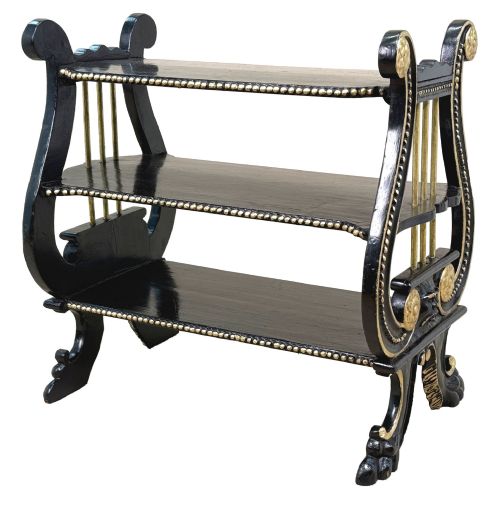
These ebonised display shelves bring dark, striking surfaces and layered storage to period interiors.
Ebonised Display Shelves
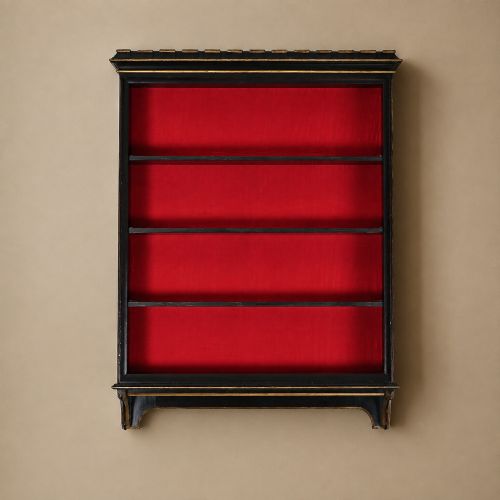
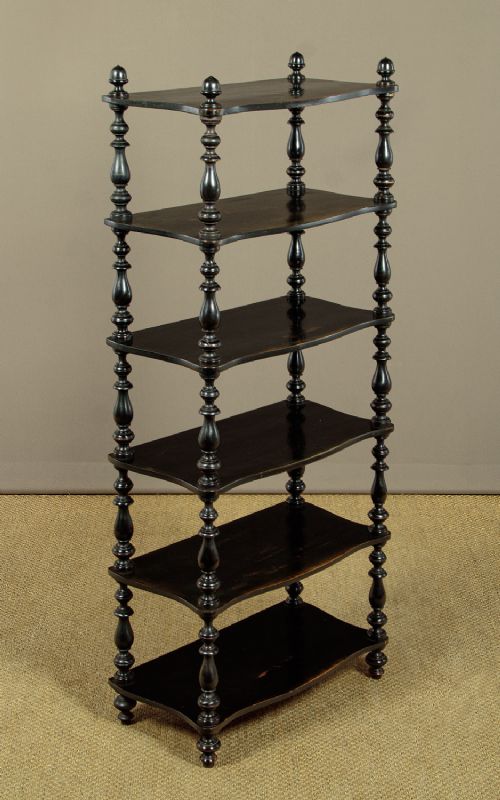
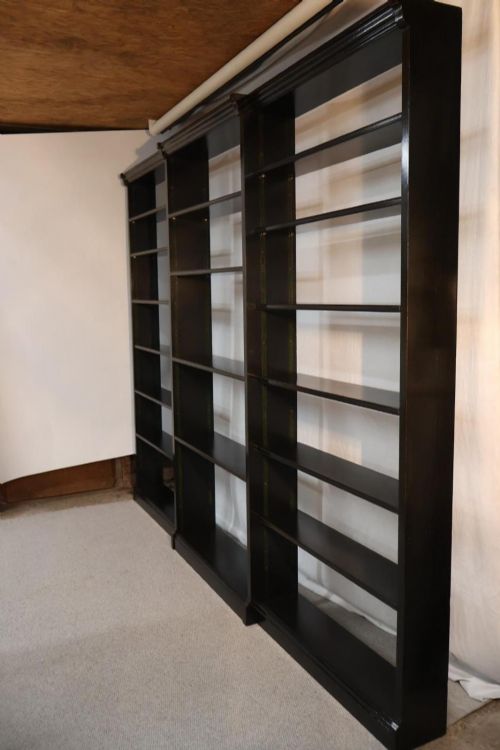
When you search for ebonised display shelves, you enter a category dominated by Victorian and nineteenth-century pieces designed to exhibit books, ceramics, and ornaments. The selection relies heavily on multi-tiered étagères, open bookcases, and wall-hanging shelves that maximise vertical space while presenting a dark, unified finish. These items range from simple domestic utility furniture to elaborate reception hall cabinets featuring intricate inlays.
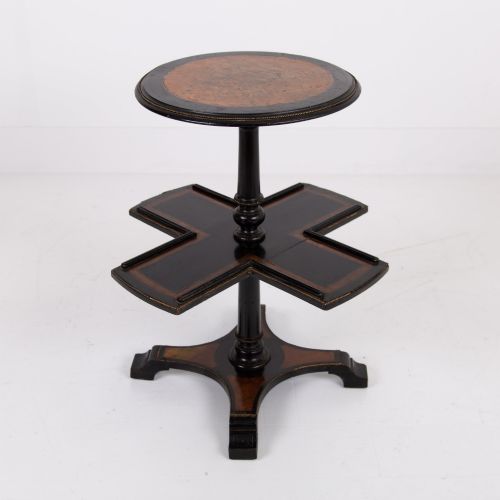
The pieces you meet most frequently on this page span the Victorian and Edwardian eras, with a strong representation of the Aesthetic Movement and French Napoleon III influences. Forms vary from corner units and dumb waiters to breakfront open bookshelves and multi-tiered stands. Cabinetmakers of these periods utilised the deep, light-absorbing quality of the dark finish to create strong visual contrasts against brightly coloured porcelain or gilded objects.
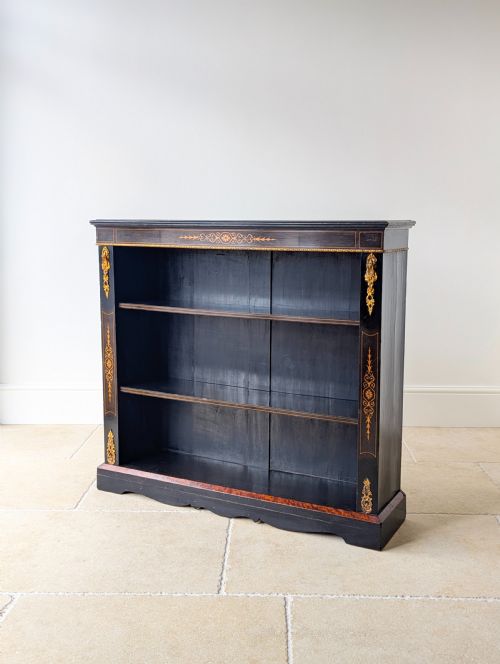
Makers and designers working in these styles drew upon Gothic Revival and classical French motifs, incorporating brass mounts, glazed doors, and parcel gilding into the architecture of the shelving. A buyer examining these listings encounters diverse proportions, from tall, slender etageres to low, wide side cabinets fitted with display surfaces. Each variation reflects the changing domestic requirements for public display in nineteenth and early twentieth-century homes.
How they were made
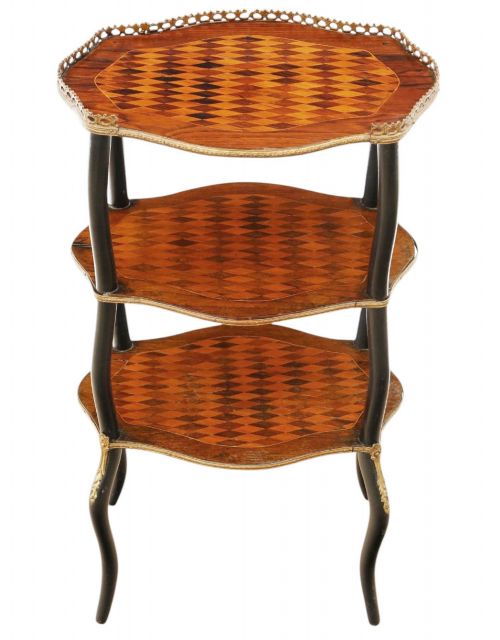
Workshops achieved the signature dark surface through ebonising, a chemical or staining process applied to timber such as beech, fruitwood, or walnut to imitate solid ebony. This technique allowed cabinetmakers to produce high-contrast furniture without relying entirely on scarce exotic hardwoods. Carpenters frequently combined this blackened finish with contrasting veneers like amboyna and burr walnut on tabletops, drawer fronts, and interior panels.
Construction methods involved substantial joinery, often reinforced with brass mounts, ormolu details, and parcel gilding to accentuate carved mouldings and turned supports. Many examples feature delicate inlays of marquetry and parquetry set into the dark wood surfaces, alongside glazed panels and adjustable shelving systems. The structural framework relies on traditional framing and dovetailing, ensuring stability across multi-tiered etageres and tall open bookcases.
Listings feature ebonised display shelves across Victorian, Edwardian, and Regency periods, incorporating materials like brass, amboyna veneer, and burr walnut.
What varies in quality
Quality in these pieces is dictated by the ambition of the design and the precision of the secondary woods and veneers used beneath or alongside the black finish. Finer examples integrate expensive secondary elements such as amboyna veneer, ormolu mounts, and hand-cut parquetry rather than relying solely on plain stained timber. The crispness of carved details, the weight of the brass hardware, and the integration of parcel gilding separate standard utility furniture from high-status artistic pieces.
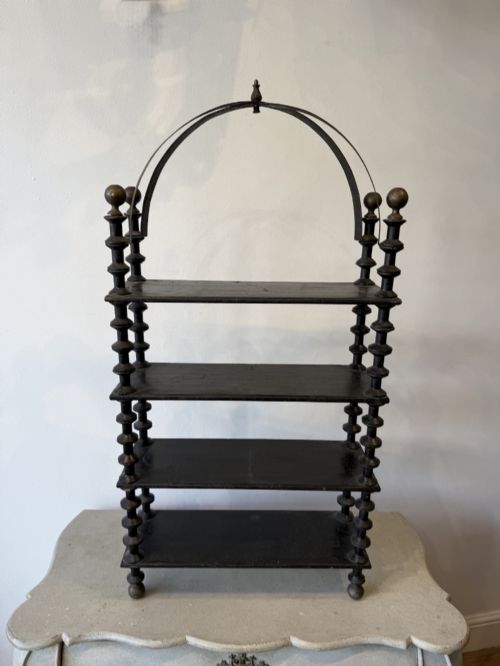
The sophistication of the silhouette also governs the standing of an item, distinguishing simple utilitarian wall brackets from architectural étagères with mirrored backs or intricate turned bobbin supports. Superior craftsmanship shows in the seamless joining of tiered platforms and the stability of slender vertical uprights designed to bear heavy loads of books and ceramics. The longevity of the ebonised finish itself depends on the original preparation of the wood grain and the quality of the protective seal applied by the workshop.
George Edmund Street
The Ebonised Display Shelves Glossary
- Ebonised
- Wood treated with stain, dye, or chemical applications to simulate genuine ebony. This dark finish became particularly fashionable during the nineteenth century for furniture mimicking Asian imports and classical antiques.
- Étagère
- A piece of furniture consisting of a set of open shelves for displaying small objects or ornaments. These tiered stands developed in France and became a staple of Victorian drawing rooms.
- Ormolu
- Gilded bronze mounts applied to furniture for decorative effect. French cabinetmakers frequently used these cast metal ornaments to accent dark wood cabinets and etageres.
- Parquetry
- Geometric wood mosaic work used for floors, cabinet doors, and tabletops. Makers arranged contrasting timber blocks to create repeating patterns on display surfaces.
- Parcel Gilded
- Partially covered with gold leaf or gold paint to highlight specific carved details or mouldings. This technique creates a bright contrast against a matte black or dark wood ground.
Ebonised Display Shelves: Frequently Asked Questions
What is an étagère?
An étagère is a freestanding piece of furniture featuring multiple open tiers designed for displaying ornaments, ceramics, and small valuables. These tiered stands were popular in nineteenth-century drawing rooms.
They allow owners to showcase collections from all angles while taking up minimal floor space. The open structure relies on slender vertical supports rather than solid side panels.
How do I care for ebonised wood?
Ebonised surfaces require gentle dusting with a soft, dry cloth to prevent micro-scratching on the dark finish. Avoid harsh chemical cleaners and direct sunlight, which can fade or dull the blackened timber over time.
Applying a light, appropriate wax periodically helps maintain the lustre of the finish. Keep the furniture away from excessive moisture and sudden temperature changes to protect the underlying wood and any delicate veneers.
Where were these shelves used?
These pieces typically served in nineteenth-century drawing rooms, libraries, and reception halls to display prized possessions and books. Wall shelves and corner units maximised space in smaller domestic interiors.
Larger breakfront bookcases and vitrines functioned as central statement furniture for formal entertaining spaces. Their dark surfaces provided a neutral backdrop for colourful porcelain and glass.