





Ebonised Crest Mirror
An ebonised crest mirror brings dark wood and striking ornamentation to a room, offering both depth and a strong focal point.
Ebonised Crest Mirror
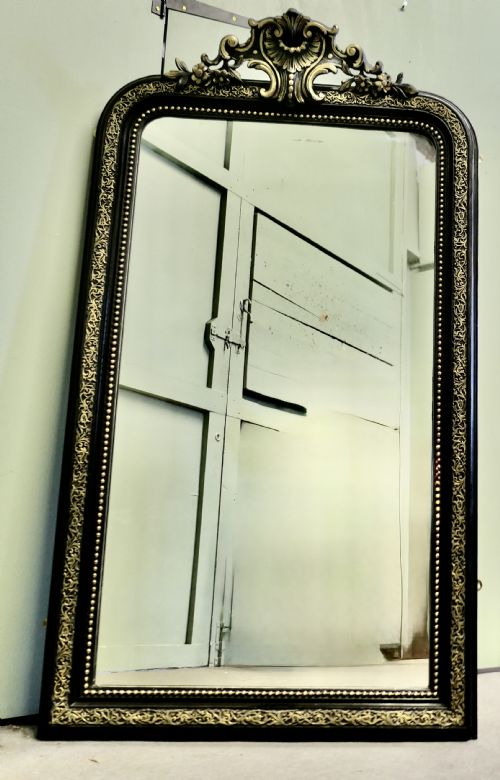
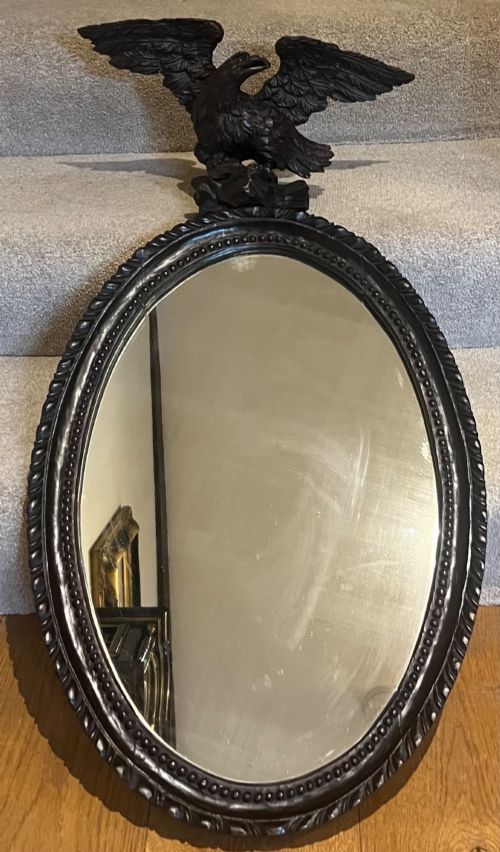
When you search for an ebonised crest mirror, you are looking at wall mirrors and overmantle mirrors defined by dark ebonised wood and prominent crests. The examples you meet on this page span the Regency, Victorian, and Napoleon III periods, alongside revival styles.
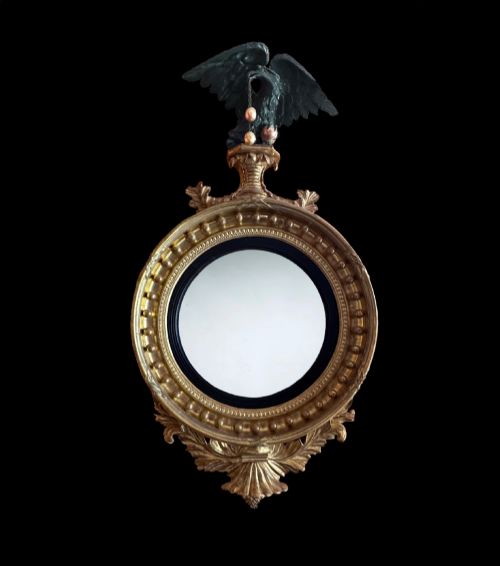
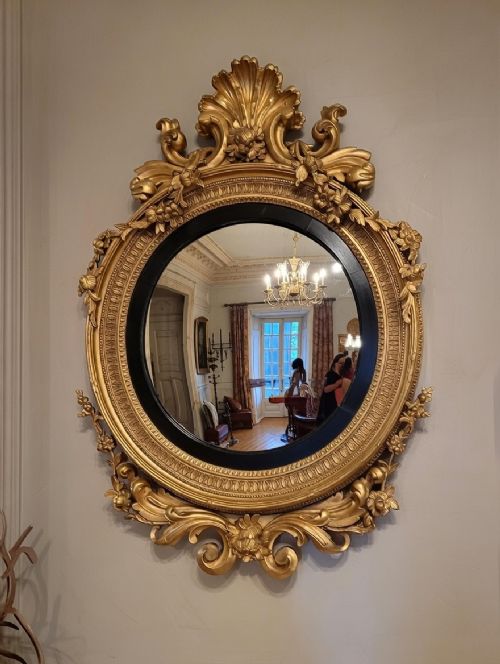
The most common forms are large wall mirrors and overmantle mirrors featuring elaborate crests such as carved eagles, lions, dragons, and cherubs. These pieces originate from English and French workshops, utilising circular, oval, and rectangular formats.
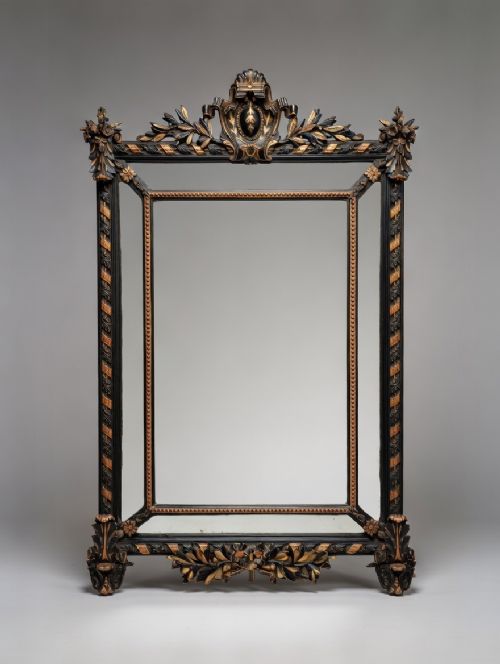
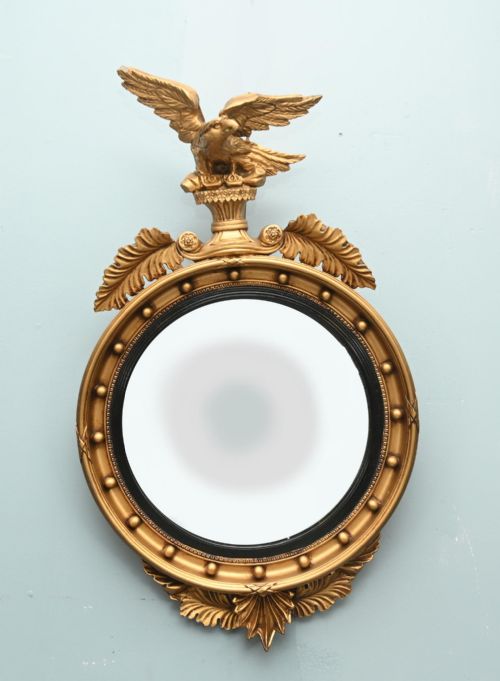
Many variants combine ebonised surfaces with parcel-gilt details, brass mounts, or cut glass pediments. Whether circular convex formats or large French cushion mirrors, the presence of the crest defines the entire piece.
Materials and Construction Techniques
Makers utilised carved wood, gesso, and mirror glass as the primary foundation for these pieces. The wooden frames were shaped and carved before undergoing the ebonising process to imitate costly ebony.
Giltwood, gold leaf, and parcel-gilt highlights were frequently applied alongside the dark ebonised ground to create high contrast. Brass elements and cut glass pediments appear on French Napoleon III pieces and Victorian wall mirrors.
Convex mirror glass required specialised blowing and silvering techniques to achieve the curved reflection seen in Regency examples. The application of gesso provided a smooth base for both the gilding and the crisp carved details of the crests.
Ebonised Crest Mirror Retail Price Guide 2026
Typical asking prices for ebonised crest mirror among the pieces listed under this phrase on Sellingantiques today, from the lower quarter to the upper quarter. They describe what is for sale here now, not the wider market.
Distinctions in Quality and Execution
The sophistication of the carved crest separates standard execution from finer examples. Hand-carved details on figures such as eagles, dragons, and cherubs display depth and sharpness that mechanical or hasty work lacks.
The harmony between the ebonised finish and the parcel-gilt or brass highlights determines the visual balance of the mirror. Superior pieces maintain crisp contrast where the dark wood and gold leaf meet.
The quality of the mirror glass and the integrity of the original frame construction dictate longevity. Convex plates and heavy overmantle frames require robust joinery to support the weight of the glass and crest.
The Ebonised Crest Mirror Glossary
- Ebonised wood
- Timber treated with stains, dyes, or finishes to resemble true ebony. This dark finish became popular in nineteenth-century cabinet making.
- Parcel-gilt
- Partially gilded surfaces where gold leaf highlights specific carved areas of a dark frame. It creates contrast against the ebonised ground.
- Convex mirror
- A round mirror glass curved outward to provide a wide, spherical reflection of the room. These pieces were historically designed to monitor large spaces.
- Overmantle mirror
- A wide mirror designed to sit directly above a fireplace mantelpiece. They often feature rectangular or cushion formats.
- Girandole
- A wall mirror featuring attached candle sconces that reflect candlelight into the room. The polished glass and gilt details amplify the illumination.
- Gesso
- A plaster-like mixture applied to wood surfaces as a base for carving and gilding. It allows craftsmen to model sharp decorative reliefs.
Ebonised Crest Mirror: Frequently Asked Questions
Where should I hang an ebonised crest mirror?
These mirrors work best on a principal wall where the dark frame and carved crest can function as the main focal point of the room. Placing them above a fireplace mantel or a large sideboard allows the proportions to anchor the surrounding furniture.
Because many examples incorporate convex glass or reflective parcel-gilt details, positioning them opposite a window helps distribute natural light throughout the space.
How do I identify a Regency period mirror?
Regency mirrors frequently feature circular convex glass plates set within heavy frames, often surmounted by carved eagles or balls. The styling draws heavily on classical revival motifs from the early nineteenth century.
English Regency pieces tend to favour giltwood and convex formats, while later Victorian and Napoleon III iterations introduce ebonised finishes and elaborate French crests.
What is a Napoleon III mirror?
Napoleon III mirrors date from the French Second Empire during the mid-nineteenth century. They are known for eclectic revivals of earlier styles, featuring rich ebonised surfaces combined with gilt details, brass mounts, and figurative crests.
These pieces often take the form of large wall mirrors or cushion mirrors with elaborate crests depicting torches, quivers, or mythical creatures.
How were convex mirrors used historically?
Convex mirrors were placed in grand rooms to provide a wide-angle view of the entire interior space. The curved glass gathered light from multiple sources and projected a miniature panorama across the room.
In domestic settings, they served both a practical security function for observing guests and a decorative purpose to brighten dark corners.