

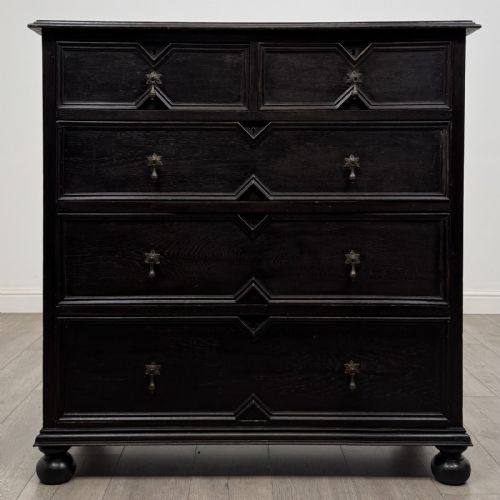
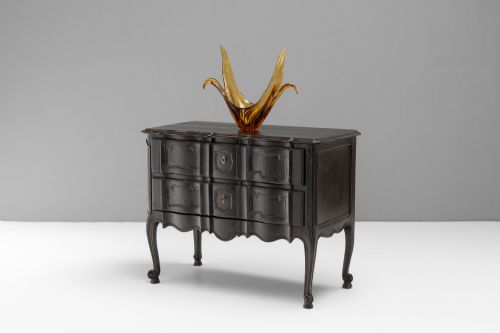
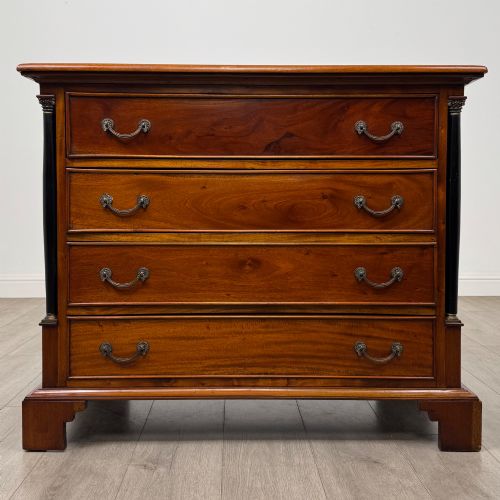
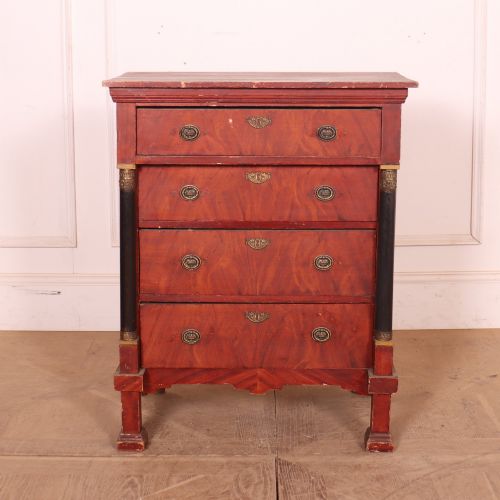



Ebonised Commode
An ebonised commode brings deep, dark elegance and generous storage to a room, offering a striking focal point with rich historical presence.
Ebonised Commode
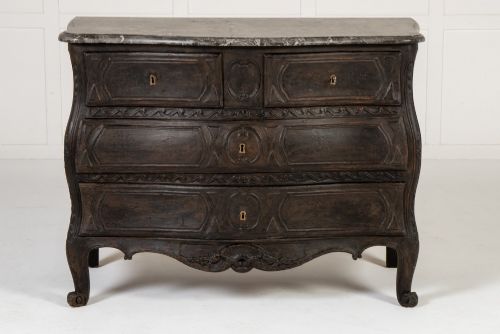
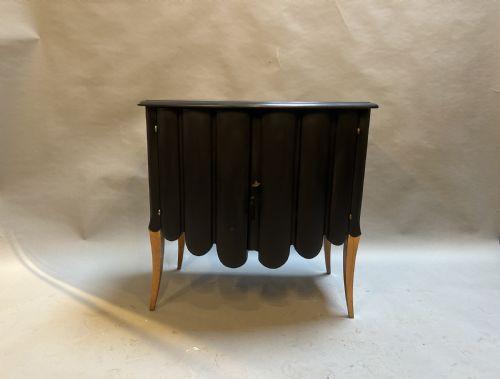
An ebonised commode is a substantial storage piece, typically featuring multiple drawers or cabinet doors, finished with a dark, polished wood surface that mimics ebony. These pieces range from eighteenth-century French bombe shapes to twentieth-century Art Deco forms, uniting practical function with dramatic visual weight.
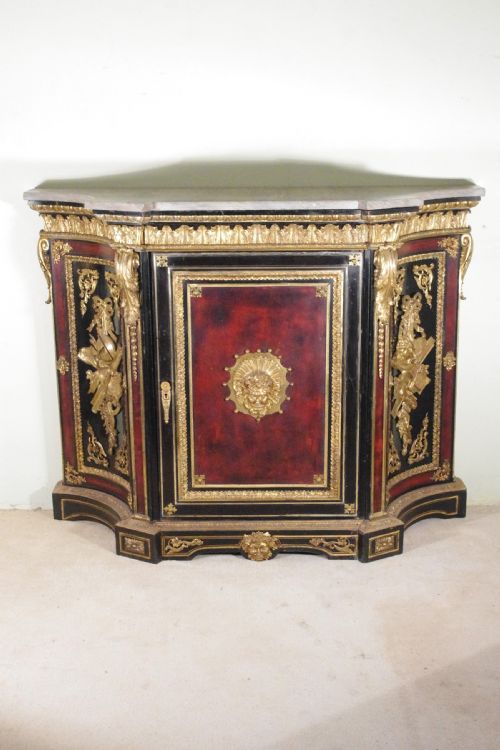
The version most commonly met on this page is the nineteenth-century French cabinet or chest, frequently adorned with marble tops, gilt metal mounts, and brass details. Alongside these, buyers find eighteenth-century examples and revival styles reflecting Dutch, Swedish, and Italian influences.
Forms vary from serpentine fronts and bow chests to side cabinets and bedside tables, providing versatile options for different interior spaces. The underlying construction utilises woods such as mahogany, birch, pitch pine, and walnut, all transformed by the signature dark finish.
What varies in quality
The refinement of the silhouette largely dictates quality, separating standard proportions from exceptional forms like serpentine fronts, bombé curves, or unusual Art Deco layouts. Superior pieces display harmonious balance between the dark ebonised woodwork and the applied metal mounts or marble tops.
The integrity of the surface finish and the precision of decorative inlays, whether brass, marquetry, or parchment, mark the distinction between simpler vernacular items and masterwork execution. Furthermore, the selection of underlying woods, from basic pine to fine burr elm and mahogany, influences the enduring character of the cabinet.
Ebonised Commode Retail Price Guide 2026
Typical asking prices for ebonised commode among the pieces listed under this phrase on Sellingantiques today, from the lower quarter to the upper quarter. They describe what is for sale here now, not the wider market.
Listings feature pieces spanning the 18th century through to 1930, incorporating materials such as ebonised wood, marble, brass, mahogany, and walnut.
The Ebonised Commode Glossary
- Ebonised wood
- Timber treated with stain, paint, or polish to imitate dense, dark ebony. This technique was widely utilised across various centuries to achieve a formal, sophisticated aesthetic.
- Commode
- A low chest of drawers or cabinet designed for domestic storage. Originating in France, the term encompasses various stylish configurations found in bedrooms and reception rooms.
- Bombe
- A swelling, outward-curving contour characteristic of certain eighteenth-century furniture forms. This rounded profile requires advanced carpentry skills to execute successfully.
- Serpentine front
- A furniture facade featuring a convex centre flanked by concave curves, or vice versa. This undulating line adds dynamic movement to chests of drawers and side cabinets.
- Marquetry
- The art of applying pieces of veneer to a structure to form decorative patterns. Craftsmen use varied woods and materials to create intricate pictorial or geometric designs on the surface.
Ebonised Commode: Frequently Asked Questions
Where should I place an ebonised commode?
An ebonised commode suits living rooms, hallways, or bedrooms where its dark finish can anchor the room's colour scheme. It serves as a practical storage unit while providing a surface for lamps, mirrors, or decorative objects.
Because these pieces come in various sizes, including bedside tables and large side cabinets, measure your available wall space carefully. Ensure the depth of the cabinet allows comfortable movement around surrounding furniture.
How do I care for the ebonised finish?
Maintain the dark wood surface by dusting regularly with a soft, dry cloth to prevent particle buildup. Avoid harsh chemical cleaners or excessive moisture, which can damage the polished ebonised coating.
Marble-topped versions require specific care depending on the stone type, generally needing prompt wiping of liquid spills to prevent staining. Periodically applying appropriate wax preserves the sheen of the surrounding woodwork.
How can I tell the period of a commode?
Examine the overall style, construction methods, and secondary woods visible inside the drawers or on the back panels. Eighteenth-century pieces often display hand-cut dovetails and specific regional shaping, whereas nineteenth-century and Art Deco examples reflect later design movements.
Stylistic cues such as gilt metal mounts, brass inlay, and marble types also offer strong indications of dating. Comparing the form against known decorative arts periods helps confirm the likely era of manufacture.
What is the difference between a commode and a chest of drawers?
While both provide drawer storage, a commode traditionally refers to a more decorative French-influenced cabinet piece often featuring ornate mounts or marble tops. Chests of drawers can encompass simpler, utilitarian English or regional forms.
In modern usage, the terms frequently overlap, particularly when describing antique furniture with stylish facades. Both serve identical practical purposes while offering distinct visual aesthetics within a room.