




Ebonised Bureau
An ebonised bureau brings dramatic dark timber surfaces and refined writing spaces into a room, combining practical storage with striking decorative presence.
Ebonised Bureau
When searching for an ebonised bureau, buyers encounter various forms of sophisticated writing furniture designed for domestic study and parlour use. The selection spans Victorian and Edwardian examples alongside continental pieces from the nineteenth century.
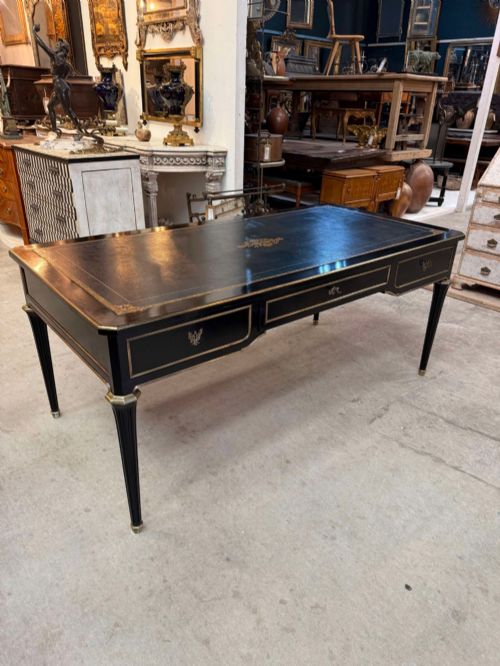
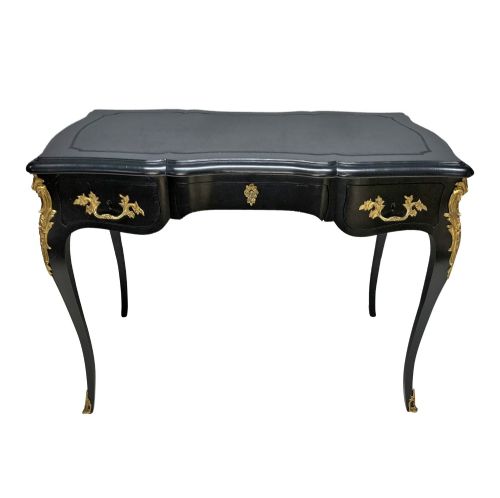
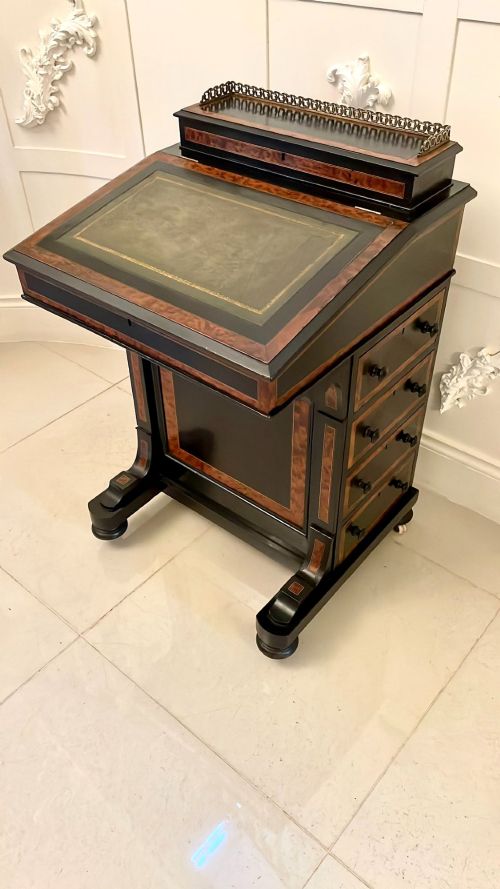
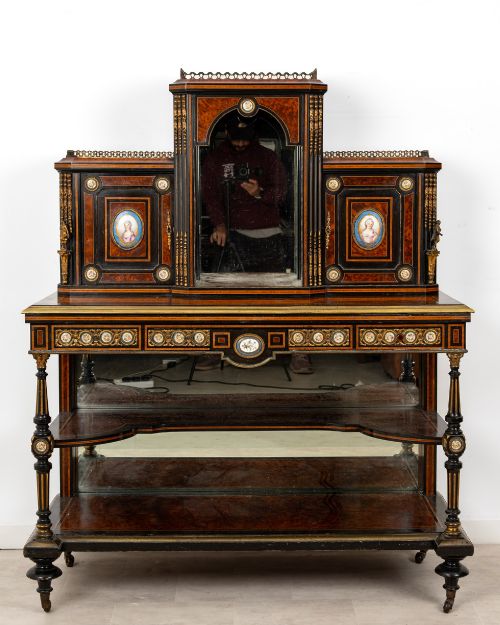
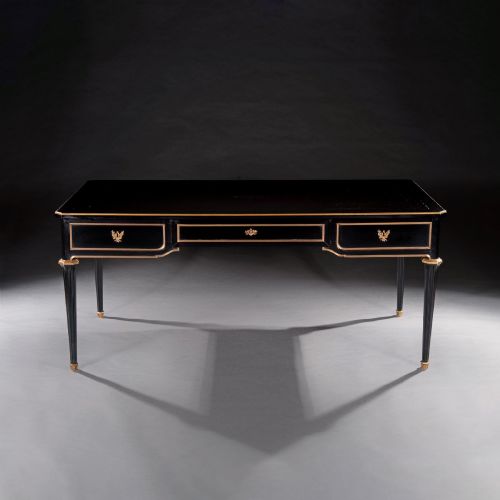
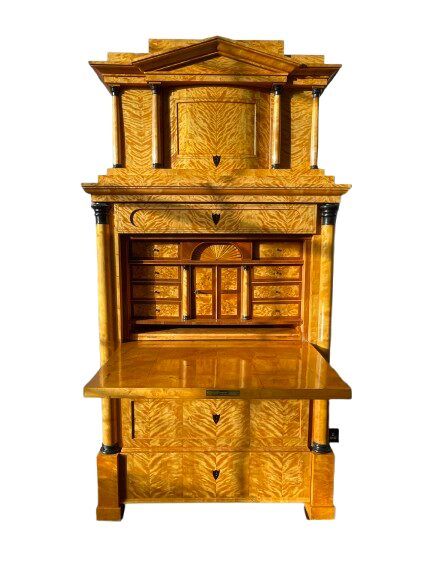
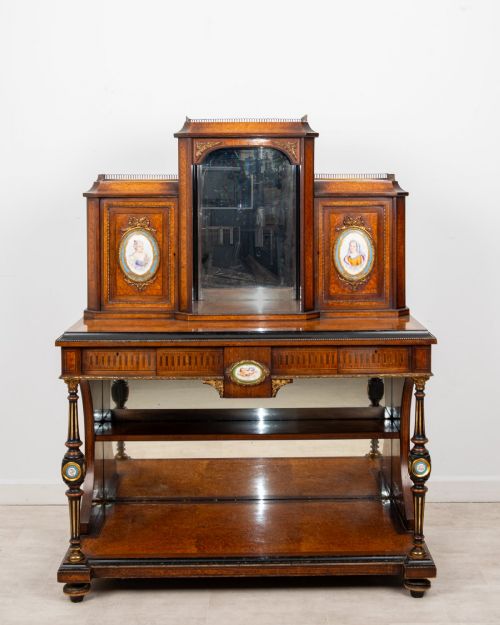
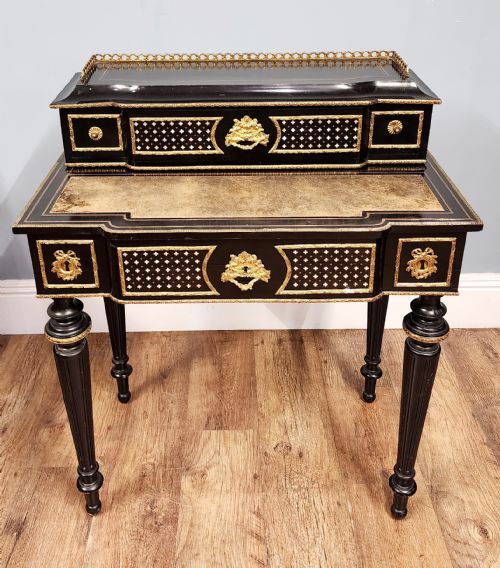
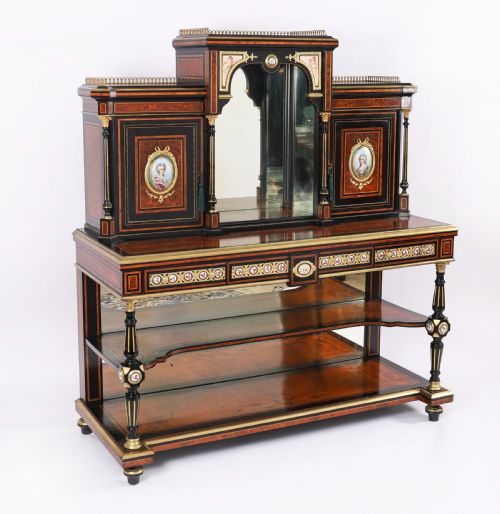
Most entries on this page take the form of compact writing cabinets, bureau plat tables, and elaborate bonheur du jour desks. These items reflect stylistic influences ranging from French Napoleon III and Louis XV Revival to Biedermeier and Aesthetic Movement design.
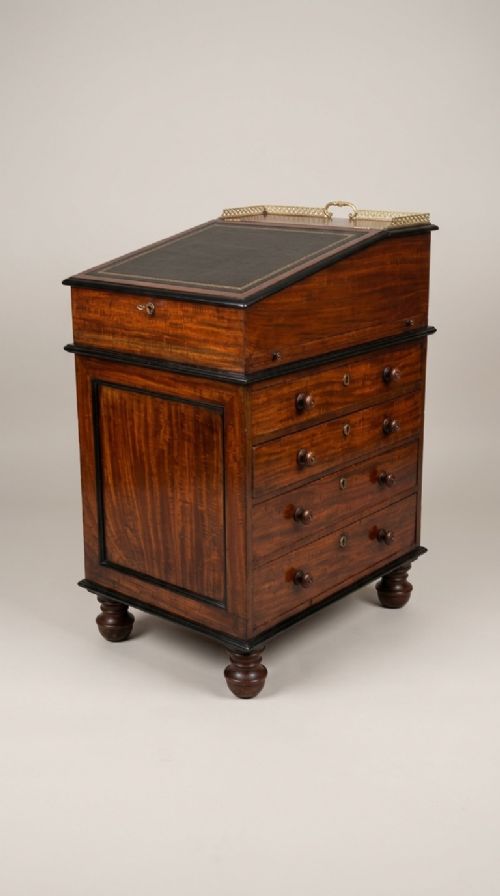
Makers and workshops often combined dark finishes with contrasting veneers, metal mounts, and fitted writing interiors. The resulting forms range from simple writing desks to monumental bureau bookcases.
Materials and construction
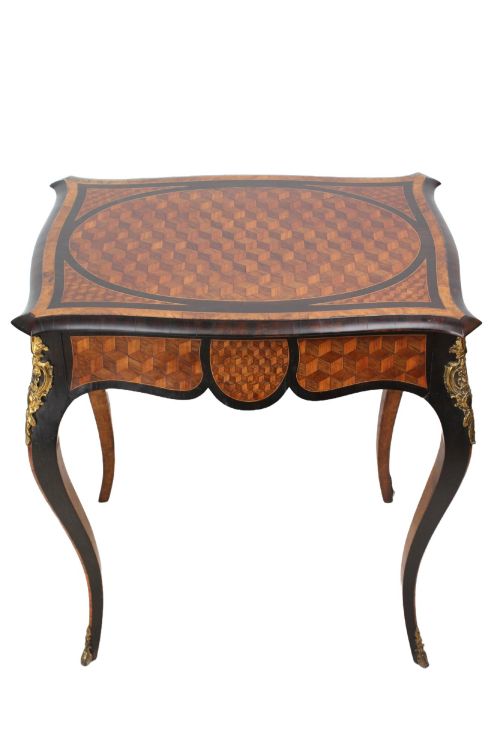
Cabinet makers utilised dense hardwoods, applying dark stains or ebonising finishes to imitate expensive ebony. These surfaces frequently serve as a dark backdrop for contrasting inlays of walnut, amboyna, and birch.
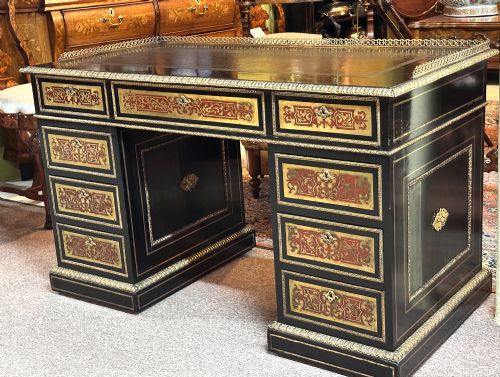
Metalwork played a structural and decorative role, with ormolu, gilt bronze, and brass mounts fixed to corners, edges, and handles. Many pieces also incorporate inset leather writing surfaces and fired porcelain plaques.
Ebonised Bureau Retail Price Guide 2026
Typical asking prices for ebonised bureau among the pieces listed under this phrase on Sellingantiques today, from the lower quarter to the upper quarter. They describe what is for sale here now, not the wider market.
Several desks manage to look both solemn and frivolous simultaneously, thanks to mourning-black timber married to gilt-bronze foliage.
Distinctions in quality
Quality rests in the precision of the cabinetwork and the integration of decorative elements. Superior examples display crisp parquetry, tightly fitted interior drawers, and cleanly cast bronze mounts rather than mass-produced ornamentation.
The choice of secondary timbers and the depth of the ebonised finish separate standard production from workshop pieces by notable makers. Well-executed crossbanding and undamaged veneer work indicate higher craftsmanship.
JAS Shoolbred·Gillows·Paul Sormani·Diehl Paris·Mathieu Befort
The Ebonised Bureau Glossary
- Ebonised wood
- Timber treated with a dark stain or finish to replicate the appearance of solid ebony. This technique gained immense popularity during the Victorian and Napoleon III periods.
- Bonheur du jour
- A small, light writing desk featuring a cabinet or tier of pigeonholes and small drawers above the main work surface. These tables originated in France during the eighteenth century and remained popular through the nineteenth.
- Ormolu
- Gilded bronze ornamentation applied to furniture mounts, feet, and key escutcheons. The technique involves coating copper alloy with a mercury and gold amalgam.
- Boulle work
- A method of marquetry using brass and tortoiseshell inlaid in intricate patterns. It takes its name from André-Charles Boulle, a master cabinetmaker to Louis XIV.
- Parquetry
- Geometric wood inlay forming patterned surfaces on tabletops and drawer fronts. Cabinet makers used contrasting timber tones to create optical depth.
Ebonised Bureau: Frequently Asked Questions
What is an ebonised bureau?
An ebonised bureau is a writing desk or cabinet finished with a dark stain that mimics solid ebony. These pieces range from simple Victorian writing tables to elaborate French bonheur du jour desks.
Cabinet makers often combined the dark wood finish with contrasting brass mounts, porcelain plaques, and lighter interior veneers to create a striking visual impact.
How do I date an ebonised bureau?
Dating relies on stylistic clues, construction methods, and materials recorded in the specific design eras. Pieces from the mid-to-late nineteenth century often display Revival styles, Aesthetic Movement motifs, or Napoleon III extravagance.
Examining secondary timbers inside drawers and the fastening techniques of metal mounts helps confirm the manufacturing period.
Where were these desks used?
These writing desks and cabinets served private studies, drawing rooms, and ladies' boudoirs for correspondence and personal administration. Their compact proportions suited domestic spaces where large executive desks would overwhelm the room.
Many featured lockable compartments and specialised pigeonholes for organising stationery and letters.
How do I care for ebonised wood?
Ebonised surfaces require gentle cleaning with a soft, dry cloth to prevent dust accumulation. Avoid harsh chemical cleaners and modern polishes that can degrade the dark surface finish over time.
Maintaining stable room humidity protects the underlying timber and prevents delicate inlays or brass mounts from loosening.