

Ebonised Bookcase Cabinet
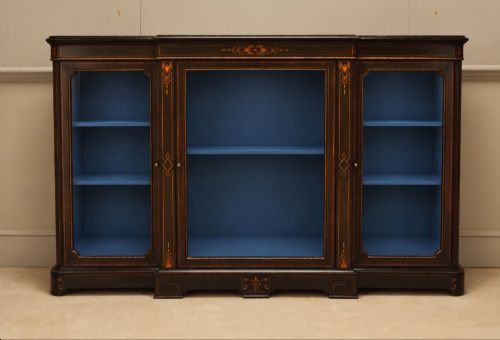
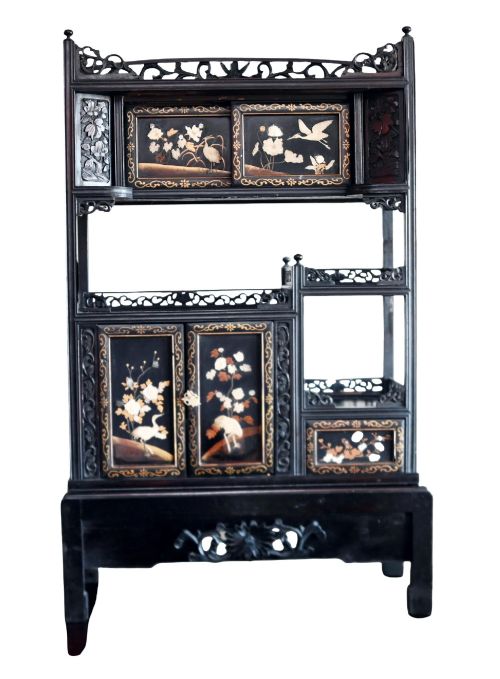
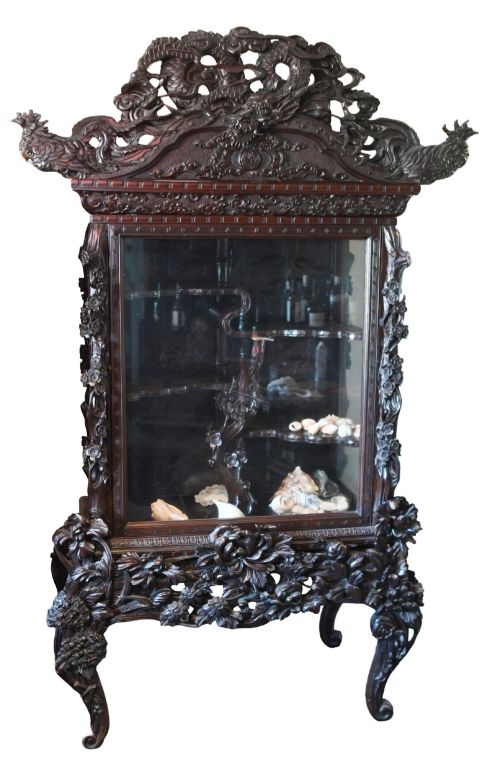
An ebonised bookcase cabinet combines dark, dense timber finishes with glazed display storage, offering a striking display surface for libraries and collections.
Ebonised Bookcase Cabinet
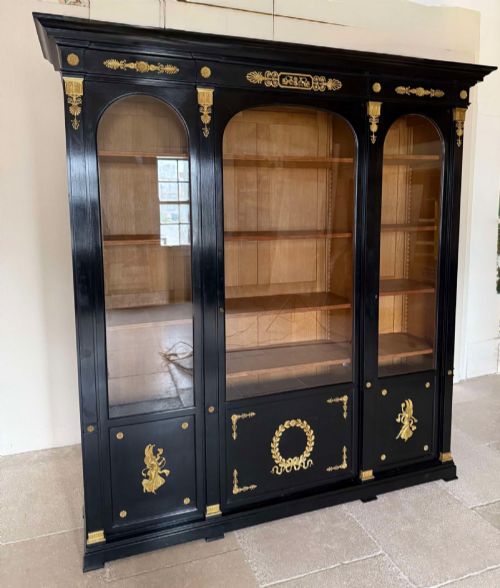
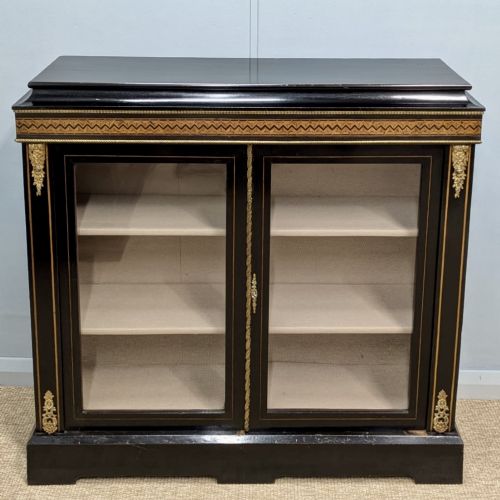
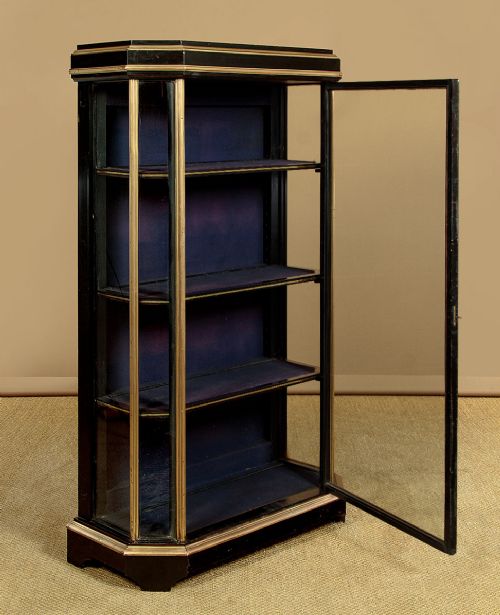
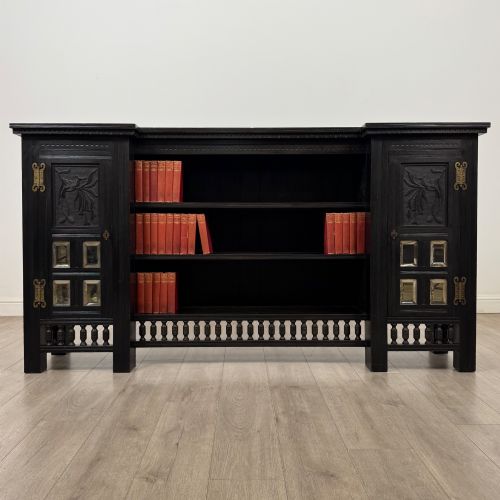
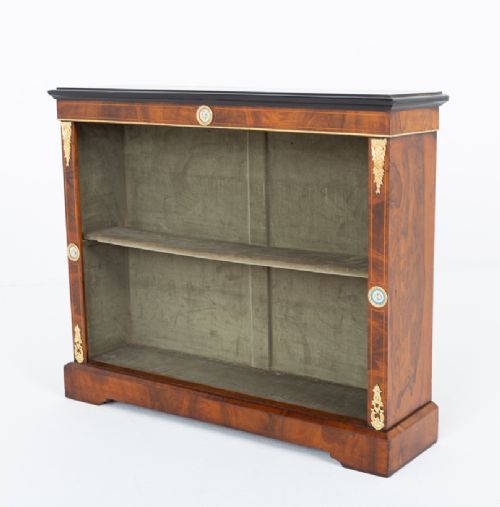
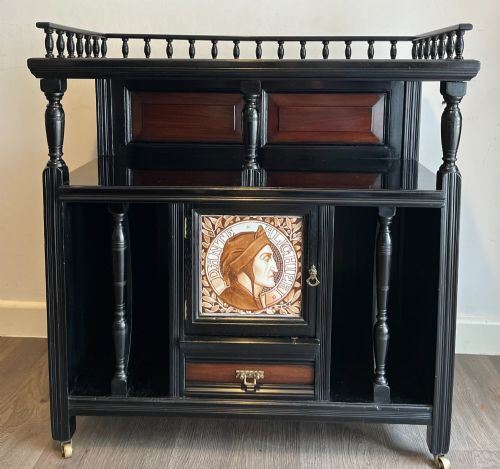
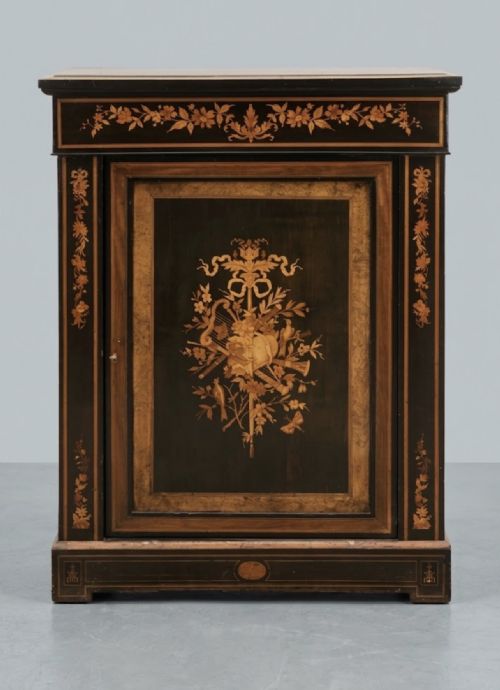
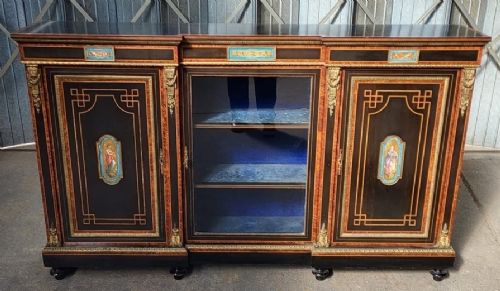
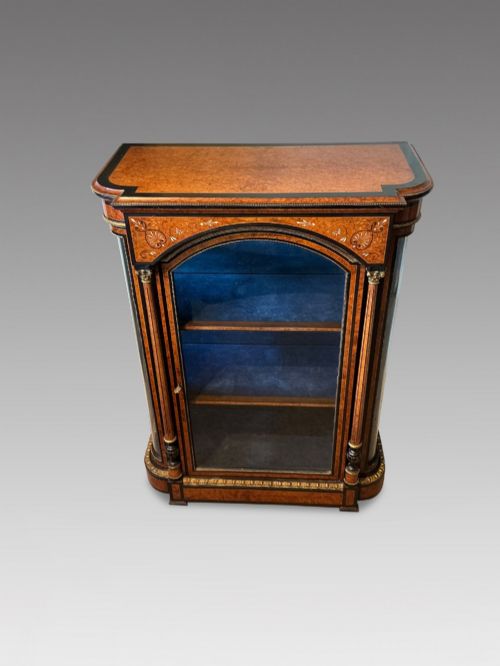
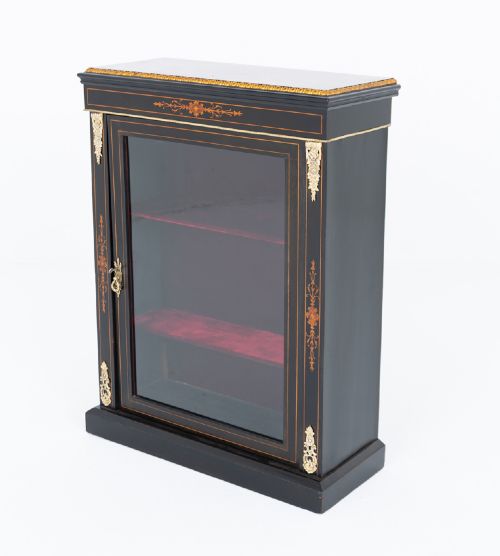
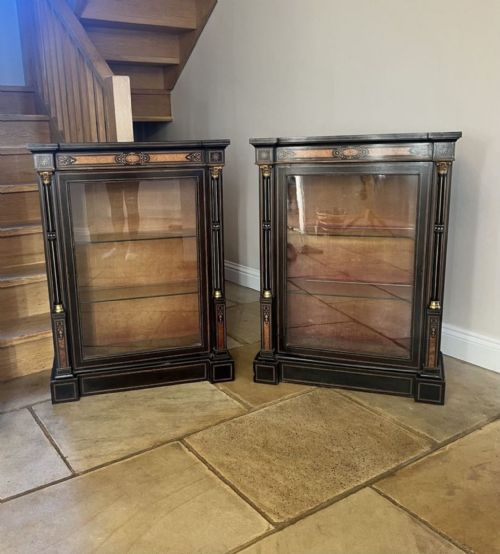
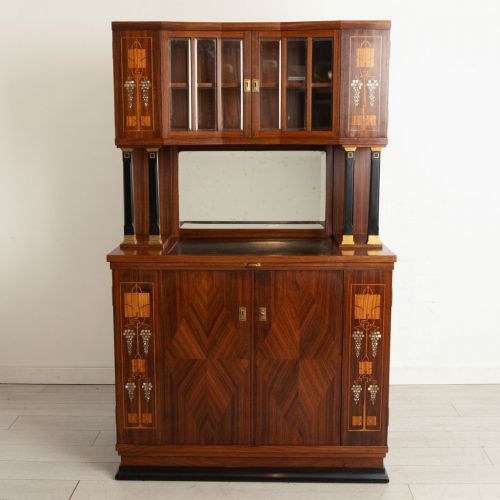
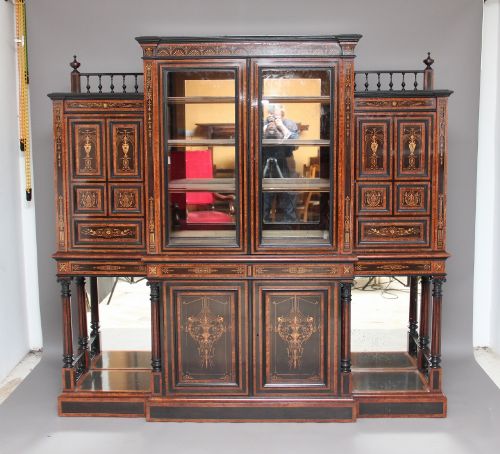
An ebonised bookcase cabinet unites book storage with display space, appearing most frequently in Victorian and nineteenth-century inventories. These pieces range from compact pier cabinets and open bookcases to large breakfront library pieces with glazed doors.
Makers and workshops across England, France, and Austria produced these cabinets during the nineteenth century, drawing on French Napoleon III, Aesthetic Movement, and Gothic Revival styles. Cabinets from this era often integrate adjustable shelving with enclosed lower cupboards or glazed upper compartments.
The form adapts to various domestic scales, accommodating everything from narrow side cabinets to expansive multi-door breakfront bookcases. Walnut, oak, and other native woods form the structural carcase beneath the dark ebonised surface.
Materials and construction methods
Cabinet makers achieved the characteristic dark finish through ebonising timber, a process of staining and polishing light woods to imitate solid ebony. This dark ground frequently serves as a contrasting backdrop for intricate brass marquetry, tortoiseshell, or gilt bronze mounts.
Inlaid decoration incorporates contrasting veneers such as amboyna, burr walnut, and thuya wood, secured with traditional animal glues. Ormolu mounts and porcelain plaques often accent the corners, friezes, and panel doors of finer nineteenth-century examples.
Ebonised Bookcase Cabinet Retail Price Guide 2026
Typical asking prices for ebonised bookcase cabinet among the pieces listed under this phrase on Sellingantiques today, from the lower quarter to the upper quarter. They describe what is for sale here now, not the wider market.
Nineteenth-century variants frequently pair ebonised carcases with contrasting burr walnut, amboyna veneers, and hand-cut brass Boullework.
Distinctions in craftsmanship and design
Quality rests in the precision of the cabinet work, from the tight fit of glazed door joints to the crispness of applied brass and ormolu mounts. Superior pieces display carefully selected contrasting veneers and hand-cut marquetry rather than stamped or printed decoration.
The integrity of the ebonised surface finish and the preservation of original glass panes distinguish finer examples. Cabinets retaining original hardware, functional locks, and internal adjustable shelving demonstrate superior original manufacture.
George Edmund Street·Lamb of Manchester·August Ungethüm
The Ebonised Bookcase Cabinet Glossary
- Ebonised
- Wood treated with a chemical stain or dark finish to resemble solid ebony. This technique gained widespread popularity during the Victorian and Aesthetic Movement periods.
- Ormolu
- Gilded bronze mounts applied to furniture for decorative effect. These cast metal ornaments frequently accent the corners and doors of nineteenth-century display cabinets.
- Boulle
- Marquetry technique utilising cut brass and tortoiseshell arranged in contrasting patterns. Named after French cabinet maker André-Charles Boulle, this style appears frequently on Napoleon III pieces.
- Pier Cabinet
- A narrow display cabinet designed to fit wall spaces between windows. These pieces often feature glass doors and velvet-lined interior shelving.
- Breakfront
- A cabinet front where the central section projects forward from the flanking wings. This architectural arrangement creates depth and visual balance in large library bookcases.
Ebonised Bookcase Cabinet: Frequently Asked Questions
What is an ebonised bookcase cabinet?
An ebonised bookcase cabinet is a storage and display piece finished with a dark, ebony-like stain, featuring glazed doors for books and collections.
Most surviving examples date from the nineteenth century, reflecting Victorian and continental design movements.
How do I date an ebonised cabinet?
Dating relies on construction methods, hardware, and stylistic indicators such as Aesthetic Movement inlay or Victorian proportions.
Secondary woods, backboards, and screw types also help determine whether a piece originates from the mid or late nineteenth century.
Were these cabinets used for books or display?
Many pieces served dual purposes, combining open or glazed upper bookshelves with enclosed lower cupboards for general storage.
Pier cabinets and vitrines tended to focus more on porcelain and curiosities rather than large volumes.
How do I care for ebonised wood?
Ebonised surfaces require gentle dusting with a soft cloth and protection from direct sunlight and extreme humidity fluctuations.
Avoiding silicone-based polishes preserves the original finish and prevents buildup on delicate brass mounts and inlay.