
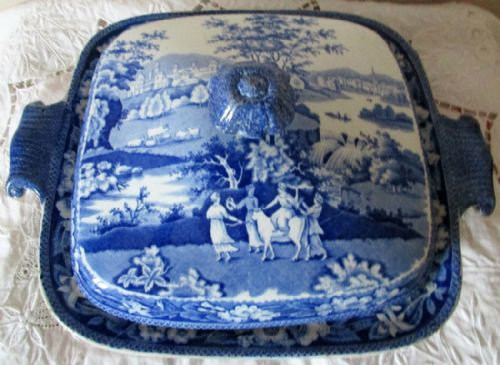


Earthenware Serving Tureen
An earthenware serving tureen brings the weight and transfer-printed scenes of nineteenth-century dining tables directly to the modern home.
Earthenware Serving Tureen
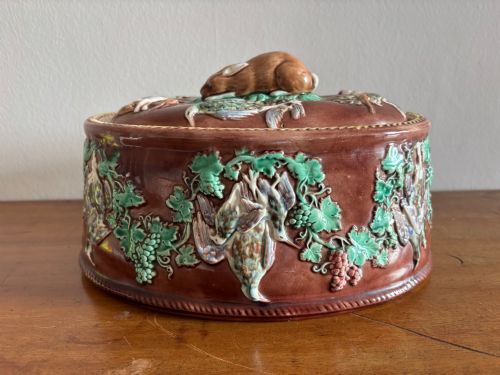
An earthenware serving tureen is a substantial lidded vessel designed for the table, most commonly found here from the Georgian and Victorian periods. These pieces include vegetable tureens with covers, sauce tureen stands, and supper set tureens intended for communal dining.
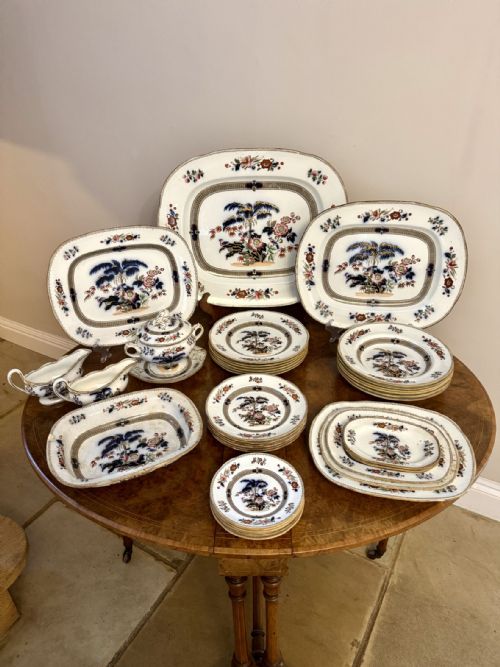
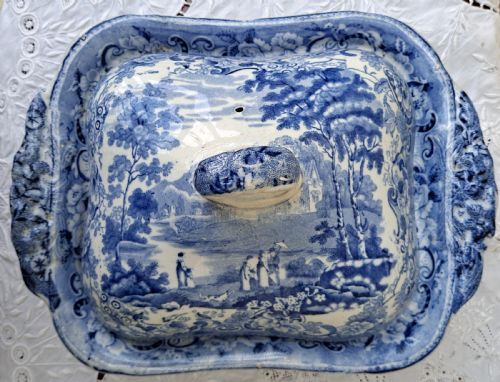
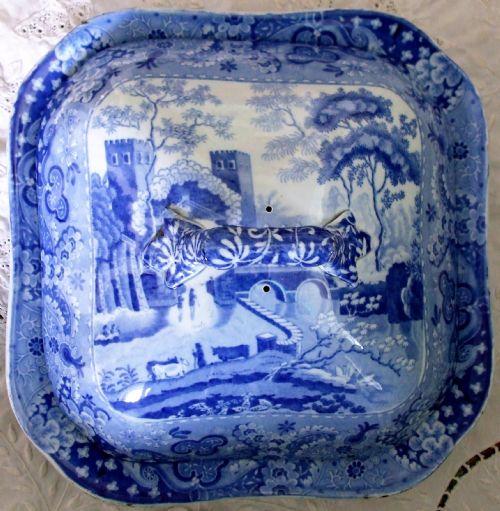
The inventory leans heavily toward blue and white transfer-printed items, featuring pastoral, classical and romantic scenes such as the Rural Scenery, Castle, and Europa patterns. Alongside these are larger dinner services and individual game pie dishes produced in Staffordshire and other English potteries.
Materials and construction
Potters built these vessels using earthenware, pearlware, terracotta, and ironstone, applying an opaque glaze to seal the porous clay body. The distinct blue and white imagery relies on copperplate transfer printing, a technique that transferred intricate engraved designs onto the ceramic surface before glazing and firing.
Many examples incorporate hand-applied enamel details over the transfer print to add colour to floral borders or architectural motifs. Lids, handles, and matching stands were cast or moulded separately and joined to the main body prior to the kiln.
Nineteenth-century diners encountered exotic elephants and pastoral ruins rendered in bright blue on their dinner table before the meal even began.
Factors determining quality
Quality rests primarily on the crispness of the transfer print and the balance of the overall form, distinguishing master potters from routine production ware. Clear registration without blurring in the printed scenes and uniform glaze coverage without excessive pooling indicate superior execution.
The presence of a matching cover or original stand elevates a piece, as complete sets survive with greater difficulty than isolated vessels. Maker attribution to known Staffordshire works also influences the standing of an item within the tradition.
Wedgwood·James Wallace and Co·J and R Clews·John and Richard Riley·Booths·Doulton Burslem·Spode·Ridgways·Copeland and Garrett·John Rogers and Son
The Earthenware Serving Tureen Glossary
- Earthenware
- Porous ceramic fired at a lower temperature than stoneware or porcelain, requiring a vitreous glaze to hold liquids. It forms the heavy base body for the majority of these antique tureens.
- Transfer print
- A decorative technique where an engraved copper plate transfers a design onto tissue paper, which is then pressed onto the unfired ceramic. This method allowed for complex repeatable scenes like romantic ruins and pastoral landscapes.
- Pearlware
- A refined earthenware developed in the late eighteenth century featuring a subtle bluish glaze that pooled in recesses. It bridges creamware and later ironstone bodies.
- Ironstone
- A dense, durable type of earthenware patented in the nineteenth century to imitate porcelain. It resists chipping and staining far better than standard soft paste bodies.
- Sauce tureen
- A diminutive vessel specifically shaped for gravies and sauces, frequently accompanied by an integral or separate matching stand. These maintain the decorative scheme of the larger dinner service.
Earthenware Serving Tureen: Frequently Asked Questions
How were earthenware tureens used?
These lidded vessels held vegetables, stews, or sauces at the centre of nineteenth-century dining tables. Servants brought them to the table filled with food, and the tight-fitting cover kept the contents warm between servings.
Smaller examples functioned as sauce tureens on matching stands, while game pie dishes accommodated specialised meat courses. Their robust ceramic construction ensured they could withstand daily use in active households.
How do I clean and care for antique earthenware?
Wash these pieces strictly by hand using warm water and a mild detergent, avoiding soaking or placing them in a dishwasher. The old glazes can develop fine craquelure over time, which absorbs coloured liquids if left submerged.
Dry them thoroughly with a soft cloth after washing to protect the ceramic body and any delicate enamel highlights. Gentle handling prevents damage to applied handles and finials on the covers.
Can I use these tureens for serving food today?
Most buyers display these pieces as decorative items or use them for dry presentation rather than active dining service. The historic glaze and porous earthenware body can react unfavorably to modern detergents, thermal shock, or acidic foods.
If you do serve food from them, avoid hot liquids that might stress old hairline fractures or stain the crazed glaze. Hand-washing immediately after use remains essential.
How do I distinguish Georgian pieces from Victorian ones?
Georgian examples often feature pearlware bodies with a characteristic blue tint in the glaze and lighter, more fluid transfer designs. The named patterns from this era frequently reference classical or romantic literary themes.
Victorian pieces tend to utilise heavier ironstone or refined earthenware bodies with denser, more mechanically precise transfer printing. Maker marks stamped into the base also help separate mid-nineteenth-century production from earlier Georgian output.