
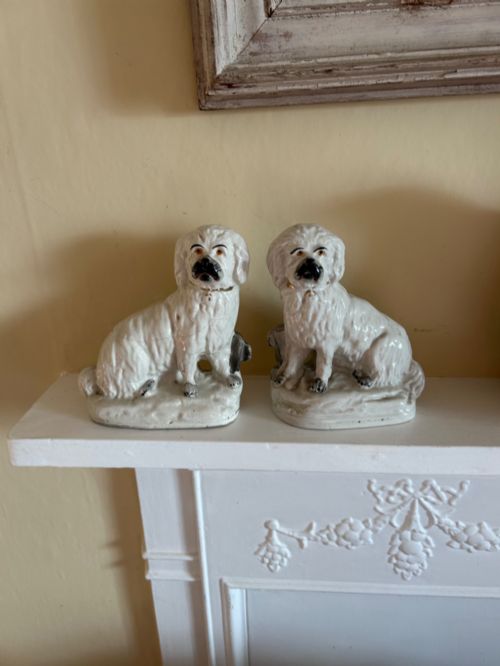


Earthenware Dog Figurine Pair
An earthenware dog figurine pair brings mantelpieces alive with Victorian character, offering symmetry and charm through traditional ceramic craftsmanship.
Earthenware Dog Figurine Pair
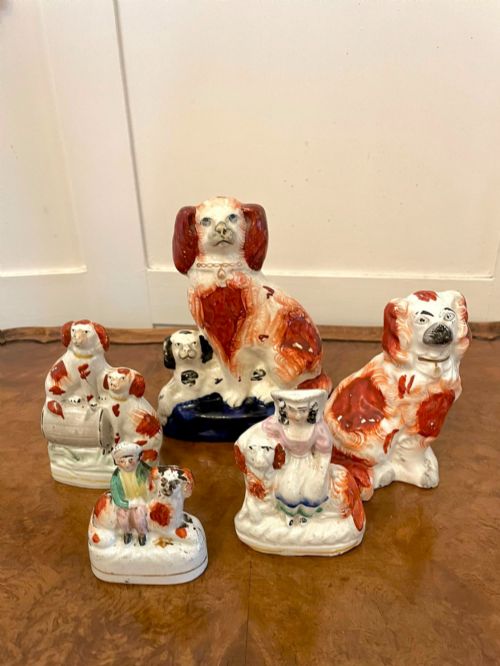
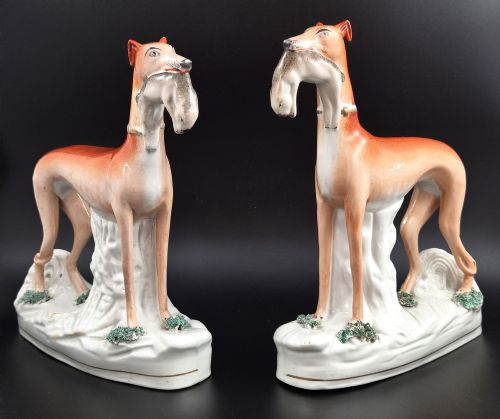
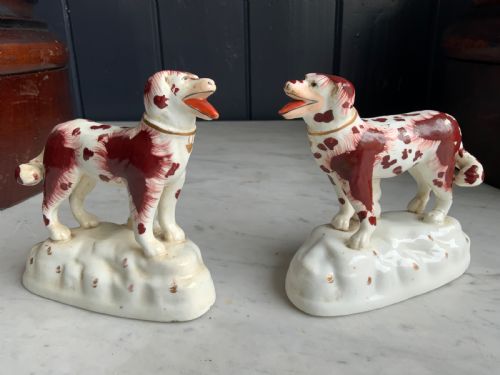
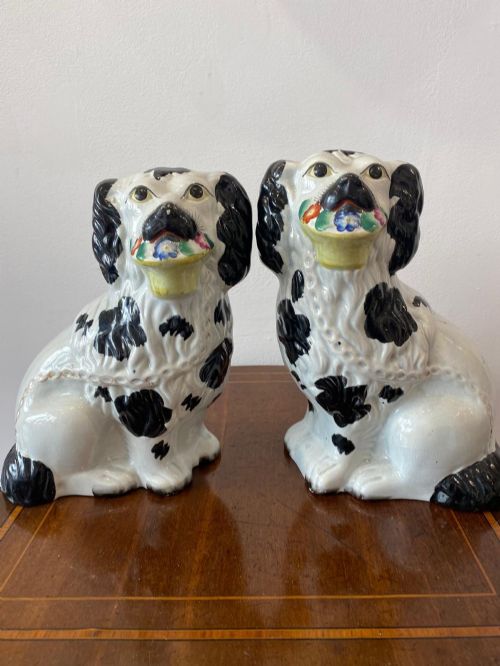
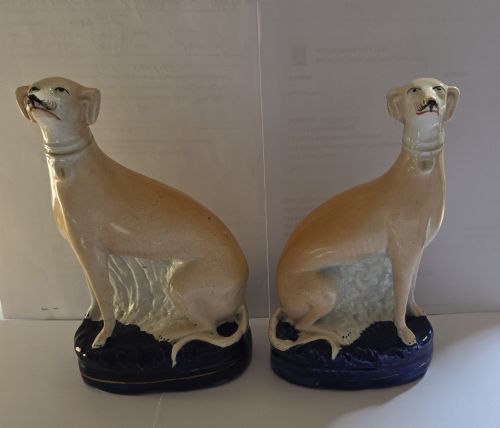
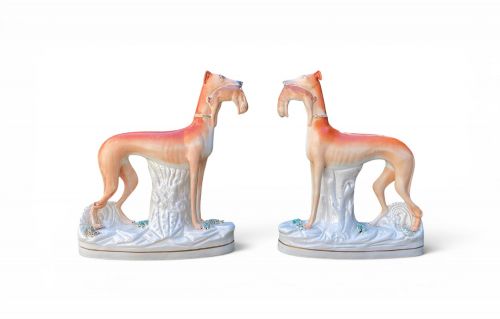
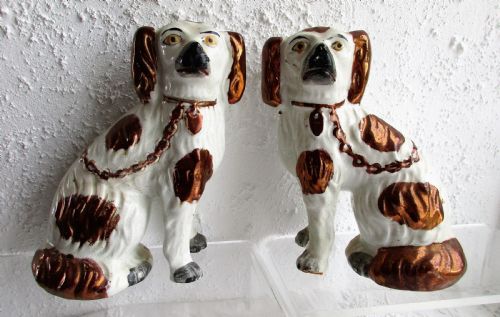
An earthenware dog figurine pair consists of matched ceramic hounds, spaniels, poodles, or greyhounds intended for decorative display. These chimney ornaments populate nineteenth-century interiors in various breeds including pugs, terriers, and whippets.
Most examples originate from nineteenth-century English kilns, capturing domestic animal companionship with symmetrical poses suited for mantelpieces. The selection ranges from miniature poodles to large greyhounds accompanied by hares.
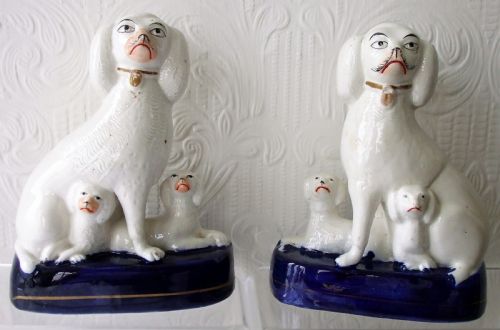
Buyers encounter traditional seated spaniels, hunting dogs, and poodles with pups across the Victorian period. These earthenware dog figurine pair groups reflect the domestic tastes of the era through sculptural pottery forms.
Materials and Construction
Makers utilised slip-casting or pressing techniques in moulds, followed by kiln firing and hand-painting. Detail work included textural effects such as woolly coats on poodles and moulded cushions.
Several poodles wear remarkably woolly coats formed from tiny clay granules.
Judging the Standard
Quality rests in the crispness of the moulding and the delicacy of the hand-painted enamel work. Superior pairs show distinct facial expressions and careful delineation of fur rather than hasty decoration.
The application of glaze and gilt varies between standard production pieces and finer modelled examples. Well-matched pairs retain their original symmetry and corresponding proportions without distortion from firing.
Thomas Parr
The Earthenware Dog Figurine Pair Glossary
- Earthenware
- Porous pottery fired at lower temperatures, forming the primary body for these nineteenth-century figures.
- Enamel Paint
- Vitreous pigments applied over the glaze to provide surface details such as spots, eyes, and collars.
- Lead Glaze
- A glossy coating applied to ceramic surfaces before firing, giving a smooth and reflective finish.
Earthenware Dog Figurine Pair: Frequently Asked Questions
What breeds appear most often?
Spaniels and greyhounds dominate the selection, accompanied by poodles, pugs, and terriers.
These subjects reflect popular nineteenth-century pets and sporting animals.
How were they displayed?
Pairs sat symmetrically on mantelpieces, often flanking a clock or ornament.
This traditional arrangement remains a popular way to style them in period interiors.
Are all pairs identical?
Moulded figures typically face opposite directions to create a mirrored pair.
Hand-painting introduces subtle individual variations between the two pieces.
Which periods are represented?
The pieces span the nineteenth century, with strong representation from the Victorian era.
Dating relies on stylistic changes in modelling and decoration.