



Earthenware Cachepot Planter
An earthenware cachepot planter holds potted greenery inside, protecting furniture while displaying the potter's craft.
Earthenware Cachepot Planter
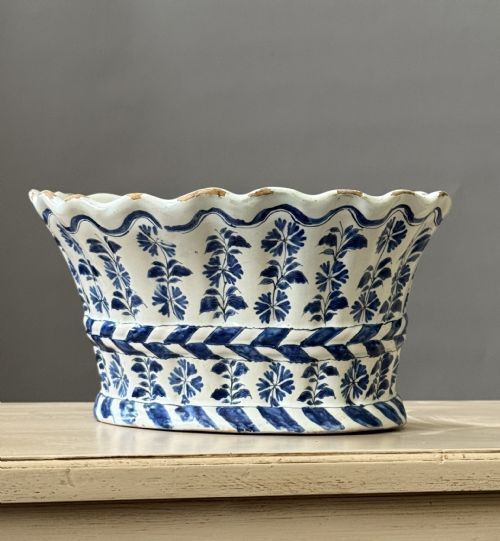
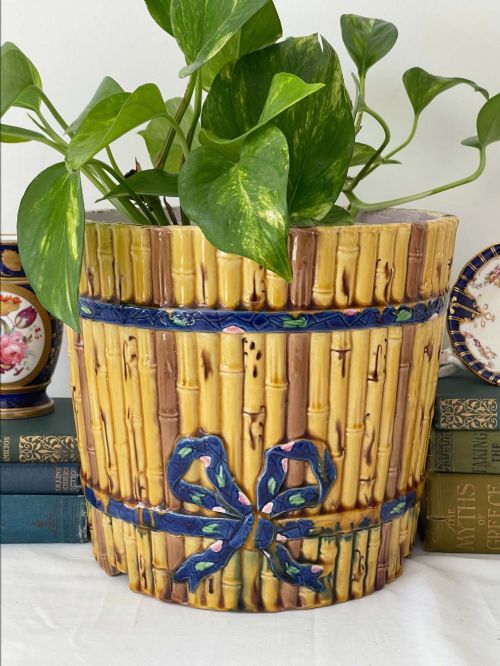
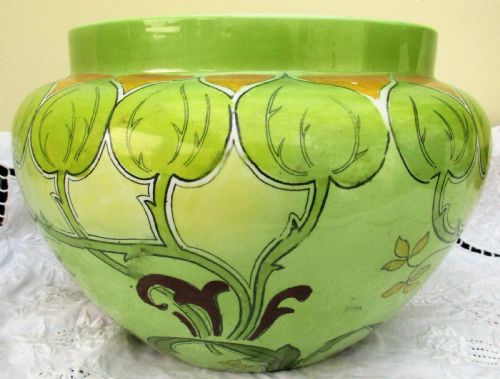
When searching for an earthenware cachepot planter, you encounter vessels designed to hold potted plants without a drainage hole, requiring an inner saucer or pot. These pieces range from early English Delftware and French faience to robust Victorian majolica and Art Nouveau pottery.
The selections span distinct periods, starting from the eighteenth century through the nineteenth century and into the early twentieth century. Common forms include jardinieres, bough pots, and specific planter and stand combinations.
Origins vary across English potteries, European factories, and Japanese kilns, offering styles from Victorian naturalism to Arts and Crafts simplicity.
Materials and methods
Potters shaped these vessels using earthenware, ceramic, and stoneware bodies, often applying tin-glaze, enamel, or coloured lead glazes to create the characteristic glossy surface.
Techniques range from hand-thrown or moulded bodies to complex majolica reliefs and applied slip decoration, fired at various temperatures to set the glaze.
Earthenware Cachepot Planter Retail Price Guide 2026
Typical asking prices for earthenware cachepot planter among the pieces listed under this phrase on Sellingantiques today, from the lower quarter to the upper quarter. They describe what is for sale here now, not the wider market.
Listings feature earthenware, stoneware, and tin-glazed earthenware bodies shaped into jardinieres, bough pots, and planters.
Assessing quality
Quality rests in the crispness of the moulding, the depth and richness of the glaze, and the precision of hand-painted or applied ornament.
Examples designed by notable artists or produced by distinguished potteries demonstrate superior control over form, colour application, and decorative harmony.
W.A. Adderley·Doulton Burslem·Doulton Lambeth·Royal Doulton·Royal Worcester·Minton·Enoch Wood & Sons·Makuzu Kozan II·Macintyre & Co.·William Moorcroft·William Adams & Sons·Linthorpe Pottery·Christopher Dresser·Charles Noke
The Earthenware Cachepot Planter Glossary
- Cachepot
- An ornamental container used to hide a plain flowerpot. The word derives from the French for hiding a pot.
- Jardiniere
- A large ornamental pot or stand for plants or flowers. These vessels often feature handles or footed bases.
- Majolica
- earthenware glazed with an opaque tin-lead glaze and painted with metallic oxides. This technique produces vibrant colouration.
- Delftware
- Tin-glazed earthenware made in Britain or the Netherlands, traditionally decorated in blue and white. Early examples often take forms like bough pots.
- Slip
- Liquid clay applied to pottery for decoration or surface smoothing. Potters use slip to create raised patterns or contrasting backgrounds.
Earthenware Cachepot Planter: Frequently Asked Questions
What is a cachepot planter?
A cachepot planter is an indoor decorative container designed to hold a potted plant. It lacks drainage holes at the base.
Because water does not drain directly through the bottom, these pots protect indoor furniture and surfaces by containing moisture within the vessel.
How can I tell the period?
Dating relies on body material, glaze characteristics, style influences such as Art Nouveau or Victorian naturalism, and maker marks.
Examining the base and manufacturing technique often reveals clues about whether a piece originates from the eighteenth or nineteenth century.
What is majolica?
Majolica is a type of pottery featuring a porous earthenware body covered with an opaque glaze containing tin oxide.
Potters painted metallic oxide colours directly onto this glaze before firing, creating rich hues and glossy surfaces popular during the Victorian era.