

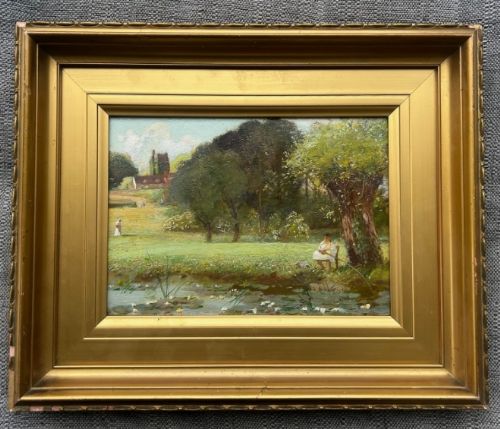


Earth Tone Impressionist Artwork
Earth tone impressionist artwork captures quiet rural landscapes and coastal scenes through expressive brushwork and muted palettes.
Earth Tone Impressionist Artwork
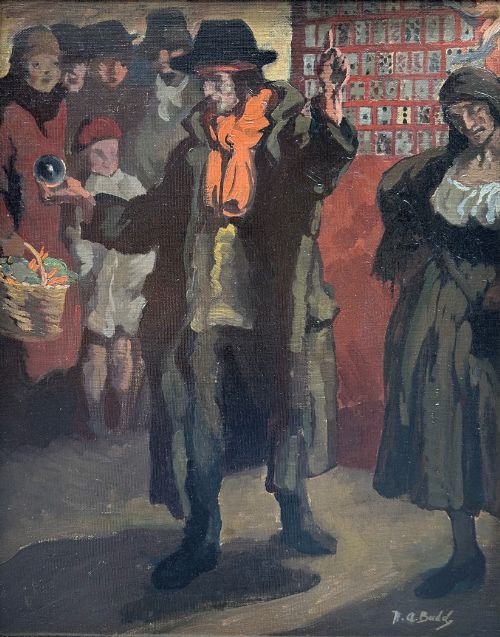
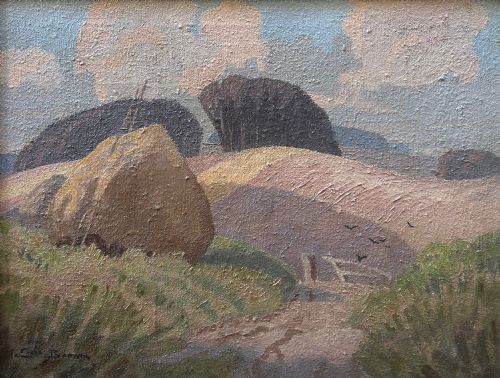
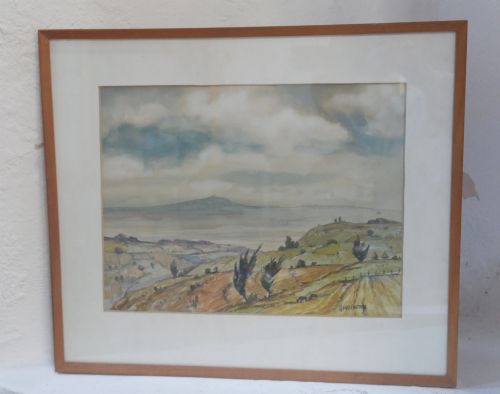
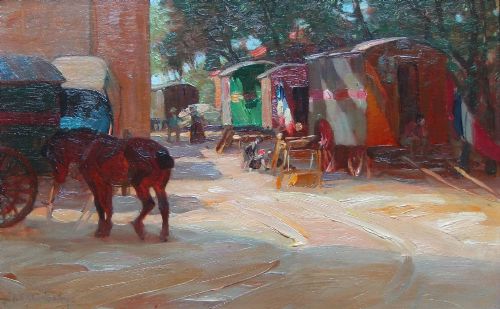
Earth tone impressionist artwork encompasses oil and watercolour paintings produced primarily during the early twentieth century, spanning British, French, and international traditions. These pieces focus on natural subjects such as haystacks, moorlands, rivers, farmsteads, and village streets captured in subdued, natural colours.
The selection on this page relies heavily on works from the nineteen-tens and nineteen-twenties, alongside mid-century examples from the nineteen-fifties and nineteen-sixties. Buyers encounter framed coastal views, woodland scenes, and rural Yorkshire landscapes executed by regional and continental painters.
Materials and technique
Artists painted primarily with oil paint on canvas or wood panels, though paper and watercolour also appear across regional works. These supports received layers of pigment applied with visible brushstrokes designed to capture transient effects of light and weather.
Framing often complements the canvas, utilising wood surrounds that isolate the subdued greens, browns, and ochres characteristic of the movement. The interplay between the textured paint surface and the support defines the physical character of each piece.
The inventory spans works produced across eight distinct decades.
Judgement of quality
Quality rests upon the handling of light and pigment, where confident brushwork conveys atmosphere and depth rather than rigid topographical accuracy. Superior examples demonstrate a cohesive tonal harmony that unifies the composition without relying on bright primary colours.
The strength of a piece also depends on the immediacy of the observation, capturing mundane agricultural or domestic subjects with a distinct artistic sensibility. Provenance and clear artist attribution further elevate the standing of individual works within the broader movement.
Herbert Ashwin Budd·Eric Brown·Paul Ehrenberg·Sir David Murray·Ernest Higgins Rigg·Owen Bowen·William Greaves·Frederick W. Jackson·Kershaw Schofield·Sidney James Beer·Fred Stead·Herbert Royle·Charles Henry Harrison Burleigh·V. Zirakian·Hendrik Yan Wolter·Josephine Haswell Miller
The Earth Tone Impressionist Artwork Glossary
- Impressionism
- A nineteenth and twentieth-century painting style focused on capturing the visual impression of a moment, particularly shifting light and natural colours. This approach prioritises loose brushwork over precise academic detail.
- Post-Impressionism
- An extension of impressionism that rejects its limitations, placing greater emphasis on symbolic motifs and distinct colour relationships. Artists working in this manner often explored firmer structural forms.
- Oil paint
- A slow-drying medium composed of pigments suspended in a drying oil, typically linseed. This material allows for rich impasto textures and subtle colour blending.
- Wood panel
- A rigid support surface used by painters before and alongside stretched canvas. Panels offer a firm base that preserves the stability of early twentieth-century brushwork.
- Watercolour
- A painting method where water-soluble pigments are applied to paper. This medium produces translucent washes suited to delicate landscape studies.
Earth Tone Impressionist Artwork: Frequently Asked Questions
What periods do these paintings cover?
The listings span the late nineteenth century through to the nineteen-sixties, with a strong concentration in the early decades of the twentieth century. Regional British painters dominate the selection alongside continental European and international examples.
Buyers find works from specific years such as nineteen-ten and nineteen-twenty, reflecting active periods of landscape painting in rural communities.
How should I display an oil painting?
Keep the artwork away from direct sunlight and fluctuating humidity to protect both the canvas and the underlying wood support. Appropriate placement ensures the muted pigments remain stable over time.
Ensure the original or complementary frame securely holds the panel without applying undue pressure to the painted surface.
What subjects appear in these works?
Common subjects include agricultural scenes, hayricks, river valleys, coastal harbours, and quiet village streets. Painters often recorded local Yorkshire landscapes, Scottish scenes, and continental settings.
Human figures appear occasionally, such as seaweed gatherers or farm workers integrated into the natural environment.
How do watercolours differ from oils?
Watercolours utilise pigments suspended in water-soluble binders applied to paper, producing lighter, translucent effects. They typically require protective glass framing to prevent environmental damage.
Oil paintings use thick or layered oil pigments on canvas or wood panels, resulting in textured surfaces with deep tonal variations.