



Early Victorian Shelving
Early victorian shelving brings useful display and storage to any room, offering traditional timber construction and period character.
Early Victorian Shelving
Early victorian shelving encompasses open bookcases, etageres, whatnots, and display shelves dating from the nineteenth century, including pieces marked by specific Regency and William IV stylistic influences. These items combine practical tiering and compartment storage with the domestic requirements of the period.
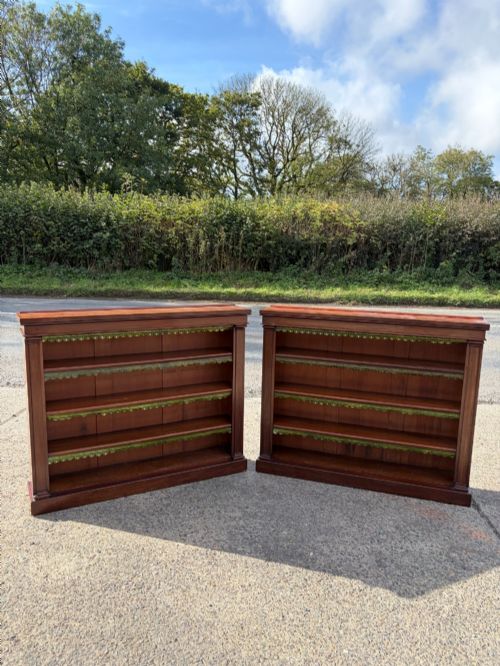
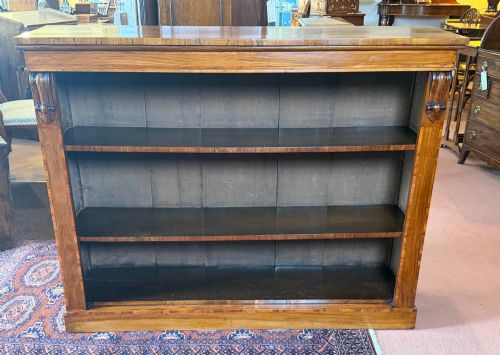
The versions most commonly met on this page include mahogany and rosewood bookcases alongside multi-tiered whatnots and etageres. Buyers find open configurations designed for book storage as well as partitioned side cabinets and adjustable storage cupboards.
Origins and materials reflect mid-nineteenth century cabinet-making traditions, utilising dense timbers like burr walnut and birdseye maple alongside more utilitarian pine. Each piece demonstrates the structural priorities of the era, balancing display capacity with domestic utility.
How early victorian shelving was made
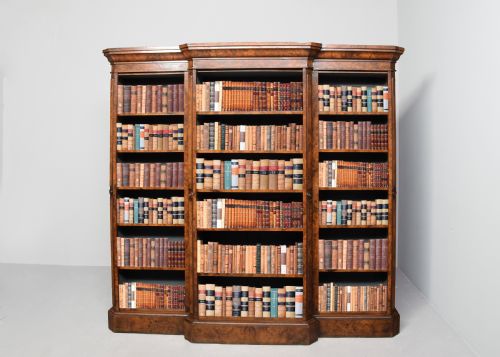
Construction relies upon traditional hardwoods such as mahogany, rosewood, and walnut, often selected for their rich grain patterns and durability. Cabinet-makers utilised timber frames to support multiple tiers or adjustable shelves within breakfront and open configurations.
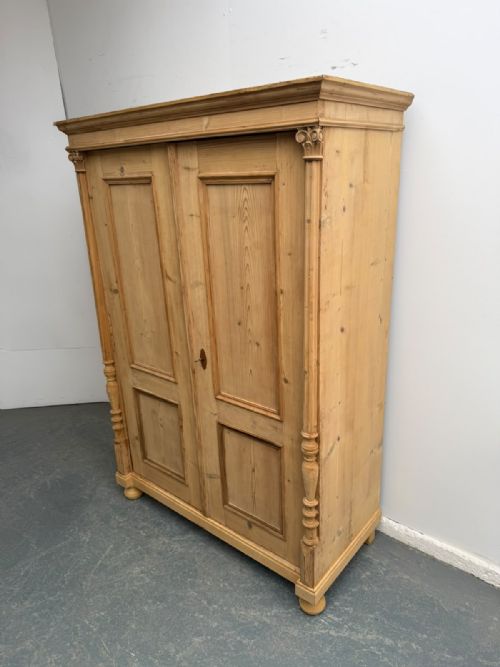
Decorative elements incorporate burr walnut veneers and birdseye maple, paired occasionally with brass fittings or leather details. Pine serves as a secondary timber for functional storage cupboards destined to be waxed or painted.
Early Victorian Shelving Retail Price Guide 2026
Typical asking prices for early victorian shelving among the pieces listed under this phrase on Sellingantiques today, from the lower quarter to the upper quarter. They describe what is for sale here now, not the wider market.
What varies in quality
Quality differences emerge in the selection and application of timber veneers, where burr walnut and rosewood display superior grain depth compared to standard utility woods. The sophistication of the breakfront layout and the precision of adjustable shelf mechanisms further distinguish finer examples.
Construction integrity is evident in the stability of multi-tiered whatnots and etageres, as well as the joinery of breakfront bookcases. Finer pieces maintain balanced proportions and harmonious secondary timbers across backboards and interior partitions.
The Early Victorian Shelving Glossary
- Whatnot
- A piece of furniture consisting of several open shelves placed one above the other, used for displaying small objects or books. They appear in multi-tier formats across the nineteenth century.
- Etagere
- A piece of furniture with a set of open shelves for displaying ornaments, closely related to the whatnot. These structures provide accessible display surfaces.
- Breakfront
- A cabinet or bookcase whose central section projects forward from the flanking sections. This architectural arrangement creates depth and visual interest in larger bookcases.
- Birdseye maple
- Maple wood showing small knots or marks resembling birds' eyes, valued for decorative cabinetwork. It appears on specialised nineteenth-century display pieces.
Early Victorian Shelving: Frequently Asked Questions
What is early victorian shelving?
Early victorian shelving comprises nineteenth-century bookcases, whatnots, and etageres designed for books and display. These items utilise traditional timbers and period construction methods.
They reflect the domestic requirements and cabinet-making styles of the mid-nineteenth century, offering both open storage and tiered display surfaces.
How were these shelves used?
These pieces served primarily for holding books, displaying decorative objects, and organising household items in nineteenth-century rooms. Multi-tiered whatnots kept ornaments accessible in principal living spaces.
Open bookcases and side cabinets provided functional storage for bound volumes and domestic miscellany within libraries and parlours.
How do I identify this period?
Identification relies upon timber choices such as rosewood, mahogany, and burr walnut, alongside specific design traits from the Regency and William IV eras. Construction details like adjustable shelf mechanisms offer further chronological clues.
Cabinet-making techniques and proportions typical of the mid-nineteenth century distinguish these items from later mass-produced alternatives.
How do I live with antique shelves?
Living with these pieces involves placing them in stable environments away from direct heat sources to protect nineteenth-century timbers and veneers. Regular dusting and careful weight distribution on adjustable shelves preserve the structure.
Their varied configurations allow them to function effectively as modern bookcases or display units in contemporary interiors.