

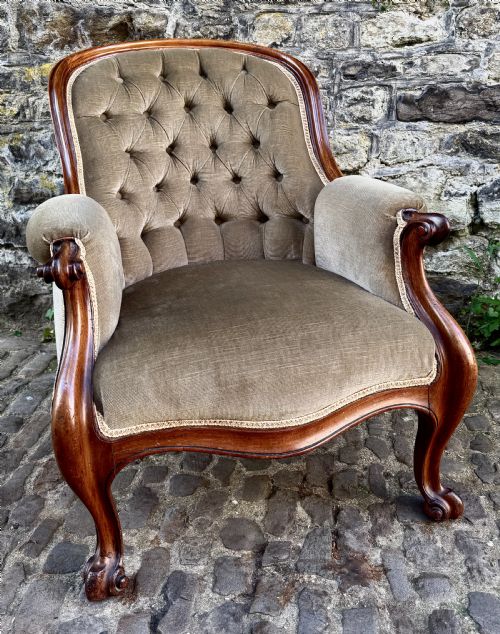


Early Victorian Easy Chair
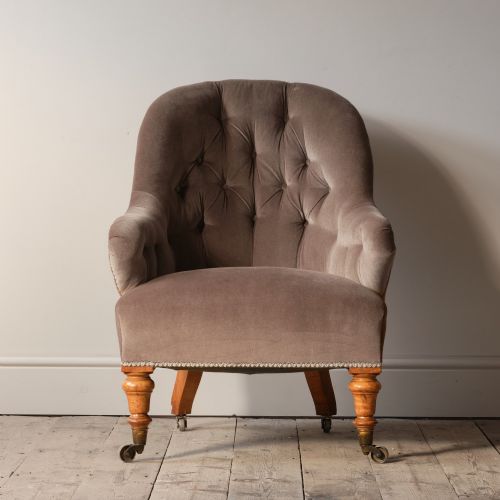
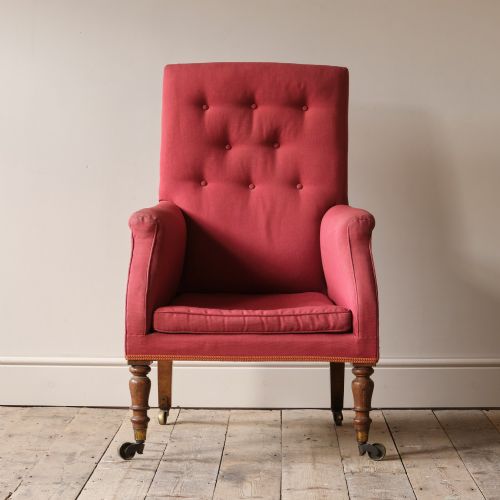
An early victorian easy chair brings proper nineteenth-century comfort to a room, pairing deep upholstery with solid timber frames.
Early Victorian Easy Chair
An early victorian easy chair is a comfortable upholstered seat designed for relaxation during the nineteenth century, appearing in forms such as gents easy chairs, elbow armchairs, and low lounge seats. These pieces belong to the broader Victorian and Regency eras, with many examples crossing over from William IV periods into the mid-nineteenth century.
The versions you are most likely to meet on this page feature exposed wooden frames in walnut, mahogany, or rosewood, paired with deep sprung seating. Makers like Howard and Sons produced notable examples during this time, often retaining original h&s ticking or later fabric coverings.
Meticulous joinery and generous proportions define these armchairs, setting them apart from later mass-produced seating. They suit traditional studies, libraries, and drawing rooms where deep comfort remains essential.
How they were made
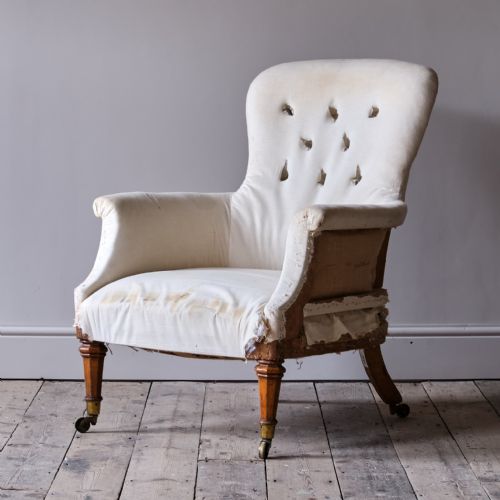
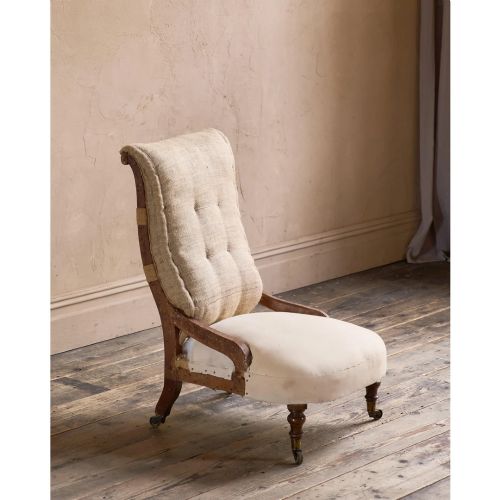
Makers constructed the exposed frames of these chairs from dense hardwoods such as mahogany, walnut, and rosewood, often incorporating carved wooden details on the arms and legs. Brass castors frequently fitted to the feet allowed these heavy chairs to move smoothly across carpets.
Internal upholstery relied on durable foundations of hessian, calico, and coil springs, layered beneath top covers of velvet or fabric. Workshops like Howard and Sons used distinctive ticking alongside traditional stuffing methods to build durable, resilient cushions.
Early Victorian Easy Chair Retail Price Guide 2026
Typical asking prices for early victorian easy chair among the pieces listed under this phrase on Sellingantiques today, from the lower quarter to the upper quarter. They describe what is for sale here now, not the wider market.
Armchair forms in the archive include gents easy chairs, Willoughby models, and upholstered elbow chairs.
What varies in quality
The distinction between standard workshop output and top-tier pieces lies in the crispness of the timber carving and the sophistication of the frame's silhouette. Chairs bearing maker attributions, such as those by Howard and Sons, demonstrate superior internal construction and timber selection.
Proportion and stance also dictate overall quality, as finer chairs maintain a balanced posture even with deep, heavy padding. The integrity of the underlying woodwork and the survival of original components elevate certain examples above standard domestic seating.
Howard and Sons
The Early Victorian Easy Chair Glossary
- Gents easy chair
- A spacious, deep-seated armchair designed for nineteenth-century parlours and studies. These chairs typically feature a low seat and high back to support relaxed sitting.
- Hessian
- A coarse woven fabric utilised as a sturdy foundation material beneath the final upholstery layers. It provides structural support for the internal stuffing of nineteenth-century seating.
- Ticking
- A tightly woven cotton fabric used by makers to contain upholstery fillings. Howard and Sons frequently employed branded ticking on their upholstered pieces.
- Regency
- A stylistic period preceding the Victorian era, spanning the early nineteenth century. Furniture from this time often shows classical restraint alongside rich timber grains.
Early Victorian Easy Chair: Frequently Asked Questions
How do I spot a Howard and Sons chair?
Howard and Sons pieces often feature maker marks, specific upholstery methods, and characteristic h&s ticking beneath the outer fabric. Their construction quality remains exceptionally high across all periods.
Examining the timber frame and interior lining helps confirm the attribution alongside any paper labels or stamped markings.
What woods were used for these frames?
Cabinetmakers utilised dense hardwoods including mahogany, walnut, and rosewood for the exposed structural parts of these chairs. These timbers were selected for their rich grain patterns and ability to hold fine carved details.
Dark polishes and French polish finishes were standard for protecting and enhancing the natural wood surface during the nineteenth century.
Are these chairs comfortable for daily use?
These armchairs were specifically designed for relaxation, offering deep sprung seats and supportive high backs. Their generous proportions make them practical for modern living rooms and studies.
Many examples retain robust internal springing that continues to provide reliable support during regular use.
How do I distinguish Regency from Victorian styles?
Regency designs often draw on classical Grecian and Roman motifs with clean lines, whereas Victorian pieces tend toward heavier carving and more exuberant upholstered forms. The transition between these eras happened gradually through the William IV period.
Examining the joinery, timber choice, and leg profiles helps clarify the specific period of manufacture.