



Early Victorian Console Table
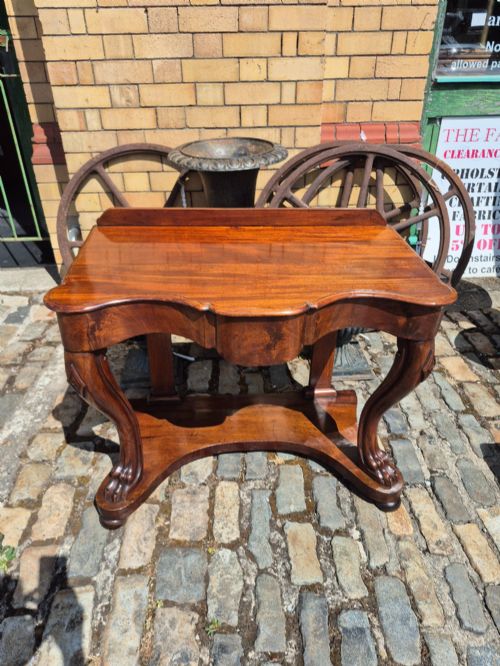
An early victorian console table brings architectural presence and rich timber figure to a hallway or drawing room.
Early Victorian Console Table
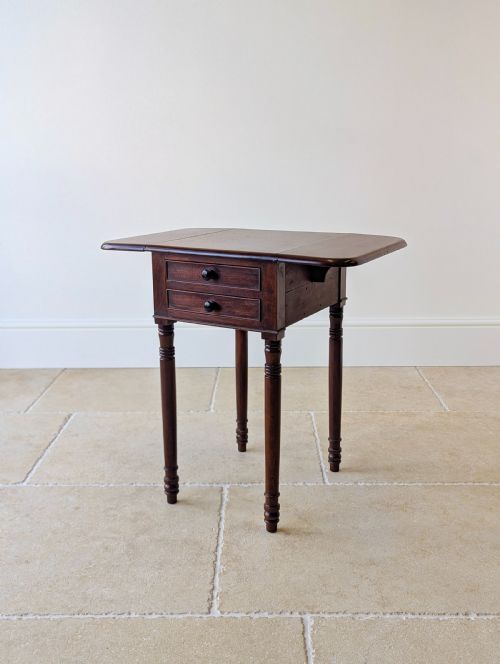
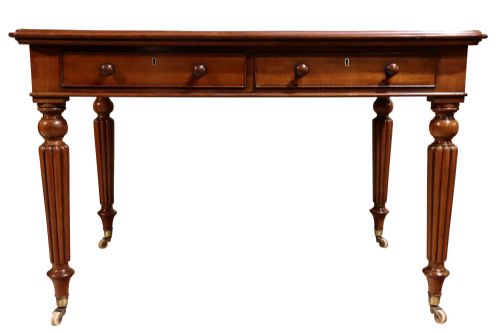
An early victorian console table combines the formal presence of earlier periods with the robust proportions favoured during the mid-nineteenth century. Buyers searching for an early victorian console table encounter forms executed in dense timbers, occasionally topped with marble and designed to stand against a wall.
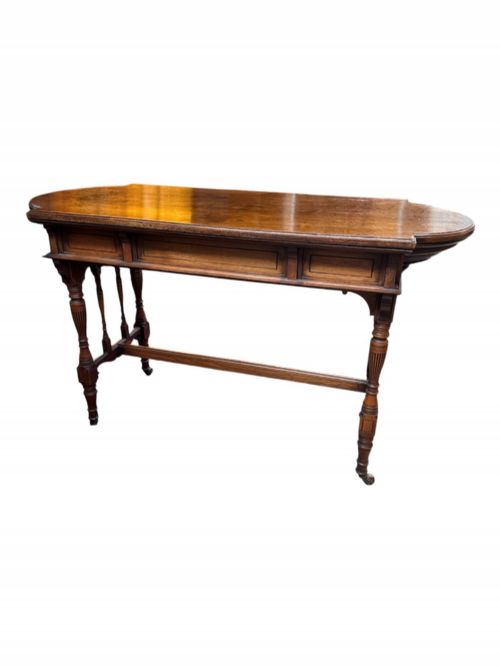
The selections available include demi-lune shapes, rectangular side formats and pieces with folding tops that adapt to different domestic settings. Cabinetmakers of the period frequently employed mahogany and rosewood, creating surfaces that show deep grain patterns and dark patination.
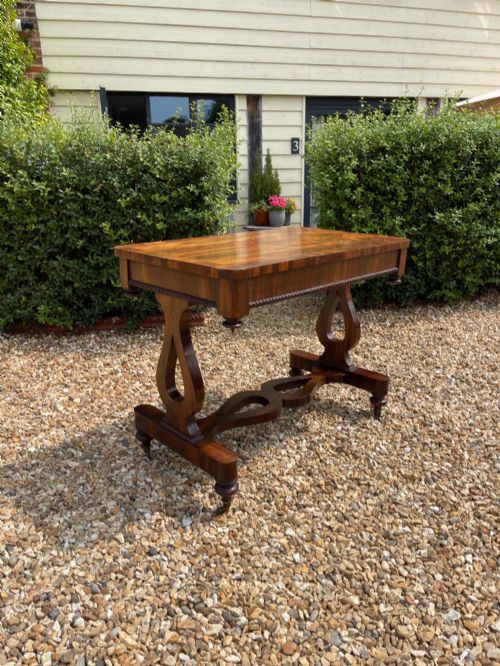
While the primary form is straightforward, related pieces such as side tables and writing desks share similar structural traits and decorative vocabularies. These tables often feature turned legs or applied scrollwork, reflecting the transitional tastes between Regency classicism and later Victorian revivalism.
Distinctions in Execution and Material
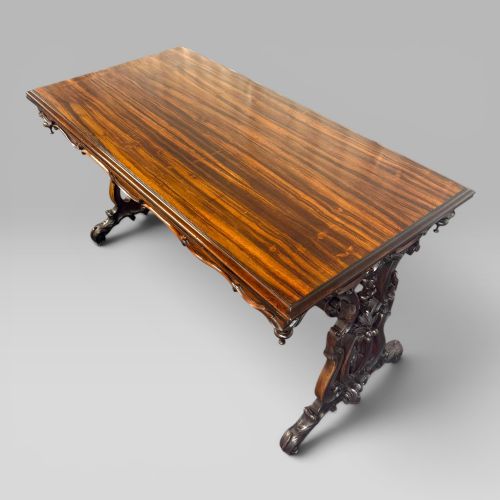
Quality in these tables rests upon the selection of timber veneers and the crispness of any carved ornamentation. Superior examples display symmetrical grain patterns across large surfaces and hand-carved details with sharp profiles rather than moulded composition ornaments.
Construction integrity also separates finer pieces from standard workshop output, visible in the precision of drawer dovetails and the weight of the supporting framework. The integration of secondary materials, such as figured zebrawood or polished marble, indicates a higher tier of commission.
Listings for an early victorian console table frequently feature dense mahogany and dark rosewood alongside alternative timbers like oak and pine.
The Early Victorian Console Table Glossary
- Console table
- A table designed to stand against a wall, frequently secured to it with brackets for stability.
- Demi-lune
- A half-moon shape characteristic of tables made to fit flush against flat wall surfaces.
- Rosewood
- A dense, heavily figured timber ranging from dark brown to reddish purple, popular in high-status nineteenth-century furniture.
- Pembroke table
- A drop-leaf table with hinged flaps on either side, often fitted with a single drawer.
- Satinbirch
- A pale, lustrous wood derived from birch trees, utilised for light-coloured veneers during the Victorian era.
Early Victorian Console Table: Frequently Asked Questions
Where should a console table be placed?
These tables traditionally sit against entrance hallway walls or below drawing room mirrors to anchor the vertical space.
Their shallow depth allows them to occupy narrow thoroughfares without impeding movement through the room.
How do I care for nineteenth-century timber?
Maintain the finish by applying natural beeswax sparingly and buffing with a soft cloth to preserve the surface sheen.
Keep the wood away from direct heat sources and strong sunlight to prevent the timber from drying out and splitting.
Can these tables be used for writing?
Some variants include fitted drawers and flat timber tops suitable for occasional correspondence or paperwork.
Dedicated writing tables often incorporate inset leather surfaces designed specifically for daily use.
What defines the early Victorian period?
The era spans roughly from the 1830s through the 1850s, bridging late Regency restraint with heavier Victorian ornamentation.
Furniture from this timeframe retains classical proportions while introducing darker woods and more pronounced decorative carving.