



Early Victorian Chest
An early victorian chest brings solid timber storage and period character into a room, offering practical utility alongside nineteenth-century craftsmanship.
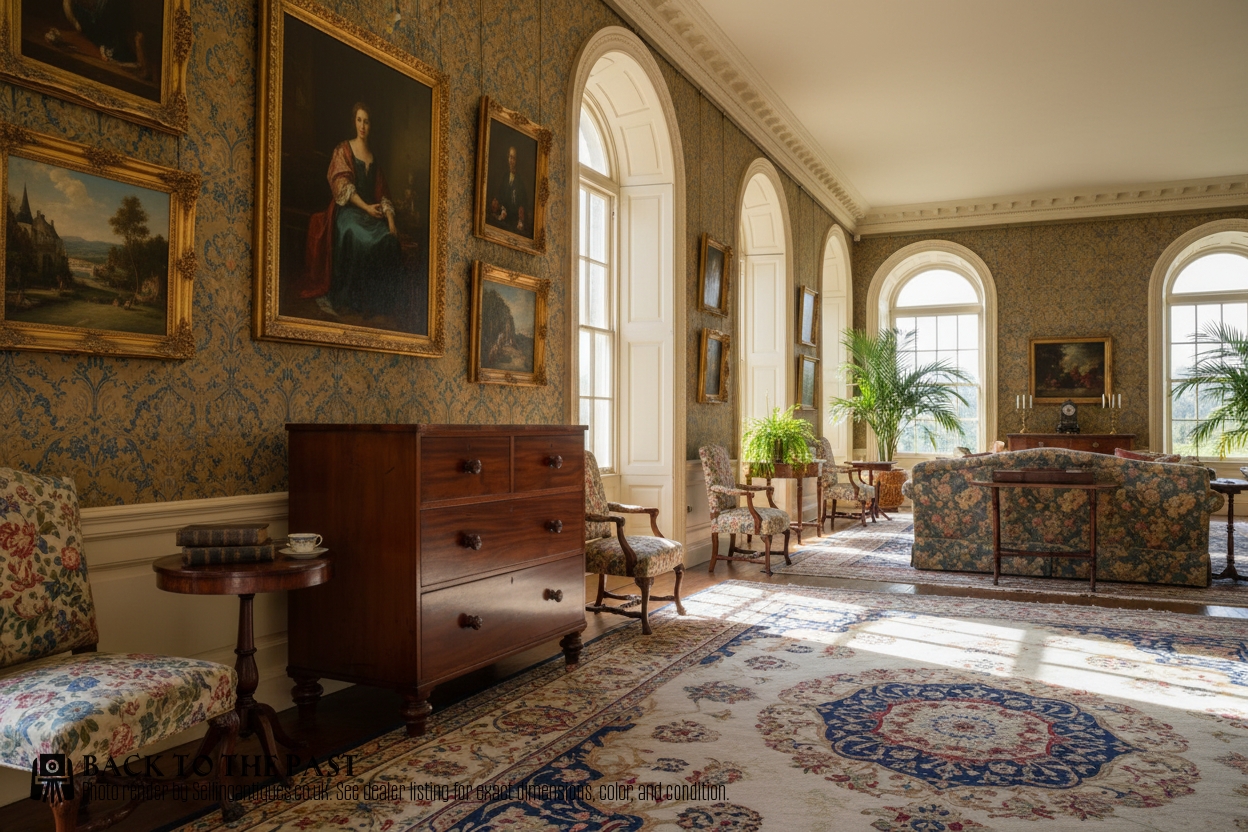
Early Victorian Chest
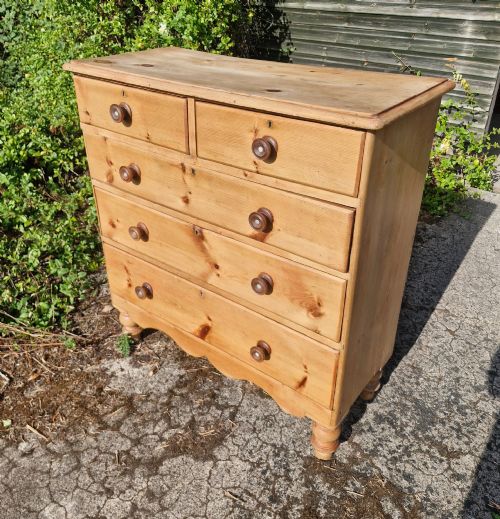
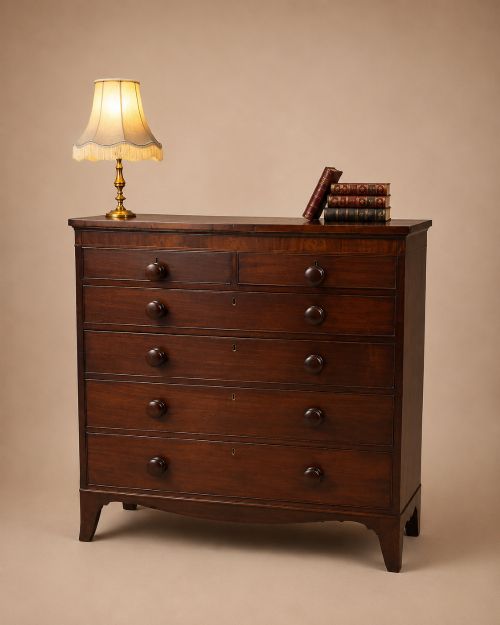
When you search for an early victorian chest, you encounter sturdy timber storage units originating from the nineteenth century. These pieces predominantly take the form of chests of drawers, often arranged in traditional configurations such as two short drawers over three long ones, or bow front designs.
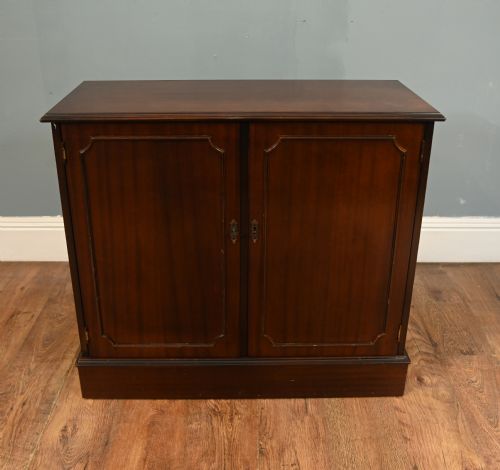
The evidence shows examples surfacing in woods like mahogany, pine, and walnut, alongside specialist variations like Wellington chests and military campaign forms. Makers of the period utilised these dense hardwoods and softer timbers to build functional furniture for domestic and campaign use.
Materials and construction
Makers constructed these storage pieces using solid woods such as mahogany, pine, and walnut, frequently enhancing surfaces with flame grain veneers or wax finishes. Brass fittings, including recessed handles and locks, appear on campaign styles, while traditional joinery secures the drawers and carcase.
Surfaces receive hand-finishing or paint depending on whether the piece served a formal parlour, a country house, or utilitarian quarters. The combination of dense timber and robust internal framing accounts for the survival of these items across the centuries.
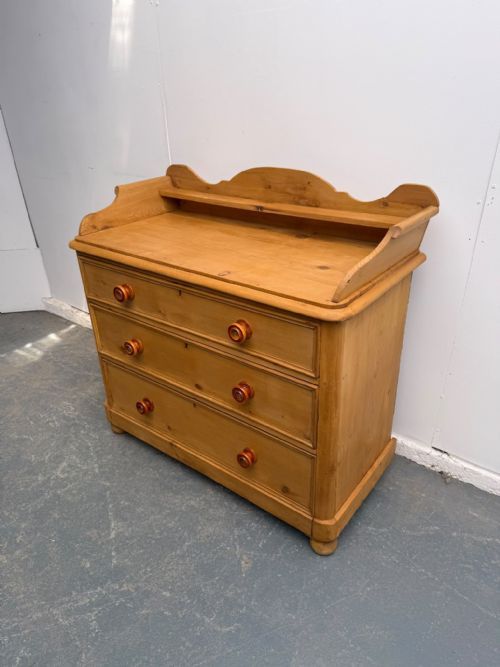
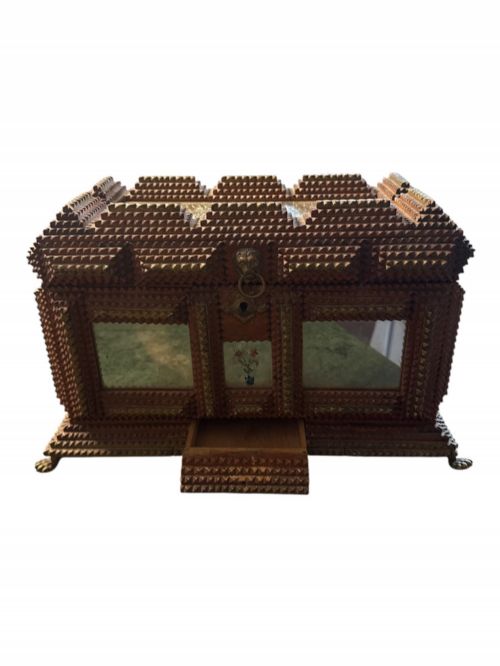
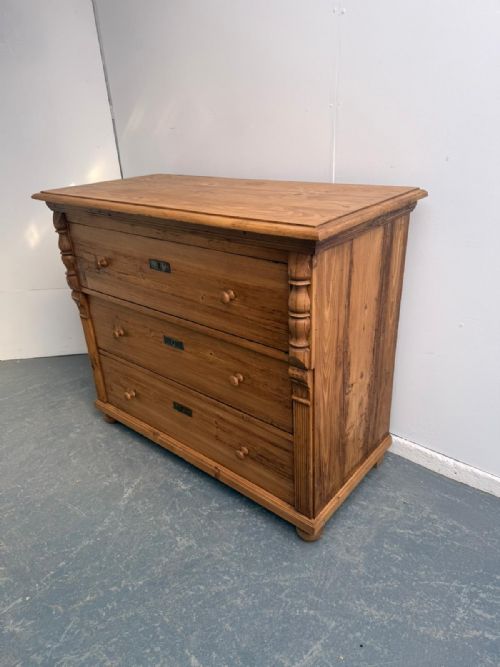
The archive includes nineteenth-century pine and mahogany chests of drawers with bow fronts and secret compartments.
Distinguishing quality
Quality rests upon the choice of timber and the fidelity of the cabinetmaking, with figured veneers and dense mahogany sitting at the higher end of the scale. Superior examples display precise dovetail joinery, well-matched wood grain, and original hardware such as turned wooden or porcelain knobs.
Proportion and untouched surfaces separate standard utility items from finer domestic examples. Pieces retaining original finishes, secret compartments, or specialised configurations like columned pilasters demonstrate superior original design.
Louis Vuitton·Jacques
The Early Victorian Chest Glossary
- Bow front
- A cabinet front that curves outward in a convex shape. This configuration softens the boxy silhouette of standard rectangular storage units.
- Wellington chest
- A tall, narrow chest of drawers secured by a hinged vertical locking sidebar on one side. This design allowed owners to secure all drawers with a single padlock.
- Campaign chest
- A modular chest built in two or more sections with recessed brass handles and corner brackets. Designed for easy transport by military officers on the move.
- Secret drawer
- A concealed compartment hidden behind a plinth or framing member. Cabinetmakers used these to safely store valuables and documents.
- Flame grain
- A distinctive wood veneer pattern resembling flickering flames. Craftsmen prized this figured wood for drawer fronts to create visual movement.
Early Victorian Chest: Frequently Asked Questions
What is a Wellington chest?
A Wellington chest is a tall, narrow set of drawers featuring a hinged locking side flap. This vertical bar fastens over the drawer edges to secure the entire stack with a single key.
Such cabinets typically contain six or more shallow drawers. Their slim footprint made them useful for storing linens or papers in smaller Victorian bedrooms.
How do I spot a campaign chest?
Military campaign chests are built in stacked modular sections designed for dismantling during travel. They feature flush brass corner brackets and inset drawer pulls to prevent snagging during transport.
These pieces often utilise teak or mahogany and separate into two distinct carcases. Iron or brass carrying side handles complete the travel-ready construction.
What is a 2 plus 3 drawer arrangement?
A two plus three configuration means the upper portion of the carcase contains two smaller side-by-side drawers above three wider full-width drawers below. This layout distributes storage space for garments of varying sizes.
Cabinetmakers utilised this format extensively on standard nineteenth-century chests. It provides structural balance to the facade while offering versatile internal storage.
How do I care for a waxed pine chest?
Waxed pine surfaces require regular dusting with a soft, dry cloth to prevent grit buildup. Applying a traditional beeswax polish periodically helps nourish the timber and maintain a soft sheen.
Keep wooden furniture away from direct heat sources and strong sunlight to prevent the timber from drying out or splitting. Consistent indoor humidity levels preserve both the pine carcase and the wax finish.