




Early Georgian Kneehole Desk
An early georgian kneehole desk brings compact elegance to a study, offering concealed drawers and a central cupboard behind a knee recess.
Early Georgian Kneehole Desk
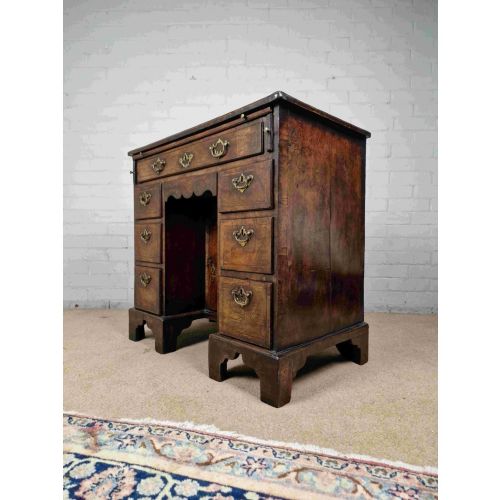
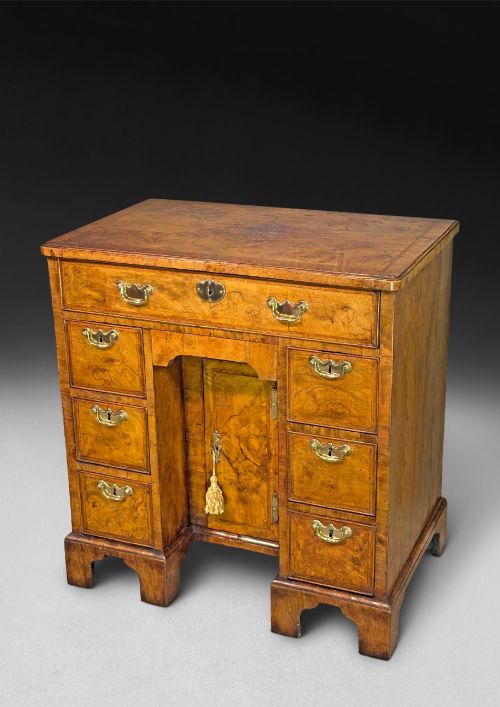
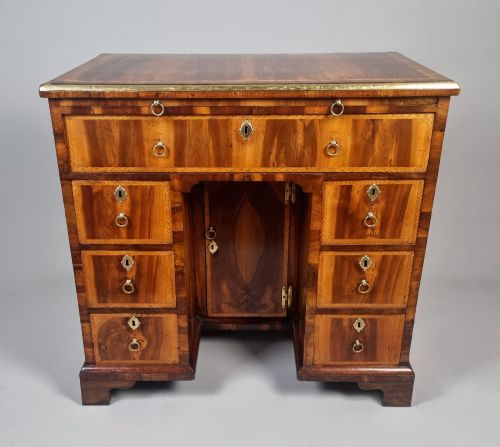
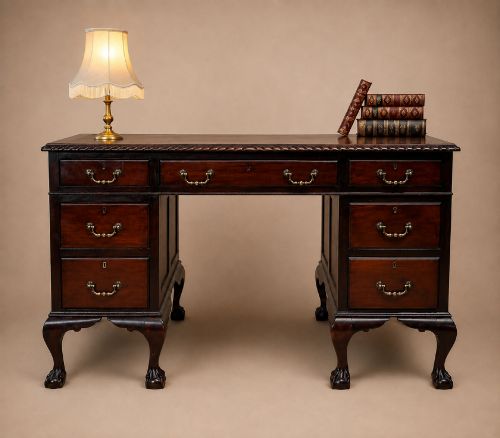
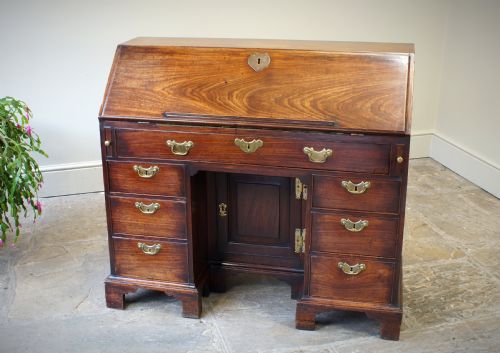
An early georgian kneehole desk is a compact writing cabinet featuring a central recessed cupboard flanked by pedestal banks of small drawers. The form appears most frequently in walnut, often with figured veneers, dating from the eighteenth century through the reigns of George I and George II.
Makers of this period constructed these pieces with small proportions to serve as private writing tables or dressing chests in domestic chambers. Surviving examples demonstrate the restrained lines and balanced drawer arrangements characteristic of early eighteenth century cabinet work.
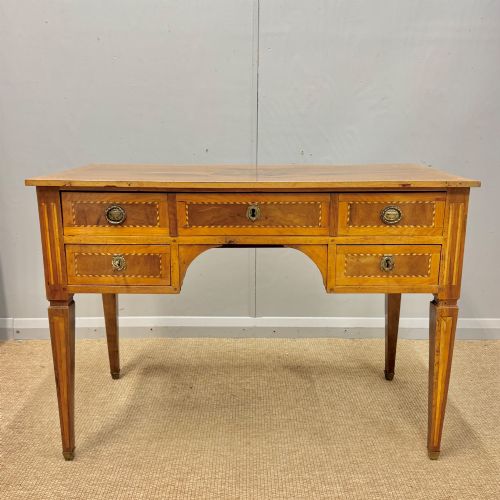
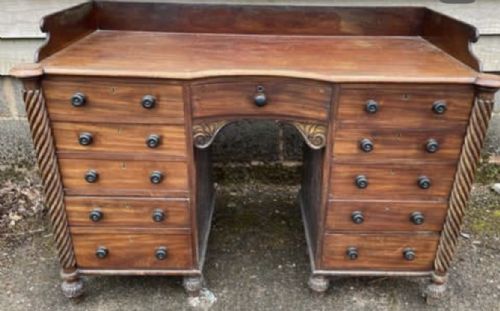
While walnut dominates the earliest examples, later nineteenth and early twentieth century interpretations also surface in mahogany, yew wood, and oak. Buyers encounter both traditional kneehole writing tables and related dressing forms fitted with galleries or washing basins.
Materials and Construction
Cabinet makers built the primary carcass using oak or pine as a stable secondary timber, applying finely figured walnut, burr walnut, or mahogany veneers to the exterior surfaces. Crossbanding and stringing lines often frame the drawer fronts to create subtle geometric decoration.
Original cast brass drop handles and batwing escutcheons secure the drawers, operating alongside bracket feet that support the base. Internal drawer linings typically consist of softwood or oak, joined with hand-cut dovetails that indicate period construction methods.
Hidden central compartments inside the knee recess offered discreet storage for private letters and valuables.
Judging Quality
The sophistication of the timber figure and the integrity of the surface finish distinguish superior pieces from standard examples. Walnut veneers selected for striking grain patterns and preserved with patinated wax surfaces command greater attention from collectors.
Survival of original brass hardware, stable secondary timbers, and unaltered bracket feet determine the historical value of a desk. Later replacements to the handles, feet, or internal drawer linings alter the unified character of the piece.
Grendy
The Early Georgian Kneehole Desk Glossary
- Kneehole
- A recessed space beneath the central top surface of a desk designed to accommodate the user's legs while seated. This architectural arrangement allows for flanking stacks of drawers.
- Burr walnut
- A decorative timber veneer harvested from walnut tree growths, displaying complex swirling grain patterns. Cabinet makers prized this material for drawer fronts and top panels.
- Bracket foot
- A corner support projecting from the base of case furniture, shaped in an L-profile with mitred joints. This style supports eighteenth century desks above the floor.
- Secretaire
- A writing desk featuring a fitted drop-front drawer that conceals smaller pigeonholes and subsidiary compartments. This internal section provides secure storage for correspondence.
- Crossbanding
- A decorative border technique where thin strips of veneer are applied so the grain runs perpendicular to the main panel. This frames the primary timber surface.
Early Georgian Kneehole Desk: Frequently Asked Questions
What is an early georgian kneehole desk used for?
These pieces served historically as private writing tables, dressing chests, or correspondence desks in elite chambers.
Today, owners utilise them as compact writing surfaces or hallway statement pieces that provide concealed storage.
How do I identify a walnut kneehole desk?
Look for a central recessed cupboard door positioned between two vertical columns of small graduating drawers.
The exterior surfaces display figured walnut veneers often bordered by delicate crossbanding.
Are these desks suitable for modern laptops?
The compact dimensions and restricted knee clearance require careful measurement before placing modern technology inside.
Many period examples were built for small-scale handwriting rather than bulky contemporary office equipment.
How do I care for antique wood surfaces?
Maintain the finish by applying traditional beeswax periodically and avoiding direct sunlight or excessive heat.
Keep humidity levels stable to prevent timber shrinkage and movement in the historical veneers.