



Early English Writing Bureau
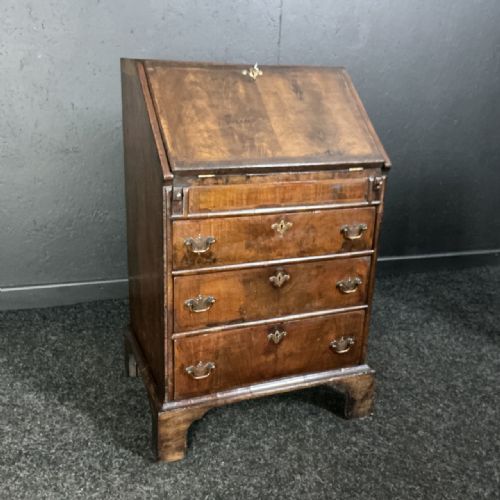
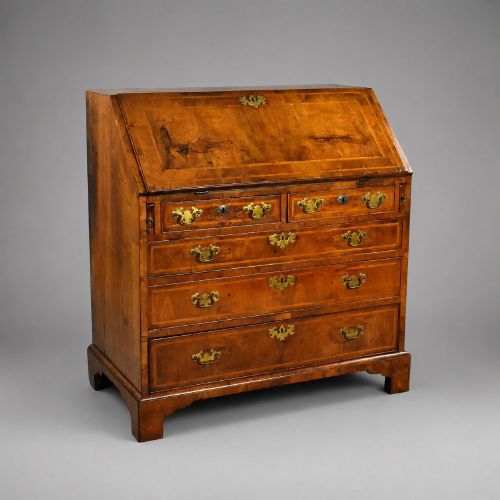
An early english writing bureau is a fitted workspace of oak, walnut, or yew wood built for private correspondence and the safe storage of papers.
Early English Writing Bureau
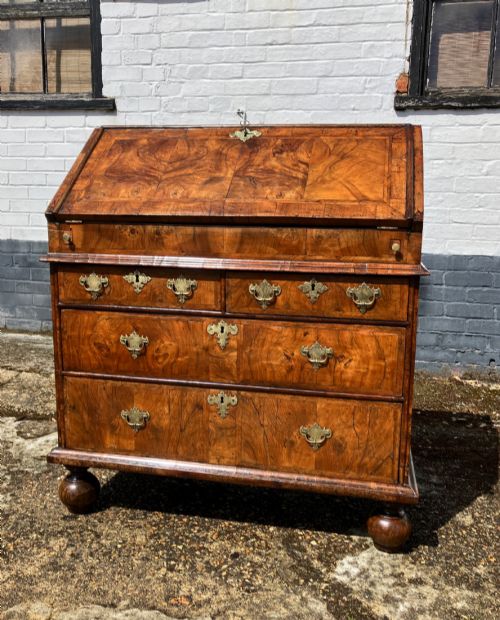
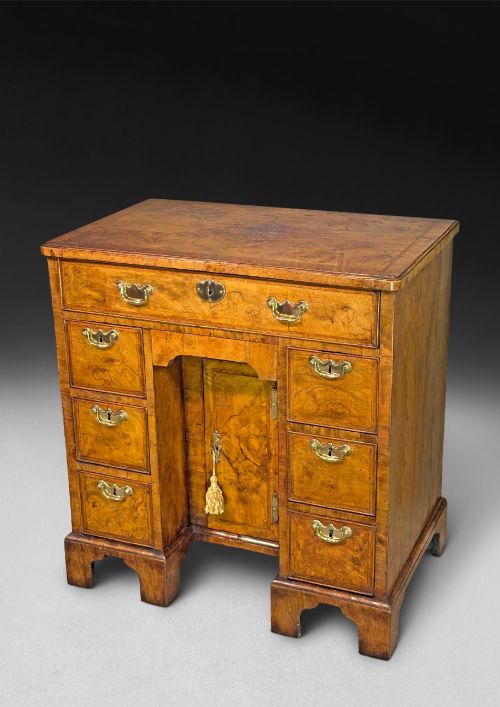
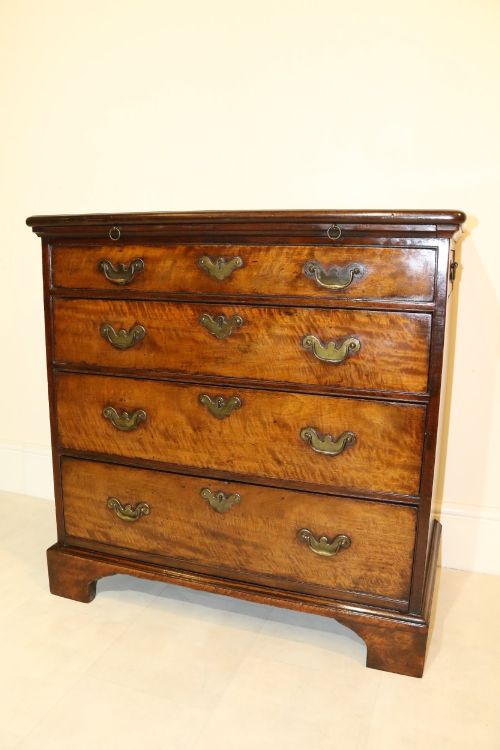
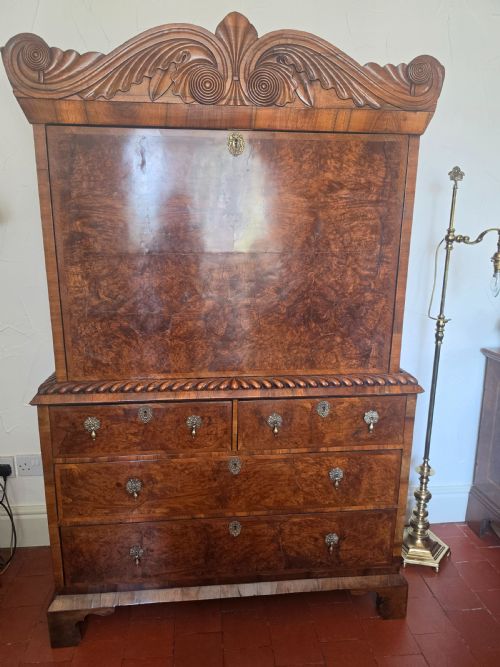
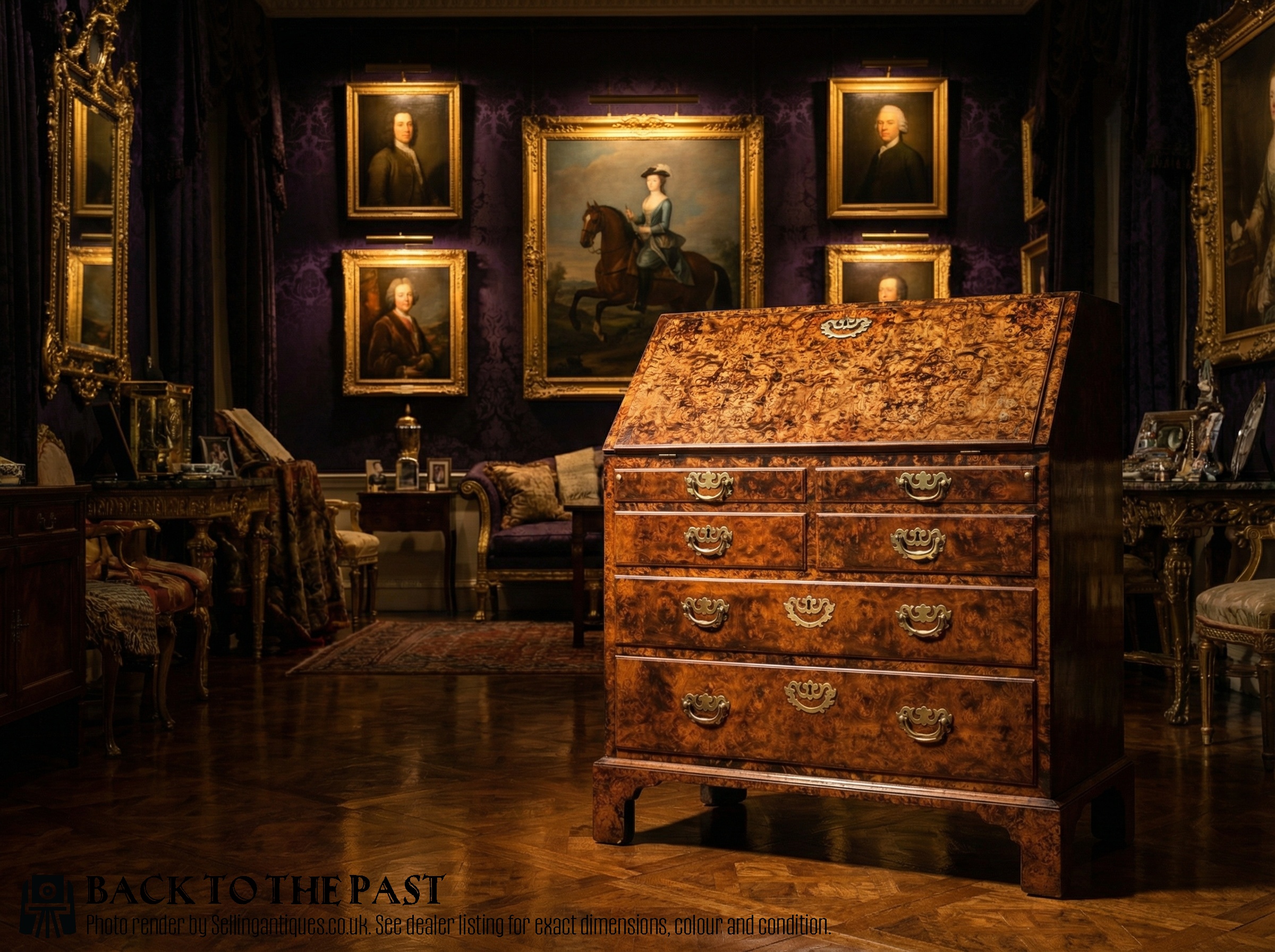
The early english writing bureau spans the seventeenth and eighteenth centuries, taking the form of fall-front desks, kneehole desks, bureau bookcases, and escritoires. Pieces from this era range from sturdy provincial oak examples to sophisticated veneered walnut creations built during the reigns of William and Mary, Queen Anne, and the early Georges.
Buyers exploring an early english writing bureau will encounter drop-front writing slopes concealing internal pigeonholes and drawers, alongside taller cabinet combinations fitted with upper bookcase sections. These surfaces were designed to close securely, keeping private correspondence hidden from view when not in use.
The materials recorded in these pieces lean heavily towards figured walnut, burr walnut, and oak, occasionally incorporating yew wood and brass hardware. Styles follow the prevailing aesthetic shifts from Jacobean and William and Mary heaviness to the cleaner, more figured surfaces of George I and George II furniture.
Evaluating craftsmanship
Quality in an early english writing bureau rests upon the selection and matching of the veneer figures across the primary surfaces, together with the crispness of internal drawer joinery. Finer examples display continuous grain patterns across closed flaps and well-figured secondary timbers inside the writing compartment.
The degree of original hardware, the integrity of the fall-front hinges, and the survival of fitted interior compartments without later alterations separate standard workshop output from exceptional cabinet work.
Early English Writing Bureau Retail Price Guide 2026
Typical asking prices for early english writing bureau among the pieces listed under this phrase on Sellingantiques today, from the lower quarter to the upper quarter. They describe what is for sale here now, not the wider market.
Current listings demonstrate a dominance of walnut and oak construction, spanning William and Mary to George II stylistic periods.
The Early English Writing Bureau Glossary
- Escritoire
- A writing cabinet featuring a fall-front flap that drops to create a desk surface, often concealing numerous small drawers and pigeonholes.
- Kneehole desk
- A compact writing table featuring a central recessed recess for the sitter's legs, flanked by banks of small drawers.
- Bureau bookcase
- A two-part furniture form combining a lower writing bureau with an upper glazed or panelled cabinet for books.
- Burr walnut
- Timber taken from walnut tree growths that produce highly twisted, knotty grain patterns prized for decorative veneer.
- Fall front
- A hinged writing flap that pulls down into a horizontal position for writing and lifts vertically to enclose the desk interior.
Early English Writing Bureau: Frequently Asked Questions
How do I use an early writing bureau today?
Drop the fall front to reveal the internal pigeonholes and use the flat surface as a compact writing desk for correspondence or laptop work.
Close the flap when finished to conceal your papers and maintain a tidy room with period character.
What wood was used for these desks?
Joiners primarily utilised walnut, burr walnut, and oak, with occasional examples appearing in yew wood and Cuban mahogany.
Surfaces often feature decorative veneer work applied over solid carcases.
How do I date a walnut bureau?
Examine the construction of the interior drawers, the thickness of the walnut veneers, and the style of the brass hardware.
Changes in leg design from William and Mary trumpet styles to Queen Anne bracket feet help narrow the production period.
Are the brass handles original?
Original brasses show appropriate wear patterns and match the ghost marks left on the wood from centuries of use.
Replacements often leave extra screw holes inside the drawer timbers upon closer inspection.