




Early English Oak Chest
An early english oak chest brings centuries of domestic history into a room, offering robust utility wrapped in the dark, heavy timber of the Tudor, Jacobean and Georgian eras.
Early English Oak Chest
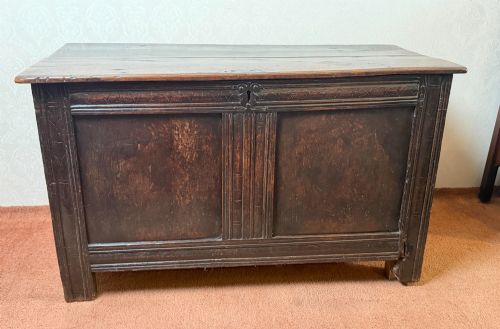
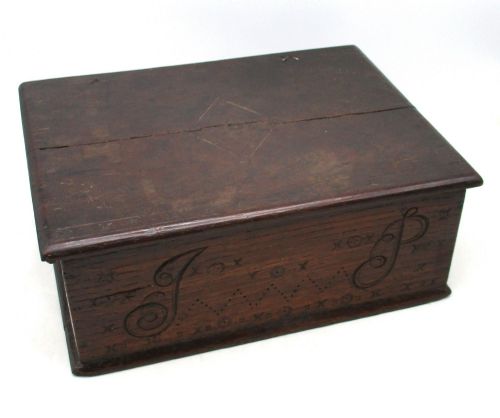
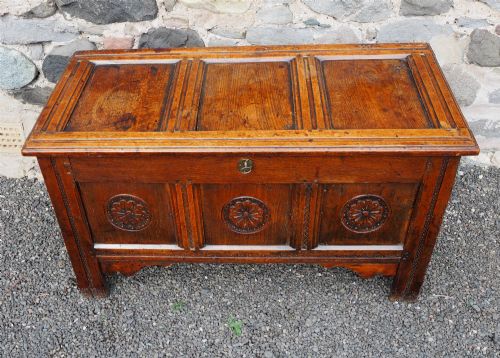
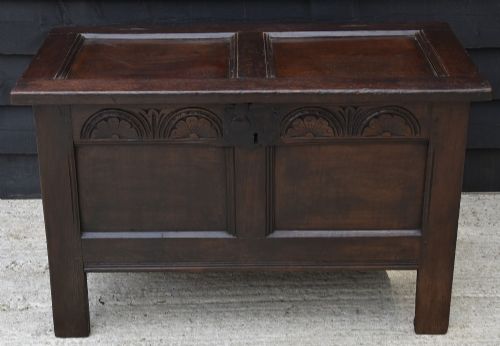
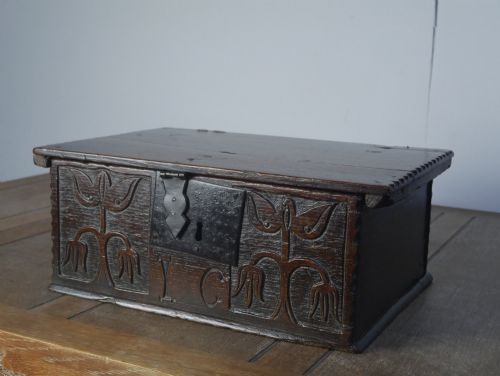
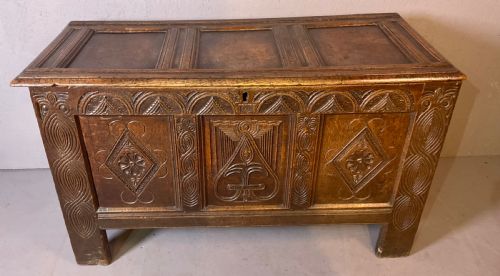
An early english oak chest typically takes the form of a sturdy coffer, blanket box, or small document box intended for secure storage in domestic or ecclesiastical settings. These pieces originate primarily from the sixteenth, seventeenth, and early eighteenth centuries, reflecting the heavy reliance on native timber before imported woods gained dominance.
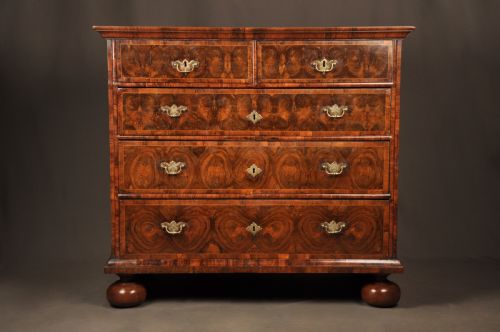
Buyers will most frequently encounter six-plank coffers and panelled storage chests dating from the seventeenth century, alongside early chests of drawers from the Georgian period. Forms range from simple joined boxes to complex geometric drawer chests and chests on stands, often showing the evolution from basic trunk storage to more sophisticated domestic cabinetry.
What varies in quality
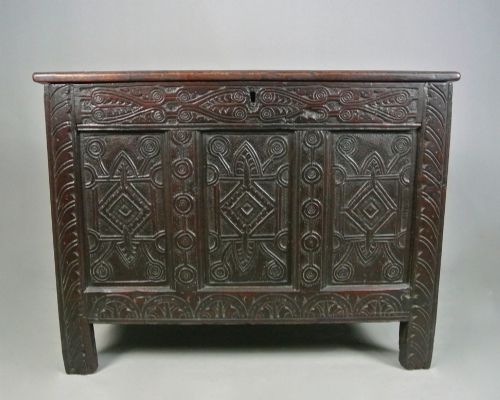
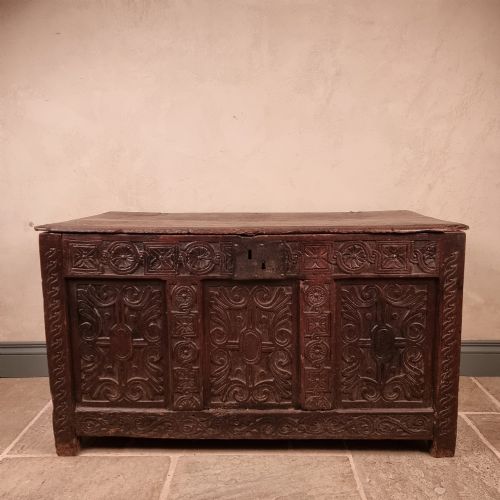
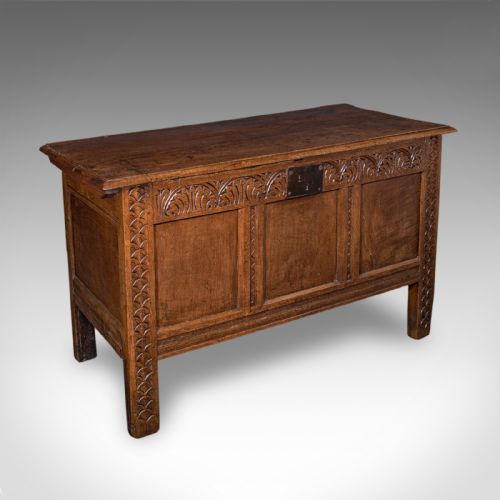
The sophistication of the carved decoration and the crispness of the hand-tooling separate standard utilitarian pieces from exceptional examples commissioned for wealthy households. Depth of relief in panels and the integration of geometric mouldings reveal the skill of the original joiner.
Originality of surface and hardware dictates overall merit, where surviving iron locks, hinges, and untouched timber patination outweigh later restorations or replaced lids. The proportional balance of smaller boxes and chests on stands also plays a significant role in determining the desirability of a piece.
Listings feature oak storage forms ranging from primitive sixteenth-century six-plank coffers to refined Georgian chests on stands.
Heals of London
The Early English Oak Chest Glossary
- Coffer
- A large wooden chest used traditionally for storing valuables, textiles, or documents. They often feature heavy lids and robust locking mechanisms.
- Linenfold
- A style of carved wooden panelling that resembles folded vertical rolls of linen cloth. It is particularly common on pieces from the Tudor period.
- Arcading
- A decorative series of arches supported by piers, carved directly onto the wood of a panel or frieze. This architectural motif frequently appears on Jacobean furniture.
- Six-plank chest
- A primitive form of chest constructed from six broad boards joined simply at the edges. Pegs and basic butt joints hold the structure together.
- Mule chest
- A storage chest fitted with one or two drawers at the base beneath the main compartment. They bridge the design gap between the traditional coffer and the chest of drawers.
Early English Oak Chest: Frequently Asked Questions
How were these chests used originally?
These pieces served primarily to store valuable household goods, clothing, and legal documents securely in domestic settings. Their heavy construction and robust locks protected contents from theft, dampness, and pests.
Over time, many served dual purposes as seating benches or tables within the home, particularly in hallways and living quarters where space was at a premium.
How do I tell a 17th century chest from a later copy?
Examine the timber closely for tool marks, hand-cut peg holes, and natural shrinkage that occurs over hundreds of years. Authentic early pieces display irregular hand-planed surfaces and genuine patina built up through centuries of handling.
Check the construction methods beneath and inside the piece, ensuring that machine-cut screws or modern adhesives are absent. Original hinges and lock plates should show genuine blacksmith wear consistent with the period.
How should I care for an antique oak chest?
Keep the timber away from direct heat sources and dramatic humidity fluctuations to prevent the oak panels from splitting or warping. Maintain the finish by applying a light coat of traditional beeswax occasionally, buffing gently with a soft cloth.
Avoid placing damp items directly onto the interior wood surface, and ensure the room maintains a stable, moderate climate.
What is the difference between a coffer and a blanket box?
A coffer traditionally refers to a heavy, highly secure storage chest fitted with a substantial lid and complex iron locking mechanism for valuables. They frequently display intricate carved panels and architectural motifs typical of early joinery.
A blanket box is generally a slightly later or simpler domestic chest designated specifically for storing household textiles rather than high-status goods.