




Early 20th Century Luggage
Early 20th century luggage carries the tangible grit of past journeys, offering robust timber trunks and fitted steamer chests built for enduring travel.
Early 20th Century Luggage
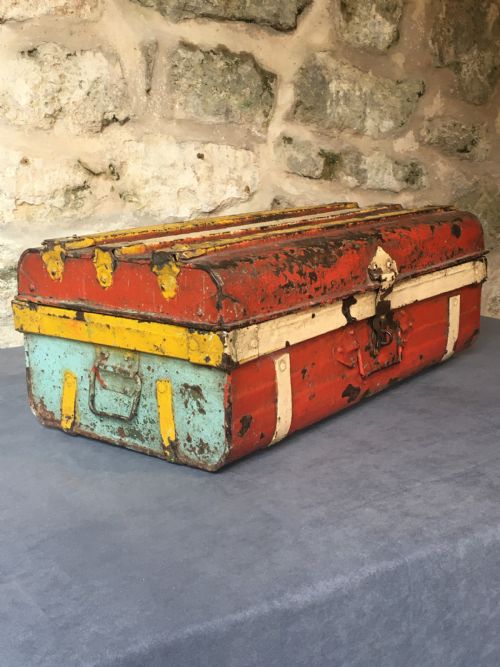
Early 20th century luggage encompasses heavy storage trunks, compact suitcases, and practical luggage stands that served travellers through the Edwardian era and into the 1930s. Buyers searching for early 20th century luggage typically encounter substantial steamer trunks, painted storage boxes, and folding stands designed for hotel rooms or cabins.
The pieces on this page span the 1900s, 1910s, 1920s, and 1930s, reflecting diverse origins from French ateliers and American workshops to Chinese export studios and Canadian makers. Forms range from large fitted wardrobe chests and hat trunks to leather suitcases and oak or beech luggage racks.
Materials and construction
Makers utilised sturdy woods such as oak, beech, mahogany, and camphor, pairing them with robust canvas, vulcanised fibre, and thick leather for outer protection. Structural integrity relied on heavy metal, iron, and brass hardware, including reinforced corners, clasps, and strips.
Interiors often featured fitted compartments, hanging space, or painted finishes, while exterior surfaces combined stitched leather panels with riveted metal framework to withstand the rigours of transatlantic steamships and railway carriages.
Camphor wood chests carried the added benefit of naturally deterring moths from travelling garments.
The spectrum of quality
Quality in early 20th century luggage rests on the integrity of the materials and the sophistication of the internal fittings. Simple beech or oak luggage stands demonstrate straightforward utilitarian craftsmanship, whereas fitted American steamer trunks or French hat trunks by known makers reveal complex internal engineering and superior hardware.
The grade of leather, the weight of the brass or chrome mountings, and the survival of original painted surfaces or interior fabric linings distinguish standard travel pieces from exceptional examples.
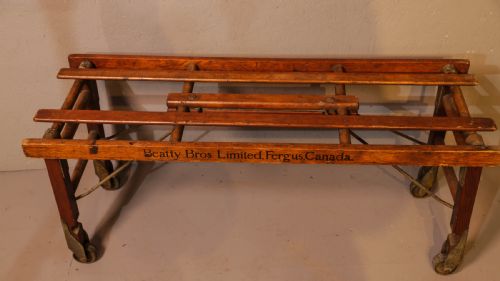
Seaward·Beatty Bros Fergus Canada·Goyard
The Early 20th Century Luggage Glossary
- Steamer trunk
- A low-profile travel trunk designed to fit beneath a ship berth or within cabin storage. These pieces often feature reinforced edges and internal compartments for extended voyages.
- Vulcanised fibre
- A laminated material made from cellulose, prized for its tough, resilient qualities on travel luggage. Makers utilised it to create lightweight yet durable outer shells.
- Luggage stand
- A folding or rigid rack designed to hold a suitcase off the floor in a bedroom or dressing room. They typically employ woods like oak, mahogany, or beech.
- Hat trunk
- A specialised container shaped to protect millinery during transit. These French or international pieces often incorporate internal cradles and sturdy carrying handles.
- Chinese export
- Goods manufactured in China specifically for overseas markets. These trunks often feature painted decoration and distinctive camphor wood construction.
Early 20th Century Luggage: Frequently Asked Questions
How do I use a steamer trunk at home?
Steamer trunks function brilliantly as coffee tables or blanket boxes in living spaces. Their internal depth provides substantial concealed storage for bulky textiles.
Position them against a wall or centrally in a room to anchor the layout while keeping everyday clutter out of sight.
What is the difference between a trunk and a suitcase?
Trunks are heavy, rigid containers built for long-distance travel and multi-week voyages, often featuring internal trays or wardrobe fittings. Suitcases are smaller, hand-carried items intended for shorter trips.
Trunks rely on sturdy wood, canvas, and metal hardware, whereas suitcases focus on portable leather construction and simpler handle placement.
How do I care for vintage leather luggage?
Vintage leather benefits from gentle cleaning using a soft cloth and specialised leather conditioner to prevent drying and cracking. Avoid harsh chemical cleaners and keep pieces away from direct heat sources.
Regular maintenance preserves the natural suppleness of the hide while protecting the original stitching and surface character.
Can I use a luggage stand in a modern bedroom?
Luggage stands provide an ideal surface for guest bedrooms, holding overnight bags or serving as auxiliary bedside storage. Their folding timber frames occupy minimal floor space.
They bring historical utility into contemporary interiors without overwhelming the surrounding room design.