

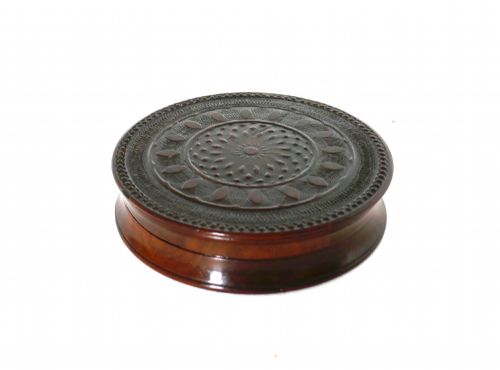


Early 19th Century Snuff Box
An early 19th century snuff box is a pocket-sized container for tobacco that offers a tangible link to Georgian social rituals.
Early 19th Century Snuff Box
An early 19th century snuff box appears in multiple forms, ranging from pocket containers to larger table pieces, reflecting the diverse material culture of the period. Buyers seeking an early 19th century snuff box will encounter functional containers alongside novelty shapes designed to amuse.
The evidence shows various object types, including rectangular boxes, cylindrical containers, shoes, books, ships, instruments, and figures. These pieces originate from British, Scottish, French, and Italian workshops spanning Georgian, Regency, Victorian, and French Empire styles.
Materials and construction
Maker utilisation of materials encompasses organic substances such as horn, tortoiseshell, coquilla nut, and various woods including laburnum, fruitwood, amboyna, birch, yew, mahogany, and burr wood. Artisans also employed metals including sterling silver, gold, copper, brass, Old Sheffield Plate, and painted tin.
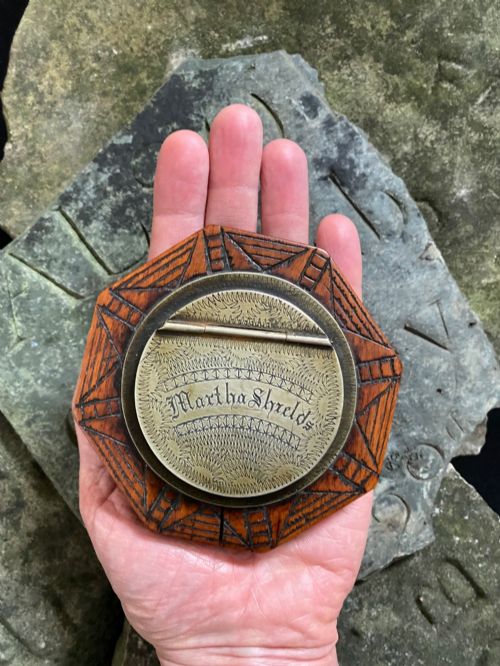
Techniques recorded in the evidence include engine turning, chip carving, hand painting, lacquer work, and glass mosaic assembly. Papier-mâché and pressed wood required specialised moulds to achieve intricate surface decoration and figural forms.
Early 19th Century Snuff Box Retail Price Guide 2026
Typical asking prices for early 19th century snuff box among the pieces listed under this phrase on Sellingantiques today, from the lower quarter to the upper quarter. They describe what is for sale here now, not the wider market.
Current listings demonstrate a material range from precious gold and sterling silver to humble painted tin and carved treen.
Evaluating craftsmanship
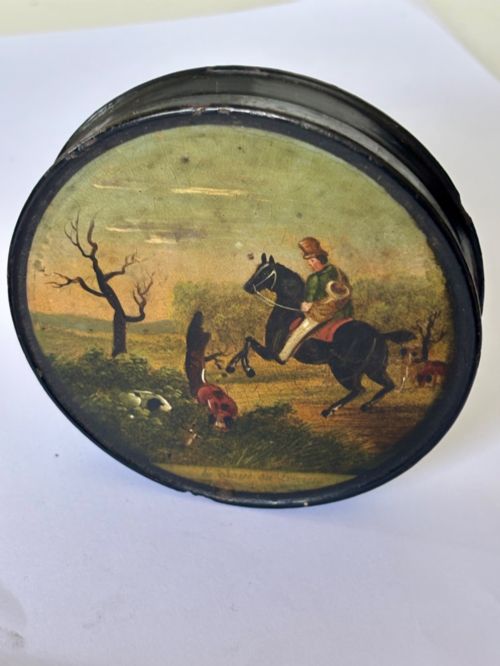
Quality rests in the precision of the carving or the fidelity of the painted decoration, particularly on papier-mâché lids and micromosaic insets. Objects formed into complex shapes like shoes, books, or figures demand superior joinery and material selection from the maker.
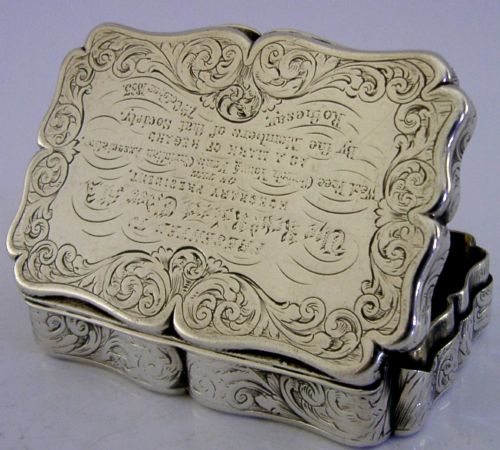
The integration of precious metals with organic materials such as tortoiseshell or horn demonstrates high-level workshop competence. Engraved inscriptions, such as institutional dedications on silver pieces, add provenance and contextual depth.
Gioacchino Barberi
The Early 19th Century Snuff Box Glossary
- Papier-mâché
- A composite material made from paper pulp or layers of paper bound with glue, pressed and dried to form rigid objects. It provided a smooth surface for detailed lacquer and paint work.
- Treen
- Small handmade wooden household objects and brown wood items. This category encompasses turned or carved containers created from indigenous timbers.
- Micromosaic
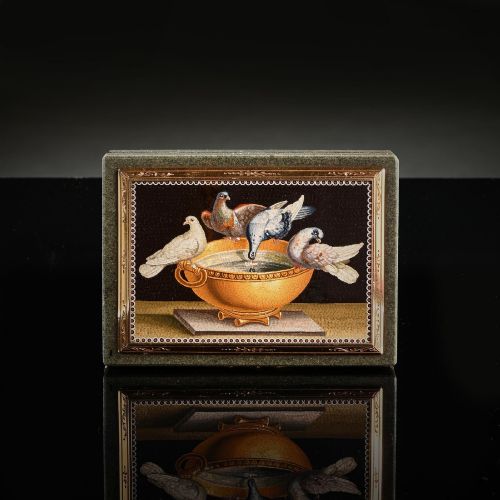
- Tiny glass tesserae assembled to create pictorial scenes, frequently set into metal and stone mounts on luxury items. Italian workshops specialised in this intricate technique.
- Snuff mull
- A Scottish term for a container used to hold and dispense ground tobacco, typically fashioned from animal horn and mounted with metal.
- Coquilla nut
- The hard, dark brown seed of a South American palm tree, frequently turned on a lathe and carved into small personal containers.
Early 19th Century Snuff Box: Frequently Asked Questions
What materials were used?
Makers utilised a wide variety of organic and inorganic substances, depending on the desired form and function of the container. Common examples include papier-mâché, lacquer, sterling silver, gold, horn, tortoiseshell, and numerous wood species.
Precious metals often appeared as mounts, hinges, or inlaid details on wooden and shell bodies, while painted tin and copper served utilitarian roles.
Why are some shaped like shoes?
Shoe and clog shaped containers emerged from folk art traditions and prisoner of war craftsmanship during the Georgian and Regency eras. These novelty forms served as conversational pieces during social gatherings.
Carved wooden shoes and papier-mâché slippers combined practicality with whimsical design, often incorporating sliding lids or hidden compartments.
How do I identify Scottish pieces?
Scottish items frequently employ regional materials such as laburnum, horn, or local hardwoods combined with distinctive decorative techniques. Engine turned decoration, treen construction, and specific regional forms like the horn snuff mull point to Scottish origin.
Inscribed silver mounts on these pieces sometimes record local institutions, adding documented provenance to the physical object.