






Early 18th Century Oak Dresser
An early 18th century oak dresser anchors a room with deep timber grain and generations of utility.
Early 18th Century Oak Dresser
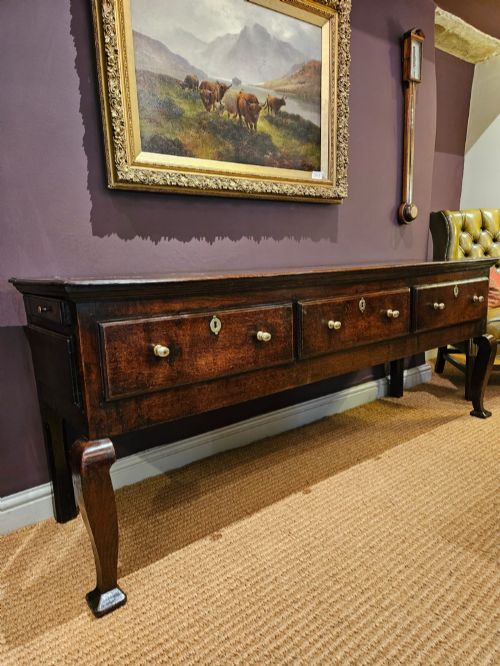
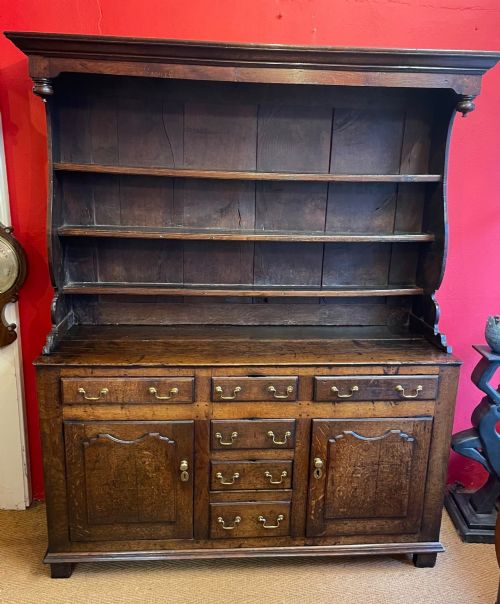
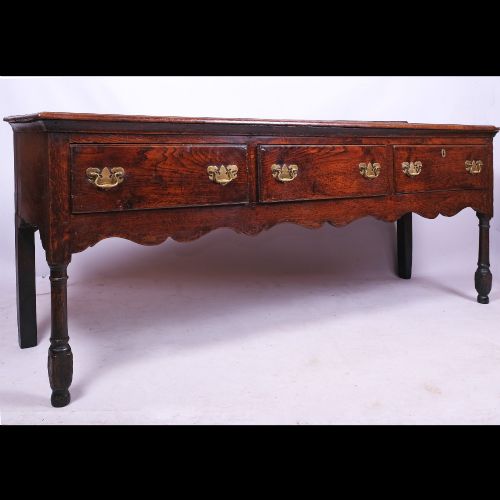
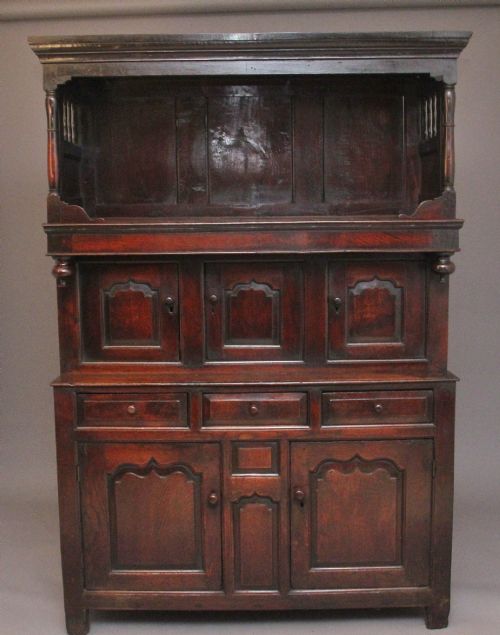
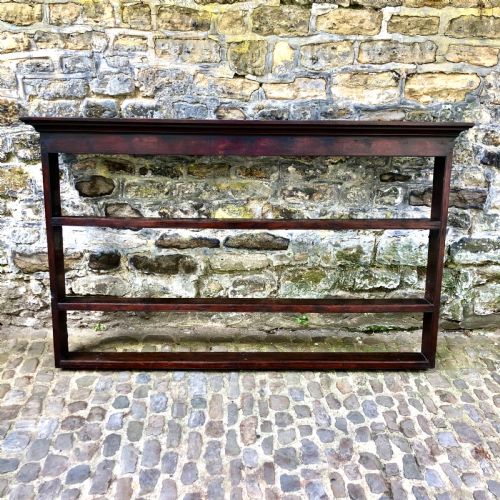
An early 18th century oak dresser stands as a monumental piece of domestic furniture designed for storage and display in homes of substance. These items encompass open plate racks, potboard bases, and towering tridarns originating from regions including Wales and the wider English countryside.
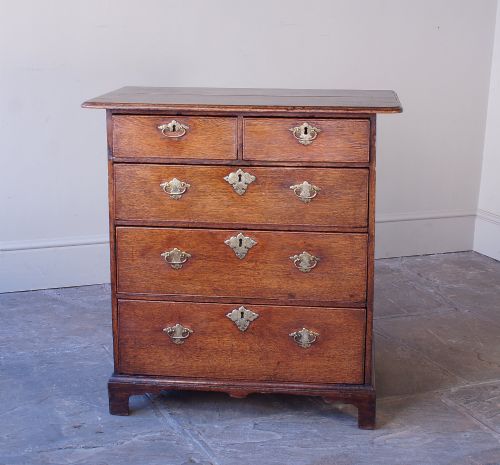
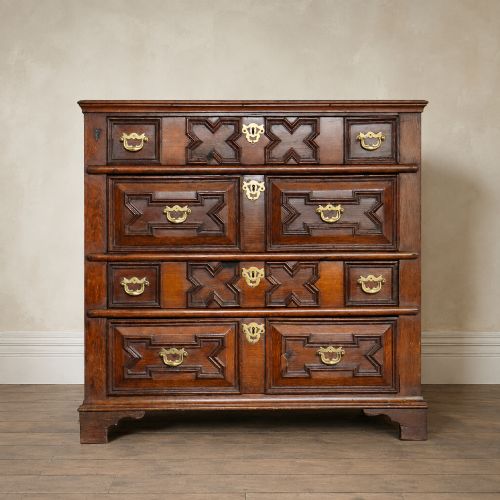
Buyers encountering this page will frequently meet Welsh vernacular forms and Georgian dresser bases alongside related storage such as geometric moulded chests of drawers and press cupboards. The selection spans the William and Mary, Queen Anne, and Stuart periods, reflecting substantial domestic utility.
The survival of these early timber forms demonstrates how families stored pewter, linen, and dry goods across centuries. Their honest construction provides both surface utility and a commanding architectural presence in contemporary interiors.
How they were made
Joinery methods rely on pegged mortise and tenon frames, solid timber boards, and hand-cut mouldings executed in native oak. Makers utilised hand tools to plane and shape the dense timber, creating robust structures held together without modern adhesives.
Brass hardware such as swan neck handles, plate escutcheons, and hinges appear as functional metalwork accents against the dark wood. Open racks and potboards demonstrate traditional regional framing techniques passed down through generations of rural cabinet makers.
Early 18th Century Oak Dresser Retail Price Guide 2026
Typical asking prices for early 18th century oak dresser among the pieces listed under this phrase on Sellingantiques today, from the lower quarter to the upper quarter. They describe what is for sale here now, not the wider market.
Listings span multiple periods including Stuart, William and Mary, Queen Anne, and Georgian eras, constructed entirely from native oak and brass.
What varies in quality
Proportion and scale dictate the visual success of a piece, with smaller proportions and pleasing heights commanding greater appreciation. The crispness of geometric mouldings and the degree of original surface patination further separate standard examples from finer works.
The integrity of the timber, including the retention of original boards and minimal replacement hardware, marks the distinction between untouched survivals and heavily restored items. Regional variations in vernacular joinery also influence how distinct and desirable a specific form appears.
The Early 18th Century Oak Dresser Glossary
- Tridarn
- A three-tier Welsh cupboard featuring an enclosed upper section, an open middle stage with pendants, and a lower cupboard base. This architectural form provides exceptional storage and display capacity.
- Potboard
- An open slatted lower shelf built into the base of a Welsh dresser, originally intended for storing heavy pots and earthenware. It sits just above the floor on stile feet.
- Geometric moulding
- Raised decorative wooden mouldings applied in intersecting geometric patterns to drawer fronts and door panels. This technique defines high-style case furniture from the late 17th and early 18th centuries.
- Belly rack
- A regional variation of a dresser plate rack featuring a bowed or protruding central section for enhanced display. It attaches securely to the top of the dresser base.
Early 18th Century Oak Dresser: Frequently Asked Questions
How do I style an oak dresser today?
An early 18th century oak dresser serves as a natural focal point in a kitchen or dining room for displaying ceramic plates and glassware. Its deep timber tones pair effectively with neutral walls and modern lighting.
Keep surrounding furniture simple to let the historic grain and construction details remain the visual priority of the space.
What is the difference between a dresser base and a full dresser?
A dresser base consists solely of the lower cabinet section containing drawers and sometimes a potboard shelf underneath. A full dresser includes the upper plate rack attached to the back for displaying ceramics.
Buyers should measure ceiling heights carefully before purchasing complete configurations featuring tall plate racks or tridarns.
How do I care for historic oak furniture?
Maintain oak surfaces by applying occasional traditional beeswax and buffing with a soft cloth to preserve the natural finish. Avoid placing timber pieces near direct heat sources or in areas prone to dampness.
Consistent indoor humidity prevents the dry wood from cracking and protects the integrity of historic joinery.
Are these dressers suitable for everyday use?
These robust pieces were built for centuries of heavy domestic service and easily accommodate modern storage requirements. Deep drawers and sturdy shelves offer practical utility for contemporary homes.
Handle historic moving parts gently to preserve original mechanisms and drawer sides for future generations.